Local News
INC Transition: Okaba Hands Over to Igbadiwei as Outgoing Exco Members Receive Honours

By Favour Bibaikefie
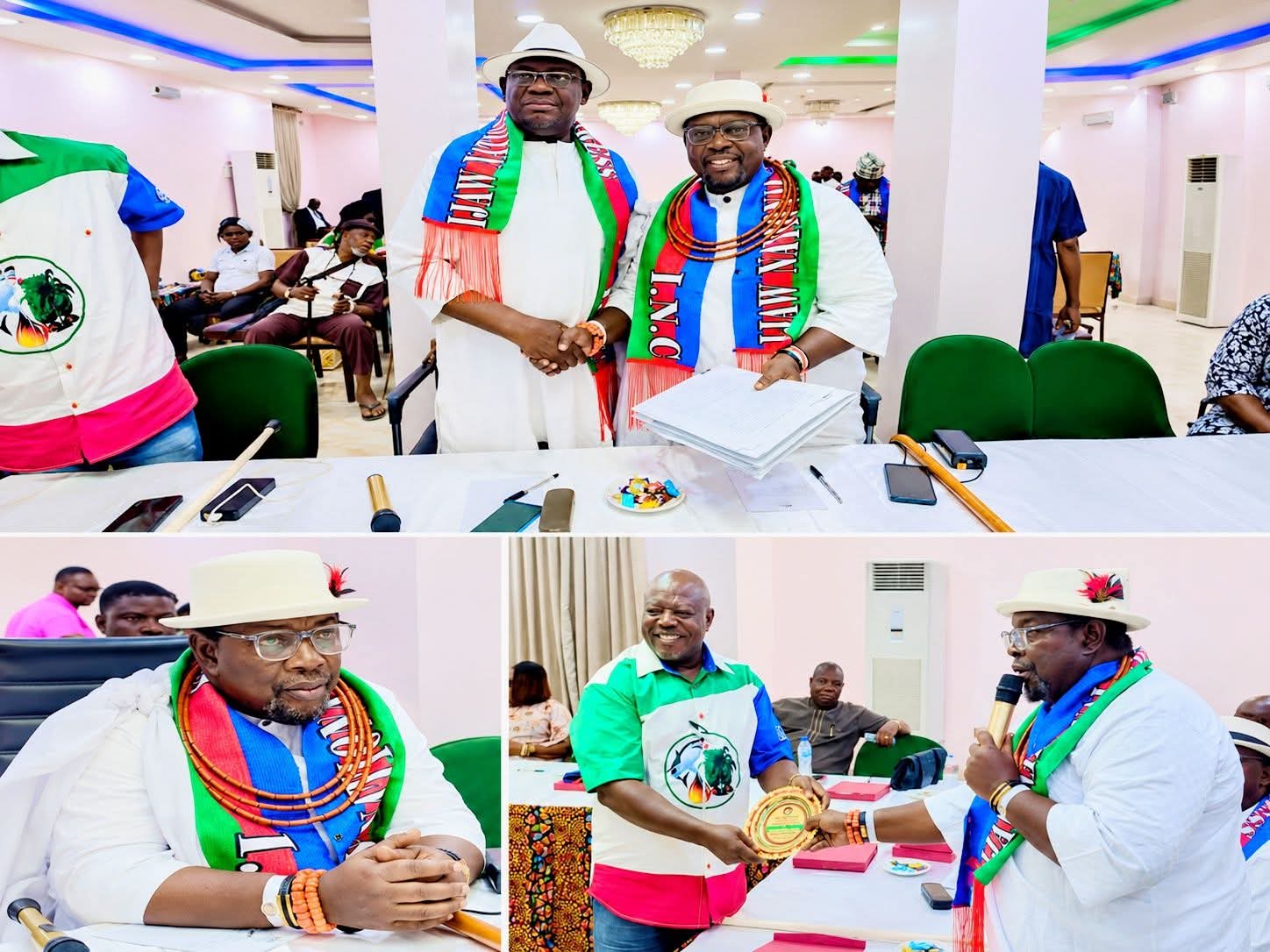
A new chapter has begun in the leadership of the Ijaw National Congress following the formal handover of authority from the outgoing President, Prof. Benjamin Okaba, to the newly elected President, High Chief Macdonald Igbadiwei.
The valedictory and handover session, held in an atmosphere marked by dignity, unity, and institutional order, officially sealed the transition process within the apex Ijaw socio-cultural body.
The event also featured the presentation of awards and recognitions to members of the outgoing executive council in appreciation of their stewardship, dedication, and contributions toward the growth, unity, and advancement of the Ijaw nation during their tenure in office.
Stakeholders, elders, delegates, and supporters who attended the ceremony expressed optimism over the emergence of the new leadership, while reaffirming their collective commitment to the aspirations, progress, and development of the Ijaw people.
The proceedings reflected a strong sense of continuity and responsibility as speakers at the event called for sustained unity and cooperation among Ijaw stakeholders across the Niger Delta region.
Speaking during the transition ceremony, outgoing President Prof. Okaba appreciated members of the Congress and the Ijaw nation for the support extended to his administration, while urging the new leadership to remain focused on the collective interest of the people.
The newly inaugurated President, High Chief Macdonald Igbadiwei, on his part, pledged to build on the achievements of the outgoing administration and work towards strengthening the voice and relevance of the INC in national affairs.
Meanwhile, IduwiniVoice Media Limited reports that the official swearing-in ceremony of the new leadership is scheduled to hold today, May 14, 2026, at Chief Tunde Smooth Playground.


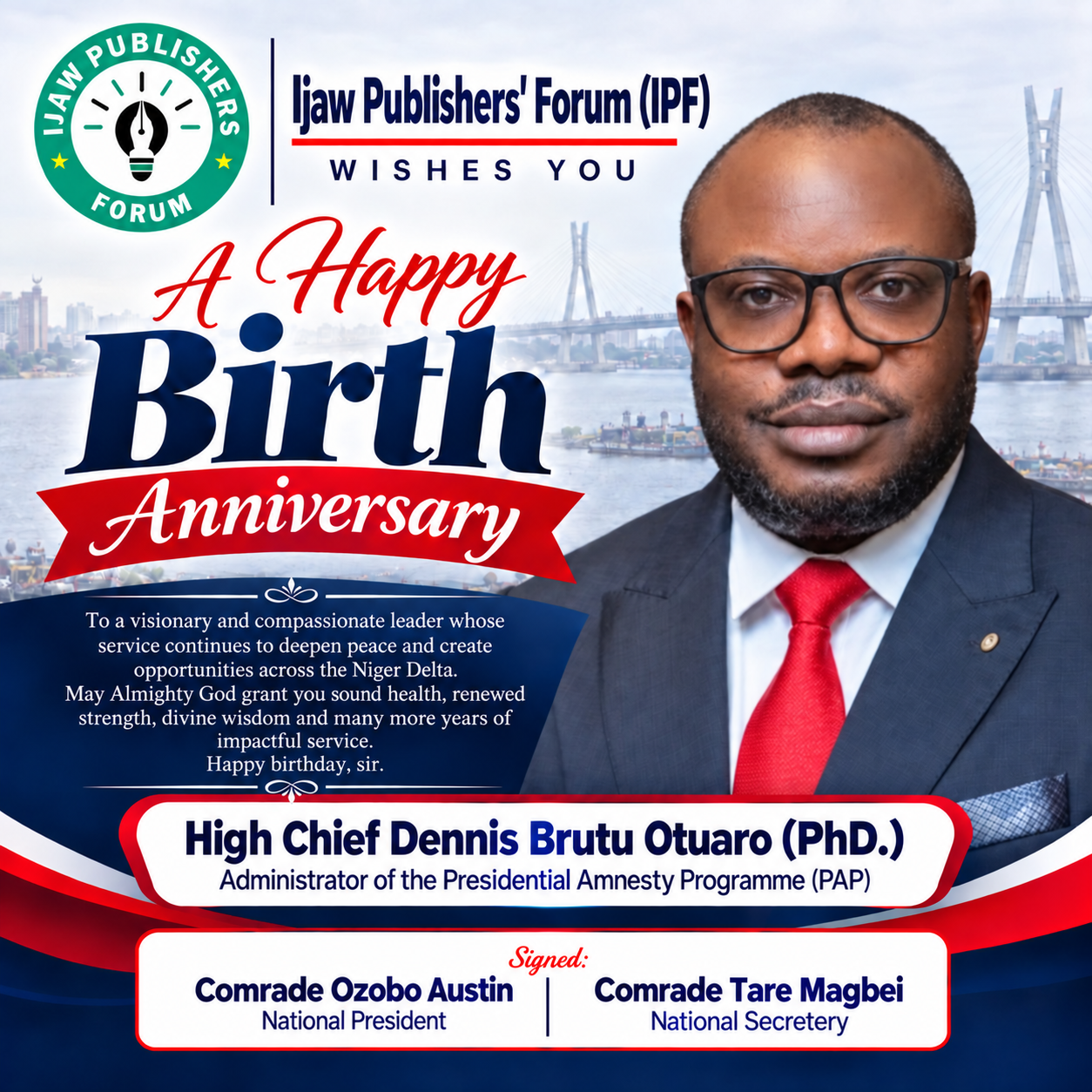
The Ijaw Publishers’ Forum (IPF) heartily celebrates by offering our congratulations to a visionary and innovative leader—the Administrator of the Presidential Amnesty Programme, High Chief Dennis Brutu Otuaro, Ph.D., on the auspicious occasion of his birthday.
We give thanks to Almighty God for gifting the Niger Delta region with a visionary, purposeful and compassionate leader whose stewardship of the Presidential Amnesty Programme has continued to deepen peace, foster unity and create sustainable opportunities for the people of the region.
Since assuming leadership of the Presidential Amnesty Programme, Dr. Otuaro has continued to contribute to the implementation of programmes aimed at human capital development, education, skills acquisition, entrepreneurship and the empowerment of beneficiaries. These interventions remain important to the broader effort to build a more productive and prosperous Niger Delta.
Your commitment to human-capacity development through foreign and home-based scholarship initiatives has brought renewed hope to countless Niger Delta youths. By investing in education and skills development, you are helping to build a generation equipped to contribute meaningfully to the growth, stability and prosperity of the region and the nation at large.
The Forum also sincerely appreciates your laudable support for the Ijaw Publishers’ Forum. Your encouragement and recognition of the role of the media in promoting peace, development and responsible public engagement remain deeply valued.
As you celebrate this special day, we pray that Almighty God will bless you with sound health, renewed strength, divine wisdom and many more years of impactful service to the Niger Delta and Nigeria as well as the fulfillment of your heart’s desires.
Happy birthday High Chief Dennis Brutu Otuaro, Ph.D. God bless your new age.
Signed:
Comrade Ozobo Austin
President, Ijaw Publishers’ Forum (IPF)
Tare Magbei
Secretary, Ijaw Publishers Forum
By Derick Peretengboro
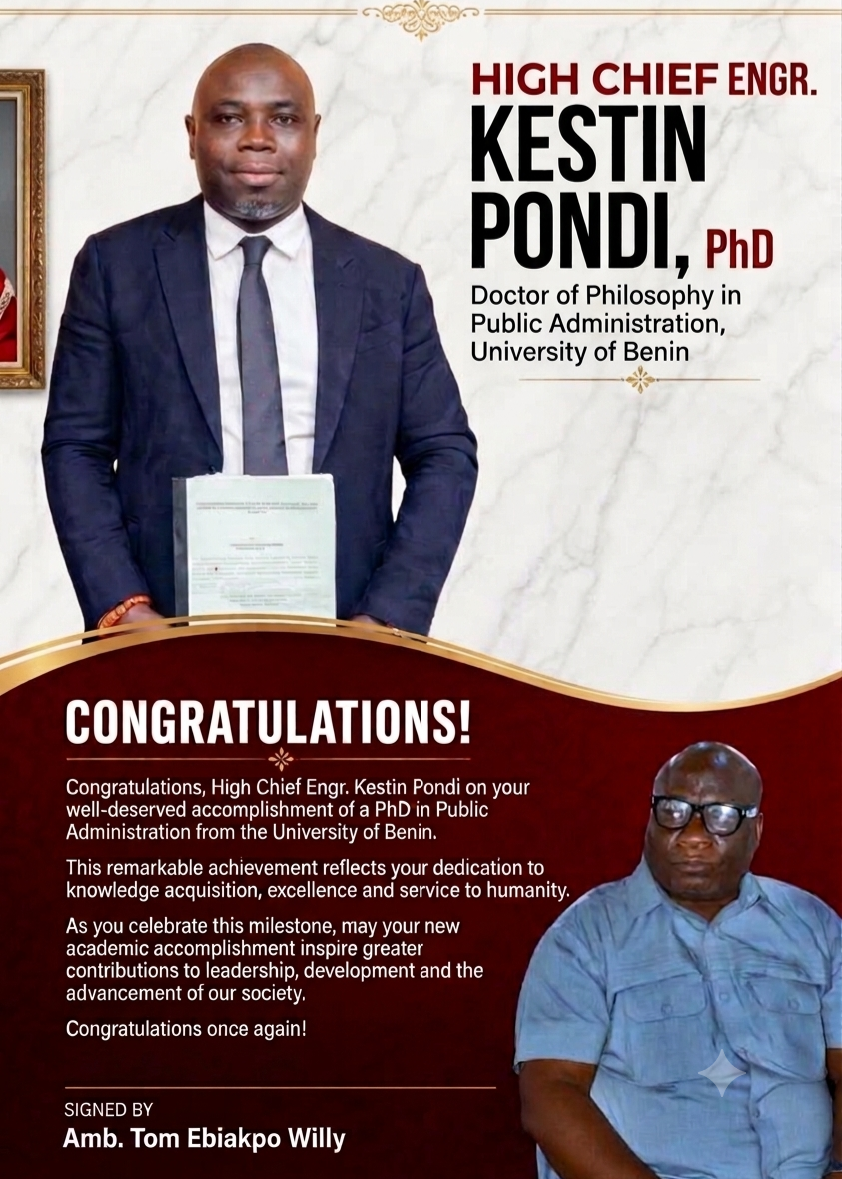
Amb. Tom Ebiakpo Willy has congratulated High Chief Engr. Kestin Pondi on his successful attainment of a Doctor of Philosophy (PhD) degree in Public Administration from the University of Benin.
In a congratulatory message, Amb. Willy described the academic achievement as well deserved, noting that it reflects Pondi’s dedication to knowledge acquisition, excellence and service to humanity.
He said the milestone should serve as an inspiration for greater contributions to leadership, societal development and the advancement of the Niger Delta and the wider society.
“Congratulations, High Chief Engr. Kestin Pondi, on your well-deserved accomplishment of a PhD in Public Administration from the University of Benin,” Willy stated.
He further wished the newly conferred scholar continued success, expressing optimism that his academic accomplishment would strengthen his capacity to make meaningful contributions to leadership and development.
Amb. Willy concluded by congratulating High Chief Engr. Kestin Pondi once again on the significant academic milestone.
By: Miracle Orumor
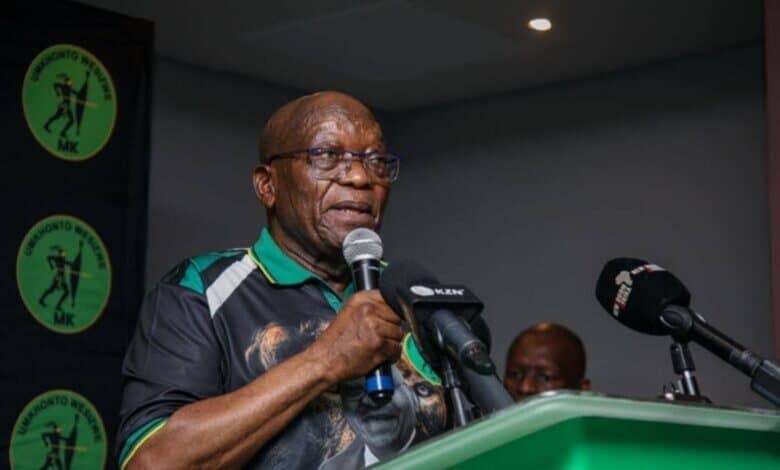
The uMkhonto weSizwe (MK) Party has stepped up preparations for the upcoming local government elections, unveiling its mayoral candidates and activating a dedicated election war room.
The move signals the party’s determination to mount a strong and coordinated campaign as political parties begin positioning themselves for control of key municipalities.
The MK Party said its selected candidates will spearhead its campaign at the local level, while the newly established war room will coordinate election strategies, monitor campaign activities and mobilise support across targeted areas.
Party leaders expressed confidence that the new campaign structure and mayoral candidates would strengthen the party’s presence and improve its chances at the polls.
With the local government elections approaching, the latest development places the MK Party firmly in campaign mode as it seeks to expand its political influence and challenge rival parties for control at the grassroots level.
-

 Social2 months ago
NAIS – Northern Nigeria/Abuja Chapter Honours Amb. Ebi Lagos with Award of Recognition
-
 Breaking3 months ago
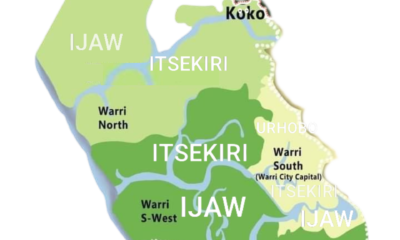
2027: INEC Alegedly Announces Plans to Conduct Party Primaries in the Newly Created State Constituencies in Warri North and Warri Southwest LGAs, Others
-

 News1 month ago
PAP: EX-AGITATORS OF BOYLOAF CAMP DISTANCE SELVES FROM THEIR LEADERS ONSLAUGHT ON THE PAP ADMINISTRATOR
-

 Local News4 months ago
Just In: Ambassador Podoki Emerges APP Candidate for Burutu Constituency-I Assembly Seat
-
 Politics3 months ago
2027: Mulade Challenges NDC’s Substitution of His Party Candidacy, Demands ₦5 Billion Damages
-
 Breaking3 months ago
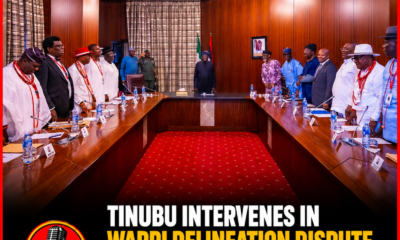
Tinubu Intervenes in Warri Delineation Dispute, Meets Ijaw, Urhobo and Itsekiri Leaders
-
 Local News4 months ago
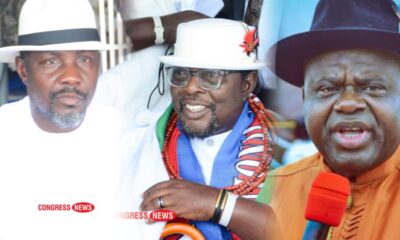
INC: Group Faults Sponsored Attacks on Tompolo, Igbadiwei, Urges Unity in Ijaw Nation
-

 Entertainment2 months ago
JKing Logistics Coordinator Shed Light to Address Ijaw Music Wage Controversy