
News
Tinubu Swears In Tegbe, Enikanolaiye as New Cabinet Ministers

By Rukevwe Odeh
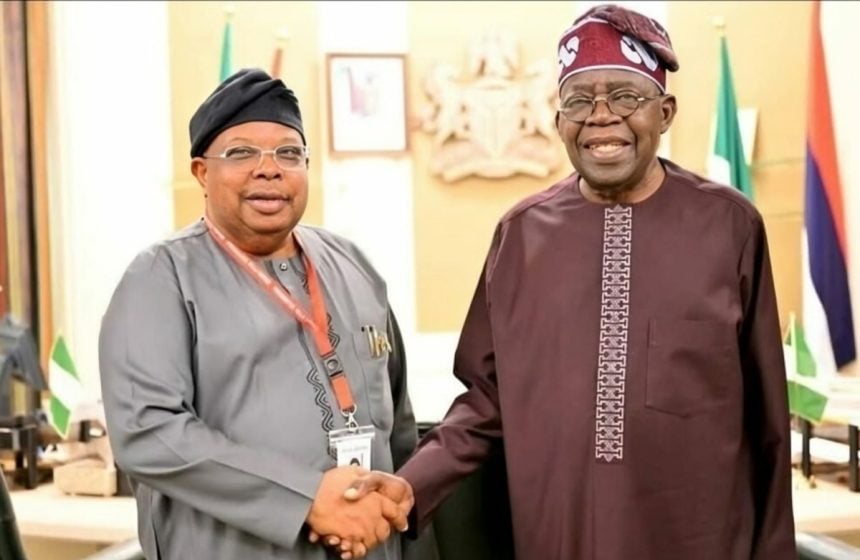
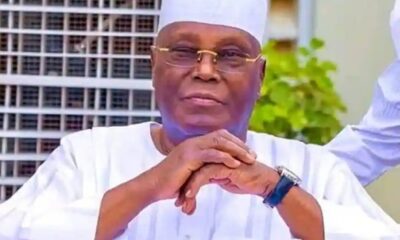
President Bola Tinubu has appointed and sworn in Joseph Tegbe as the new Minister of Power and Ambassador Sola Enikanolaiye as Minister of State for Foreign Affairs, filling vacancies created by recent resignations in his cabinet.
The inauguration ceremony took place at the Presidential Villa in Abuja and was attended by family members of the appointees, senior government officials, and presidential aides.
Speaking after taking office, Tegbe acknowledged the longstanding challenges facing Nigeria’s power sector, emphasizing that meaningful reforms would take time. He stated that while immediate solutions should not be expected, Nigerians would witness steady improvements under his leadership.
According to him, his approach would focus on disciplined implementation, measurable targets, and transparency. He added that signs of progress were already emerging within the sector.
One notable achievement highlighted by the minister is the restoration of the 450-megawatt Alaoji Open Cycle Power Plant in Abia State. The facility, which had remained inactive for three years, has been revived by the Niger Delta Power Holding Company, making up to 375MW available for transmission to the national grid.
The appointments followed the departure of former Minister of Power, Adebayo Adelabu, and former Minister of Foreign Affairs, Yusuf Tuggar, who resigned to pursue political interests. President Tinubu subsequently nominated Tegbe and Enikanolaiye, and the Senate confirmed their appointments on May 6, 2026.
Tegbe brings more than three decades of experience in economic management, institutional reform, and public sector transformation. A graduate of Civil Engineering from Obafemi Awolowo University, Ile-Ife, where he earned a First-Class degree, he also holds postgraduate qualifications in Business Administration and Public Administration from institutions in Switzerland and Birmingham.
Before joining the Federal Executive Council, he served as Senior Partner and Head of Advisory Services at KPMG Africa. Throughout his career, he has contributed to major reform programmes and advised various public and private organizations, including regulatory agencies and multinational corporations.
Enikanolaiye, who hails from Igbagun in Kogi State, is an accomplished diplomat and public servant. He graduated with First-Class honours in Political Science from Ahmadu Bello University, Zaria, and later obtained a Master’s degree in International Law and Diplomacy from the University of Lagos.
He joined the Ministry of Foreign Affairs in 1982 and rose through the ranks to become Permanent Secretary in 2016. After completing 35 years of service, he retired from the civil service in 2017.
During his diplomatic career, Enikanolaiye represented Nigeria in several countries, including Ethiopia, Serbia, Canada, the United Kingdom, and India, where he served as Head of Mission.
His contributions to public service have earned him several national honours and professional recognitions. Prior to his latest appointment, he served as Senior Special Assistant to President Tinubu on Foreign Affairs and International Relations in the Office of the Chief of Staff to the President.









By staff Reporter Rukevwe Odeh
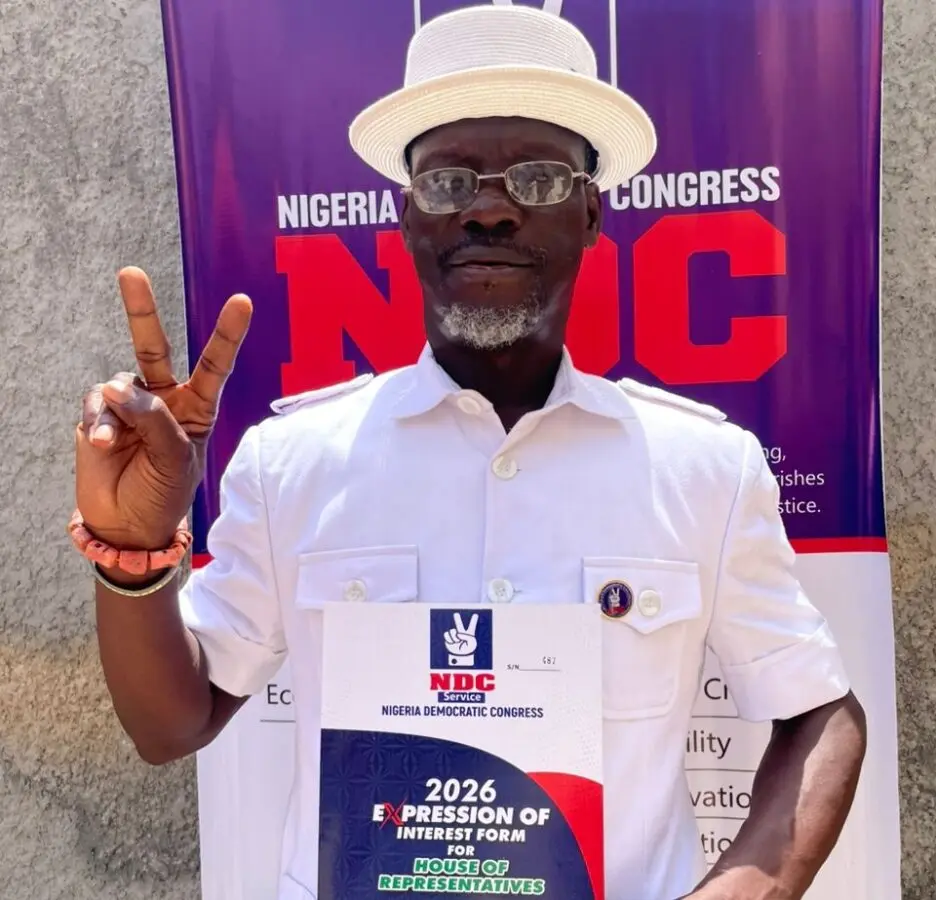
A group of stakeholders in Warri has announced its decision to withdraw support for the incumbent member representing the Warri Federal Constituency in the House of Representatives, Hon. Thomas Ereyitomi, ahead of the 2027 general elections.
The group, while explaining its position, cited what it described as dissatisfaction with the lawmaker’s performance and representation of the constituency.
The stakeholders subsequently declared their support for Comrade Jude Ukori Mulade as their preferred candidate for the 2027 House of Representatives election.
According to the group, its decision followed concerns over the level of representation and development delivered to the constituency under the current administration.
The stakeholders said they were seeking a representative who would be more responsive to the needs of the people and more committed to advancing issues affecting residents across the constituency.
They urged other political stakeholders and eligible voters in Warri to consider Mulade’s candidacy as the 2027 elections approach.
The group’s endorsement adds to the growing political activities and realignments expected to shape the contest for the Warri Federal Constituency seat ahead of the 2027 general elections.
Ereyitomi, who currently represents the constituency in the House of Representatives, has yet to publicly respond to the allegations contained in the group’s statement.
By staff Reporter Rukevwe Odeh
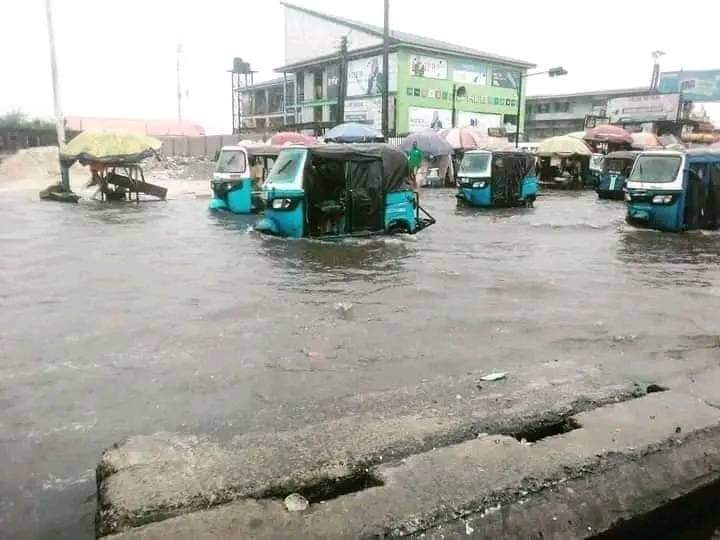
Residents and road users along the Warri Airport Road, particularly the section near Federal Government College in Warri South Local Government Area of Delta State, have continued to contend with recurring flooding despite years of road construction and rehabilitation efforts.
The affected stretch is frequently submerged following heavy rainfall, with inadequate drainage identified as a major factor contributing to the persistent flooding.
The recurring situation has raised concerns among motorists, residents and other road users, who say the condition of the road continues to disrupt movement and create difficulties for commuters whenever there is significant rainfall.
The development has also renewed calls for attention to the drainage system along the route, with residents hoping that a lasting solution will be implemented to prevent the road from repeatedly becoming flooded.
By staff Reporter: Rukevwe Odeh
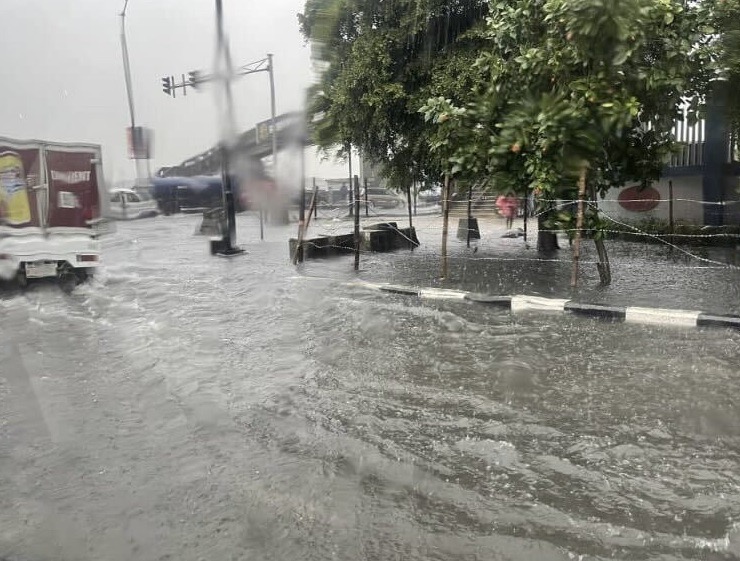
A heavy downpour has left the popular NNPC Housing Complex Road, also known as Ekpan Link Road, submerged in floodwater in Uvwie Local Government Area of Delta State.
The rainfall caused significant water accumulation along the busy road, affecting movement and creating difficulties for motorists and other road users.
The condition of the road has renewed concerns over flooding and drainage challenges in the area, particularly during periods of heavy rainfall.
Residents and commuters are expected to exercise caution while using the affected route as efforts to manage the situation continue.
-

 Social2 months ago
NAIS – Northern Nigeria/Abuja Chapter Honours Amb. Ebi Lagos with Award of Recognition
-
 Breaking3 months ago
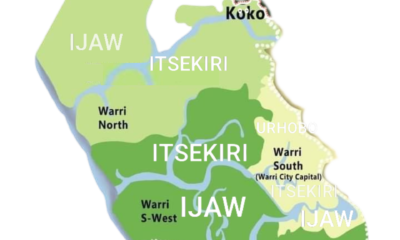
2027: INEC Alegedly Announces Plans to Conduct Party Primaries in the Newly Created State Constituencies in Warri North and Warri Southwest LGAs, Others
-

 News1 month ago
PAP: EX-AGITATORS OF BOYLOAF CAMP DISTANCE SELVES FROM THEIR LEADERS ONSLAUGHT ON THE PAP ADMINISTRATOR
-

 Local News4 months ago
Just In: Ambassador Podoki Emerges APP Candidate for Burutu Constituency-I Assembly Seat
-
 Politics3 months ago
2027: Mulade Challenges NDC’s Substitution of His Party Candidacy, Demands ₦5 Billion Damages
-
 Breaking3 months ago
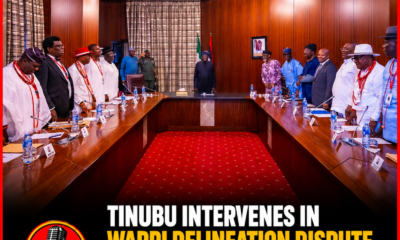
Tinubu Intervenes in Warri Delineation Dispute, Meets Ijaw, Urhobo and Itsekiri Leaders
-
 Local News4 months ago
INC: Group Faults Sponsored Attacks on Tompolo, Igbadiwei, Urges Unity in Ijaw Nation
-

 Entertainment2 months ago
JKing Logistics Coordinator Shed Light to Address Ijaw Music Wage Controversy