
Security
PRP Rejects Tinubu’s Proposed State Police Plan, Cites Lack of Public Trust in Government


By Rukevwe odeh
The Peoples Redemption Party (PRP) has rejected the proposed plan by President Bola Tinubu’s administration to introduce state police through a constitutional amendment, saying the government lacks the credibility and public trust required to implement such a major reform.
In a statement issued by its National Chairman, Hakeem Baba-Ahmed, the party argued that while Nigeria urgently needs comprehensive reforms to improve its security system, the current administration is not in a position to effectively lead such a sensitive restructuring of the country’s policing framework.
The PRP expressed concern over what it described as declining confidence in government institutions, insisting that the present administration does not enjoy the moral authority needed to handle a fundamental shift in policing structure.
According to the party, although decentralising policing could help address insecurity, the process must be guided by a leadership that has earned the trust of citizens.
It further claimed that the ruling All Progressives Congress (APC)-led government has performed poorly in managing security challenges, warning that its proposal for state police should be treated with caution and rejected in its current form.
The opposition party also urged the government to focus more on improving national security and protecting lives rather than pushing ahead with structural reforms it believes lack public backing.
Meanwhile, President Tinubu had earlier forwarded a proposal to the National Assembly seeking a constitutional amendment to allow the establishment of state police across Nigeria, a move that has continued to generate mixed reactions among stakeholders.








By Favour Bibaikefie
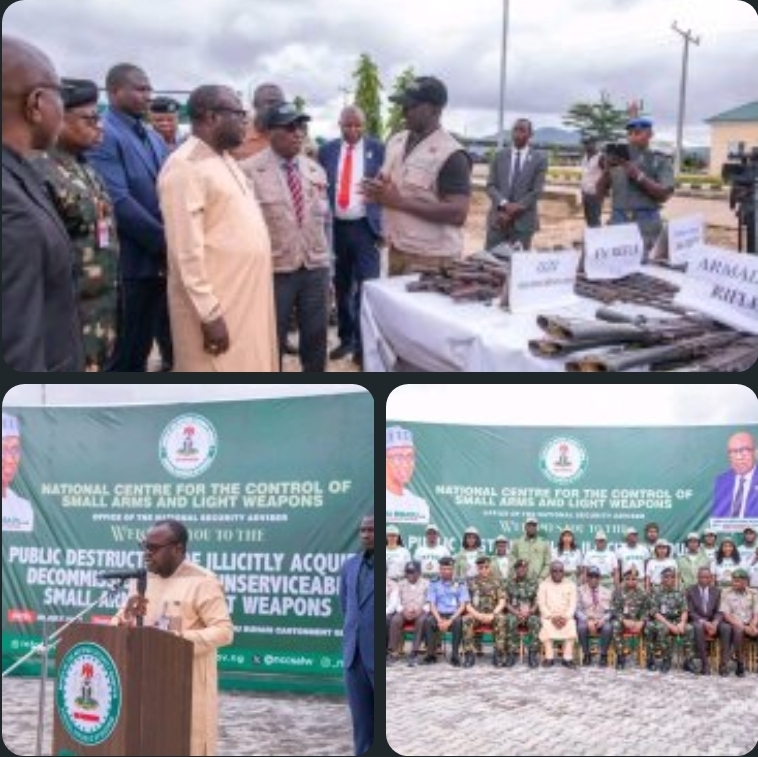
The Federal Government has reaffirmed its determination to rid the country of illicit weapons and strengthen national security with the destruction of 2,819 illicitly acquired, decommissioned and unserviceable small arms and light weapons in Abuja.
The exercise, carried out by the National Centre for the Control of Small Arms and Light Weapons at the General Muhammadu Buhari Cantonment, Giri, marked another milestone in the government’s ongoing efforts to curb the proliferation of illegal firearms. With the latest destruction, the Centre has now eliminated about 19,000 illicit and obsolete weapons since its establishment.
Speaking during the event on Thursday, the National Security Adviser (NSA), Mallam Nuhu Ribadu, represented by the Administrator of the Presidential Amnesty Programme (PAP), Dr. Dennis Brutu Otuaro, said the Federal Government remained unwavering in its constitutional responsibility to safeguard lives and property across the country.
According to a press release issued on July 30, 2026, by the Special Assistant on Media to the PAP Administrator, Mr. Igoniko Oduma, Ribadu stressed that reducing the circulation of illegal firearms is central to the nation’s broader security strategy.
He warned that illicit weapons often fuel terrorism, insurgency, banditry, kidnapping and communal violence, noting that each firearm removed from circulation contributes significantly to national peace and stability.
According to him, “every weapon recovered and destroyed by the security agencies represents a threat permanently neutralized”.
The NSA explained that, with the full backing of President Bola Ahmed Tinubu, his office has pursued a comprehensive security strategy anchored on intelligence-driven operations, enhanced collaboration among security agencies, disruption of criminal and terrorist financing networks, and stronger engagement with international partners.
“This approach has yielded results across the country, from degrading terrorist networks to strengthening our border security architecture, and it continues to evolve to meet new and emerging threats.
“The control and destruction of illicit small arms and light weapons is an essential, and sometimes underappreciated, pillar of this strategy. It complements our kinetic operations by steadily shrinking the pool of weapons available to those who would sow terror or violence in our communities”, he said.
Ribadu described the public destruction of the recovered weapons as evidence of the government’s commitment to transparency and accountability in tackling insecurity.
He also praised the Director-General of the National Centre for the Control of Small Arms and Light Weapons, retired Deputy Inspector-General of Police Johnson Kokumo, and personnel of the Centre for their dedication. He equally acknowledged the contributions of the Nigeria Police Force, the Armed Forces, the Department of State Services, the Nigeria Customs Service and other security agencies whose recovery efforts made the exercise possible.
The NSA further appealed to Nigerians to actively support security efforts, stressing that the responsibility of maintaining peace should not rest solely on government institutions. He called on traditional rulers, religious leaders and citizens to remain vigilant and cooperate with security agencies.
He added: “Let me reassure all Nigerians that our security agencies, under the coordination of this office, remain resolute and united in the constitutional duty to protect lives and property across every part of this county.
“Exercises such as this, conducted openly and transparently, are proof of consistent follow-through, not mere ceremony. Government understands that public confidence is earned through sustained, visible action, and we remain committed to earning it, one milestone at a time.”
By Rukevwe Odeh
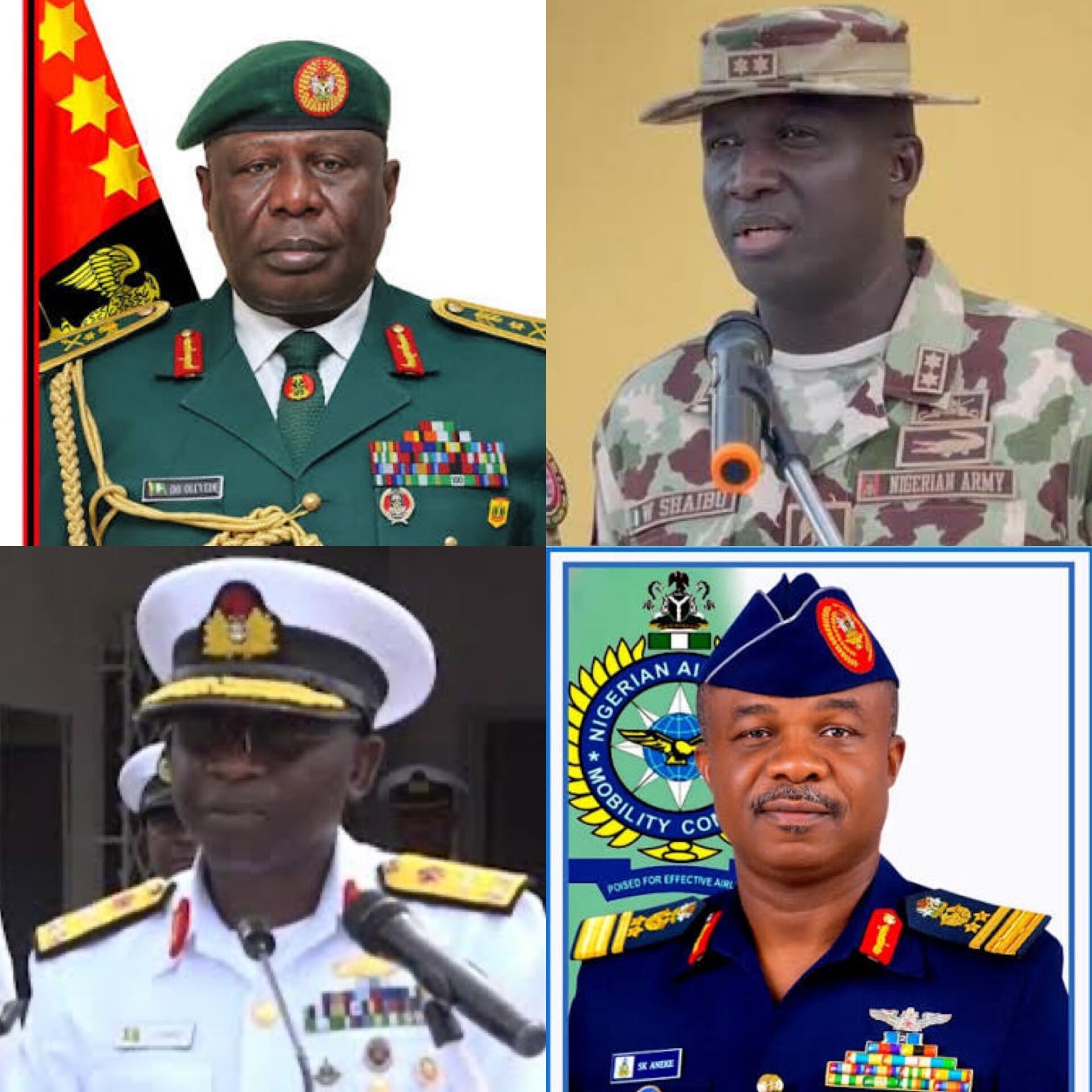
The Chief of Army Staff (COAS), Waidi Shaibu, has assured Nigerians that military personnel are making steady progress in efforts to rescue the pupils and teachers abducted from schools in Oyo State.
Speaking during a media interaction in Port Harcourt as part of activities marking the 2026 Nigerian Army Day Celebration, Shaibu said troops remain actively engaged in operations aimed at securing the safe release of the 39 pupils and seven teachers kidnapped from three schools in Oriire Local Government Area.
According to him, the ongoing operation has recorded encouraging progress, expressing optimism that the victims will soon be reunited with their families.
The Army Chief also highlighted the military’s achievements across different parts of the country. He noted that troops under Operation Hadin Kai have continued to weaken insurgent groups in the North-East, including the recent elimination of a senior Islamic State commander, Abu Bilal al-Minuki, during a joint operation with the United States.
Shaibu said improved security in the region has enabled many displaced residents to return to their communities, citing the closure of the Internally Displaced Persons camp in Bama, Borno State, as evidence of the progress made.
He added that military operations have also strengthened security in Plateau, Benue, Nasarawa, Kwara, Niger and parts of Kogi State, while efforts against crude oil theft and pipeline vandalism have improved stability in the South-South.
To further boost the Army’s operational strength, Shaibu disclosed that President Bola Tinubu has approved the establishment of a new Nigerian Army depot in Amasiri-Edda, Ebonyi State, increasing the number of Army depots nationwide to three.
He also revealed that the Army has acquired additional armoured personnel carriers, mine-resistant vehicles and unmanned aerial vehicles to improve operational effectiveness, alongside specialised training for personnel to tackle evolving security threats.
Separately, Biodun Oyebanji visited victims of the recent Eda Oniyo kidnapping incident receiving treatment at the Ekiti State University Teaching Hospital in Ado-Ekiti. The governor condemned the attack and reaffirmed his administration’s commitment to protecting lives and property.
Oyebanji also urged residents not to politicise security matters, stressing that tackling kidnapping and other criminal activities requires collective support and responsible public engagement.
Source: The Guardian Nigeria
By Rukevwe Odeh
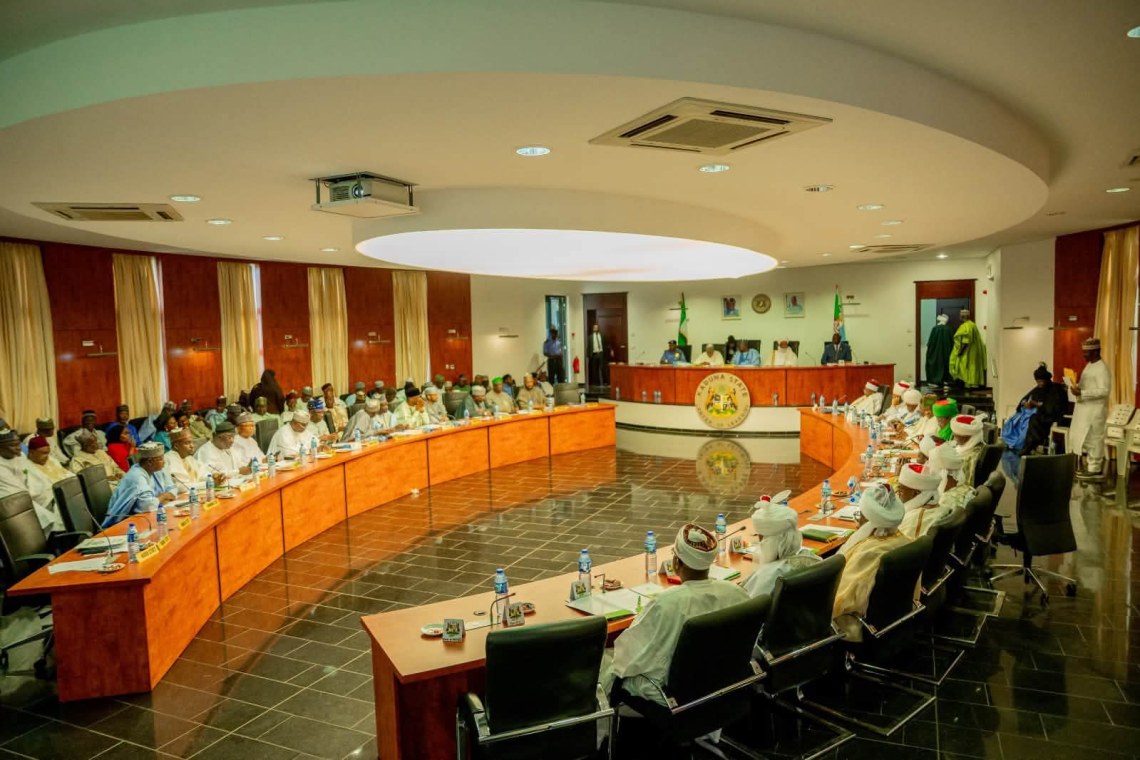
Governors of the 19 Northern states have unveiled the Northern Nigeria Security Trust Fund as part of renewed efforts to combat rising insecurity across the region, while reaffirming their support for the establishment of state police.
The decision was reached during a joint meeting of the Northern Nigeria Governors’ Forum and the Northern Traditional Rulers’ Council held in Kaduna, where participants agreed that the worsening security situation demands stronger regional cooperation and immediate action.
As part of the initiative, the governors pledged to contribute ₦1 billion every month to finance the trust fund, which is expected to strengthen intelligence gathering, improve coordination among security agencies, and support measures aimed at protecting lives and property.
The meeting also inaugurated the Board of Trustees for the trust fund. Former Minister of Defence, Mahmud Yayale Ahmed, and former Chief of Defence Staff, retired General Martin Luther Agwai, were named Co-Chairmen of the board.
Speaking at the event, Chairman of the Northern Nigeria Governors’ Forum and Governor of Gombe State, Muhammadu Inuwa Yahaya, said the trust fund is intended to serve as a practical platform for mobilising resources and strengthening regional security efforts in partnership with the Federal Government and security agencies. He urged members of the board to discharge their responsibilities with transparency, accountability, and fairness.
The governors also reiterated their backing for the creation of state police, expressing confidence that a properly trained, adequately equipped, and well-regulated state policing system would significantly improve efforts to tackle banditry, kidnapping, terrorism, and other criminal activities across the country.
In addition to security, the forum agreed to deepen collaboration among Northern states in critical sectors such as education, agriculture, and healthcare, with the aim of promoting sustainable development and improving service delivery throughout the region.
-

 Social4 weeks ago
NAIS – Northern Nigeria/Abuja Chapter Honours Amb. Ebi Lagos with Award of Recognition
-
 Breaking3 months ago
2027: INEC Alegedly Announces Plans to Conduct Party Primaries in the Newly Created State Constituencies in Warri North and Warri Southwest LGAs, Others
-

 Local News3 months ago
Just In: Ambassador Podoki Emerges APP Candidate for Burutu Constituency-I Assembly Seat
-

 Politics3 months ago
2027: Mulade Challenges NDC’s Substitution of His Party Candidacy, Demands ₦5 Billion Damages
-

 News2 weeks ago
PAP: EX-AGITATORS OF BOYLOAF CAMP DISTANCE SELVES FROM THEIR LEADERS ONSLAUGHT ON THE PAP ADMINISTRATOR
-
 Breaking3 months ago
Tinubu Intervenes in Warri Delineation Dispute, Meets Ijaw, Urhobo and Itsekiri Leaders
-
 Local News4 months ago
INC: Group Faults Sponsored Attacks on Tompolo, Igbadiwei, Urges Unity in Ijaw Nation
-

 Entertainment2 months ago
JKing Logistics Coordinator Shed Light to Address Ijaw Music Wage Controversy