
Economy
FG Sets ₦2.5 Trillion Independent Revenue Goal to Strengthen Fiscal Discipline

By Rukevwe Odeh
The Federal Government has announced a target of generating ₦2.5 trillion in independent revenue in 2026 as part of efforts to improve public finance management, reduce revenue leakages, and lessen the country’s dependence on oil earnings.
The new target was disclosed in Abuja by the Acting Executive Chairman and Chief Executive Officer of the Fiscal Responsibility Commission (FRC), Charles Abana, during a meeting with the Secretary to the Government of the Federation (SGF), Senator George Akume. According to Abana, the commission’s decision follows its monitoring of approximately ₦1.84 trillion generated by Ministries, Departments, and Agencies (MDAs) as independent revenue by September 2025.
Abana explained that the commission is intensifying oversight of government-owned enterprises and MDAs to ensure that operating surpluses are correctly calculated and promptly remitted into the Consolidated Revenue Fund. He also revealed that the Operating Surplus Calculation Template, first introduced in 2016, has been upgraded and fully automated in line with the Finance Act 2020. The updated system is expected to improve transparency, accuracy, efficiency, and compliance in revenue reporting.
Speaking at the meeting, Senator Akume stressed the importance of stronger collaboration among institutions responsible for fiscal oversight. He urged the Fiscal Responsibility Commission to work more closely with the Federal Ministry of Finance, the Budget Office of the Federation, the Office of the Accountant-General, the Debt Management Office, and other relevant agencies to eliminate overlapping responsibilities and enhance accountability in public finance.
Akume described the commission as a key institution in Nigeria’s financial governance framework, noting that prudent management of public resources is essential for maintaining macroeconomic stability, attracting investment, and ensuring sustainable debt management. He added that stronger fiscal discipline would support the efficient use of government resources and contribute to the implementation of the administration’s economic agenda.
The ₦2.5 trillion revenue target forms part of the Federal Government’s broader strategy to expand non-oil revenue sources, strengthen transparency, and build a more sustainable fiscal system capable of meeting the country’s growing expenditure needs.


By Rukevwe Odeh
Tantita Security Services Nigeria Limited has strengthened its community support initiatives by providing financial assistance totaling ₦20 million to 20 widows in Bomadi Local Government Area of Delta State.
The empowerment programme, carried out on Tuesday, was organized by the company through its Community Relations Department in collaboration with Tombraski Security Company. Beneficiaries were selected from the Tuomo and Bomadi communities.
The initiative forms part of Tantita Security Services’ widows’ empowerment programme, which is designed to improve the livelihoods of vulnerable women by providing financial support to help them meet their needs and pursue income-generating activities.
Company representatives said the programme reflects the firm’s ongoing commitment to community development and social welfare, particularly among disadvantaged groups in its host communities.Tantita, Tombraski Empower 20 Widows with ₦20m in Bomadi
The financial support was presented on Tuesday as part of the company’s widows’ empowerment initiative, aimed at improving the welfare of vulnerable women and promoting economic self-reliance in the benefiting communities.
The programme underscores Tantita’s continued commitment to community development and social investment across its host communities.
By Divine Perezide
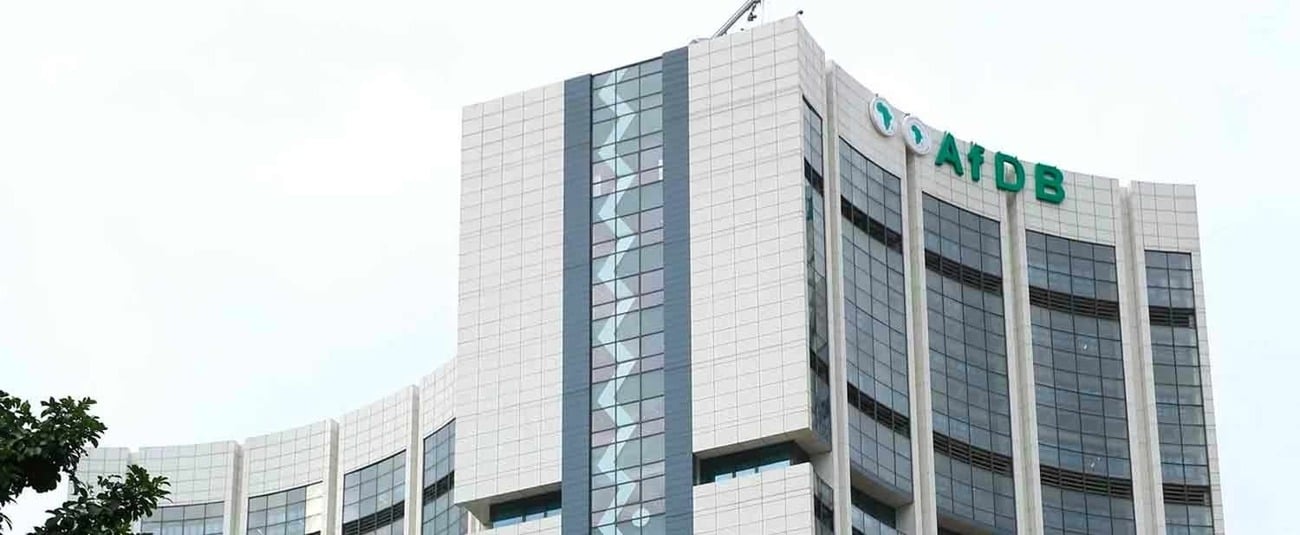
The African Development Bank (AfDB) has warned that Nigeria’s rapidly increasing population could deepen the country’s sanitation challenges unless urgent investments are made to improve urban sanitation infrastructure.
The warning was issued during the unveiling of Nigeria’s Urban Sanitation Diagnostic Report under the African Urban Sanitation Investment Initiative (AUSII) in Abuja. Participants at the event noted that only about 20 per cent of Nigerians currently have access to safely managed sanitation services, despite the country’s fast-growing population.
Experts projected that Nigeria’s population could surpass 400 million by 2050 and approach 500 million before the end of the century, a development expected to place greater pressure on cities, public health systems, the environment and economic growth if sanitation services are not significantly improved.
Speaking at the event, AfDB’s Division Manager for Water and Sanitation, Jeanne-Astrid Ngako, described Nigeria’s population expansion as one of the continent’s biggest urban development concerns. She stressed that the country’s priority should be ensuring residents have access to safe sanitation facilities as cities continue to expand.
Ngako urged governments at all levels, development partners, civil society organisations and the private sector to work together, describing urban sanitation as a critical national development issue rather than a sector-specific concern.
She acknowledged progress made by the Federal Ministry of Water Resources and Sanitation but said the report identified major shortcomings, especially in sanitation systems serving densely populated urban areas. According to her, relying solely on conventional sewer networks would not adequately solve Nigeria’s sanitation problems because such projects require huge investments and long implementation periods.
Instead, she recommended expanding the use of affordable on-site sanitation systems capable of serving rapidly growing urban and peri-urban communities more efficiently.
Also speaking, Director of Water Quality Control and Sanitation at the Federal Ministry of Water Resources and Sanitation, Jamilu Dan Habu, disclosed that while roughly 60 per cent of Nigerians have access to basic sanitation, only one in five enjoys safely managed sanitation services.
He added that hygiene service coverage stands at about 25 per cent nationwide. Sanitation facilities are available in only 44 per cent of schools, 15 per cent of healthcare centres and approximately 20 per cent of public spaces.
Habu explained that rapid urbanisation continues to outpace infrastructure development, leaving many cities with widening sanitation gaps. He noted that most households depend on on-site sanitation because sewer systems remain limited across the country.
According to him, the Federal Government has introduced several reforms, including the National Action Plan for the Revitalisation of the Water, Sanitation and Hygiene (WASH) Sector, while work is ongoing to review the National Policy on Water Supply and Sanitation to strengthen governance and improve inclusive sanitation services across Nigerian cities.
By Rukevwe Odeh
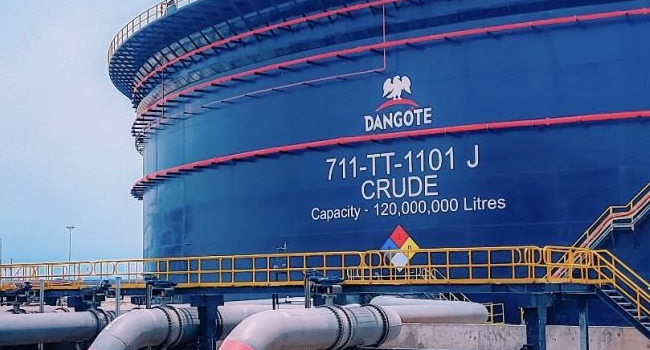
Dangote Petroleum Refinery has defended its fuel pricing strategy following criticism over recent fluctuations in petrol prices, while announcing a fresh reduction of ₦50 per litre in its ex-depot price.
The company said the latest adjustment reflects changes in international crude oil prices and demonstrates its commitment to ensuring Nigerians benefit whenever market conditions improve.
According to the refinery, fuel prices are influenced by several factors, including the cost of crude oil, foreign exchange rates, logistics, and other operational expenses. It explained that price reviews are carried out in response to prevailing market realities rather than arbitrary decisions.
With the latest review, the refinery’s ex-depot price has been reduced by ₦50 per litre, a move expected to lower the cost of petrol at filling stations once marketers adjust their retail prices.
The company noted that all outstanding product orders that had not been loaded before the implementation of the new price would be recalculated using the revised rate, allowing customers to benefit from the reduction.
Dangote Refinery also stressed that it remains focused on maintaining a stable supply of petroleum products while promoting greater affordability for consumers across the country.
Industry observers believe the latest price cut could trigger further reductions in pump prices nationwide, although the final retail price will still depend on transportation costs, marketers’ margins, and other distribution-related expenses. The reduction follows a decline in global crude oil prices after easing geopolitical tensions in the Middle East, which have helped moderate energy costs internationally.
-

 Social4 weeks ago
NAIS – Northern Nigeria/Abuja Chapter Honours Amb. Ebi Lagos with Award of Recognition
-
 Breaking3 months ago
2027: INEC Alegedly Announces Plans to Conduct Party Primaries in the Newly Created State Constituencies in Warri North and Warri Southwest LGAs, Others
-

 Local News3 months ago
Just In: Ambassador Podoki Emerges APP Candidate for Burutu Constituency-I Assembly Seat
-
 Politics3 months ago
2027: Mulade Challenges NDC’s Substitution of His Party Candidacy, Demands ₦5 Billion Damages
-

 News2 weeks ago
PAP: EX-AGITATORS OF BOYLOAF CAMP DISTANCE SELVES FROM THEIR LEADERS ONSLAUGHT ON THE PAP ADMINISTRATOR
-
 Breaking3 months ago
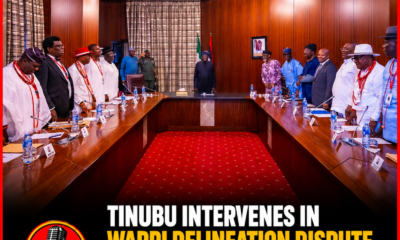
Tinubu Intervenes in Warri Delineation Dispute, Meets Ijaw, Urhobo and Itsekiri Leaders
-

 Local News4 months ago
INC: Group Faults Sponsored Attacks on Tompolo, Igbadiwei, Urges Unity in Ijaw Nation
-
 Entertainment2 months ago
JKing Logistics Coordinator Shed Light to Address Ijaw Music Wage Controversy