
News
Economists Raise Concerns Over ₦34 Trillion Revenue Lost Through Import Duty Waivers


By Rukevwe Odeh
Economic experts have expressed concern over the Federal Government’s extensive use of import duty waivers after the Nigeria Customs Service (NCS) revealed that approvals under the Import Duty Exemption Certificate (IDEC) scheme reached about ₦34 trillion by the end of 2025.
The disclosure was made by Comptroller-General of Customs, Bashir Adewale Adeniyi, during an investigative hearing before the Senate Committee on Finance. He explained that the exemptions were introduced to support national priorities such as security, healthcare, industrial development, food supply, and the importation of compressed natural gas (CNG), electric vehicles, and manufacturing equipment. Around 60 percent of the waivers, he noted, were granted for military hardware due to the country’s security challenges.
Despite these justifications, several economists argued that the scale of the waivers represents a significant loss of government revenue at a time when Nigeria is facing fiscal pressure. They warned that while tax incentives can stimulate investment and economic activity, weak monitoring and poor transparency could turn the policy into a channel for revenue leakages.
The experts called for a comprehensive review of the waiver system, urging the government to ensure that only qualified beneficiaries receive the incentives and that measurable economic benefits are achieved. According to them, stronger oversight would help prevent abuse and improve accountability.
Meanwhile, the Senate Committee on Finance has commenced an investigation into the administration of the import duty waiver programme. Lawmakers said the probe is aimed at determining whether the incentives have delivered the intended economic benefits and whether public funds have been adequately protected.
Although the Customs Service acknowledged that the waivers reduced potential revenue collections, Adeniyi maintained that fiscal incentives should be assessed not only by the revenue forgone but also by their contribution to national security, industrial growth, healthcare access, and economic development. He also recommended tighter monitoring to ensure that beneficiaries meet the objectives for which the waivers were granted.

By Rukevwe Odeh
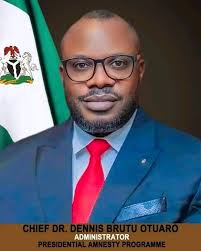
The Administrator of the Presidential Amnesty Programme (PAP), Dr. Dennis Otuaro, has praised President Bola Ahmed Tinubu for his continued support of the programme, following the successful graduation of 16 beneficiaries sponsored for postgraduate studies abroad.
The graduates completed master’s degree programmes at universities in the United Kingdom and the United States, with four of them earning distinctions in their respective fields. The outstanding graduates are Nina Orubebe (Financial Management), Tonbra Tonlagha (International Hospitality and Tourism), Kemien Egbekun (Law), and Simon Douye (Construction Engineering Management).
The scholars studied a wide range of disciplines, including Software Engineering, Oil and Gas, Data Science and Engineering, Financial Management, Law, Construction Engineering Management, and Global Public Health. They graduated from respected institutions such as the University of Cambridge, Coventry University, Manchester Metropolitan University, Aston University, Northumbria University, Carnegie Mellon University, and several others.
Reacting to the achievement, Otuaro congratulated the graduates for their dedication and successful completion of their programmes. He noted that their accomplishments demonstrate the positive impact of the Federal Government’s investment in education and human capital development in the Niger Delta.
According to him, the expansion of the scholarship scheme aligns with President Tinubu’s Renewed Hope Agenda, which seeks to improve educational opportunities and equip young people in the region with the skills needed to contribute meaningfully to national development.
Otuaro stated that since assuming office in March 2024, the Presidential Amnesty Programme has produced 111 master’s and doctoral degree holders, comprising 57 graduates from foreign universities and 54 from institutions within Nigeria. He added that the programme has awarded about 9,000 undergraduate and postgraduate scholarships in Nigerian universities, alongside 247 scholarships for higher education abroad.
The PAP administrator also expressed appreciation to President Tinubu and the National Security Adviser, Mallam Nuhu Ribadu, for their continued support, saying their commitment has strengthened the programme’s efforts to promote peace, education, and sustainable development across the Niger Delta.
He reaffirmed the agency’s resolve to continue expanding access to educational opportunities for qualified youths despite criticism, stressing that investment in education remains one of the most effective ways to secure lasting peace and economic growth in the region.
By Rukevwe Odeh
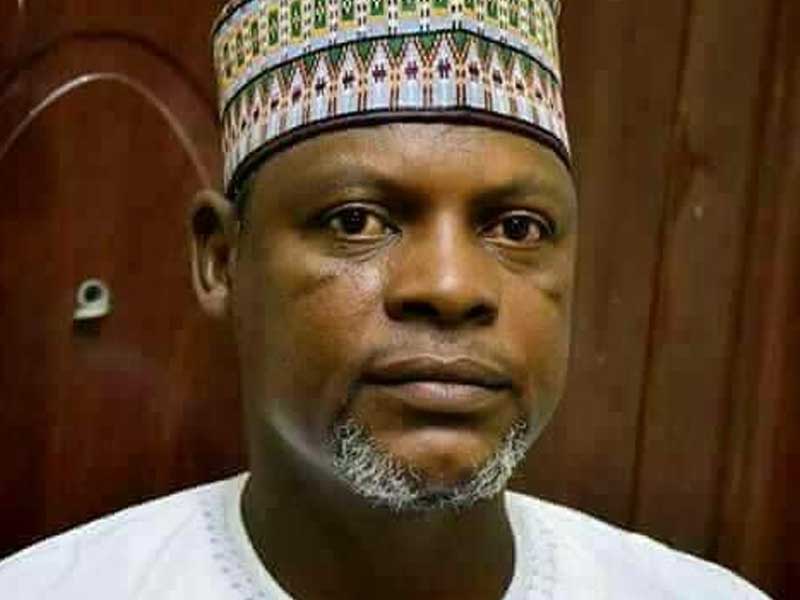
A prominent All Progressives Congress (APC) figure, Hon. Dahiru Hammandikko, has appealed to Nigerians to continue supporting the administration of President Bola Ahmed Tinubu, stating that the country’s progress depends on collective commitment and national unity.
Hammandikko said the current administration is implementing policies aimed at repositioning Nigeria’s economy, strengthening institutions, and improving the welfare of citizens. According to him, while the reforms may present temporary challenges, they are intended to create long-term economic stability and sustainable development.
He urged Nigerians to remain patient and avoid actions capable of undermining the government’s efforts, stressing that meaningful transformation requires time, cooperation, and sacrifice from all stakeholders.
The APC chieftain also encouraged citizens to promote peace, national cohesion, and constructive dialogue, noting that political differences should not stand in the way of the country’s development.
Hammandikko expressed confidence in President Tinubu’s leadership, saying the administration remains committed to delivering on its Renewed Hope agenda through reforms designed to improve infrastructure, expand economic opportunities, and strengthen governance. He urged Nigerians to continue offering prayers and support for the President as the government pursues its development objectives.
By Rukevwe Odeh
Senior government officials, economic experts and business leaders have urged Nigeria’s state governments to take a more active role in driving economic development, arguing that the country’s recent economic reforms can only deliver meaningful benefits if states attract investments, expand local industries and create employment opportunities.
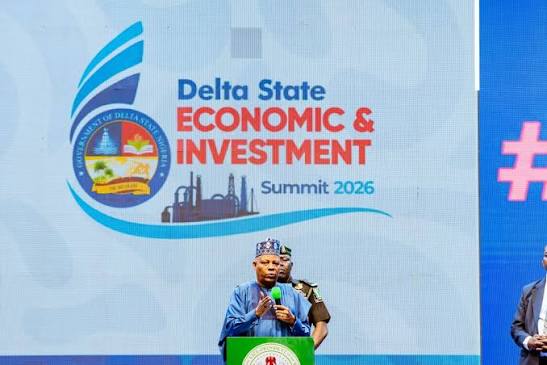
The call was made during the 2026 Delta State Economic and Investment Summit in Asaba, where participants stressed that while the Federal Government has introduced reforms aimed at stabilising the economy, sub-national governments must now translate those gains into improved living standards for citizens.
Chairman of the Presidential Committee on Fiscal Policy and Tax Reforms, Taiwo Oyedele, said macroeconomic stability alone would not guarantee economic prosperity. According to him, state and local governments are best positioned to unlock development by promoting industries, encouraging investment and supporting businesses based on their comparative advantages.
He noted that recent reforms, including the unification of the foreign exchange market, fuel subsidy removal and tax policy changes, have increased revenue allocations to states and local councils, giving them greater capacity to fund infrastructure, settle salary and pension obligations, and improve public services.
Also speaking at the summit, Director-General of the World Trade Organization, Ngozi Okonjo-Iweala, encouraged Nigeria and other African countries to take advantage of changes in global trade patterns. She said businesses around the world are diversifying supply chains, creating opportunities for African economies that can provide stable investment environments.
Okonjo-Iweala further highlighted the benefits of the African Continental Free Trade Area (AfCFTA), describing it as a major opportunity for Nigeria to attract manufacturers and investors seeking access to a large regional market.
Vice President Kashim Shettima reaffirmed the Federal Government’s commitment to supporting states pursuing economic reforms under President Bola Tinubu’s administration. He described Delta State as a strategic investment destination with strong potential in agriculture, manufacturing, logistics, energy and the blue economy.
Shettima said Nigeria’s long-term prosperity cannot rely solely on crude oil revenues, stressing the need for economic diversification. He pointed to Delta State’s coastline, ports, gas resources and entrepreneurial population as assets capable of attracting both domestic and foreign investors.
Delta State Governor Sheriff Oborevwori unveiled a 100-million-dollar investment fund designed to stimulate business growth and attract new investments into the state, while other speakers called for greater collaboration between governments and the private sector to improve infrastructure, electricity supply and industrial development.
Participants agreed that sustained economic growth will depend on how effectively state governments leverage ongoing reforms to expand productive sectors, create jobs and improve the welfare of citizens.
-
 Breaking2 months ago
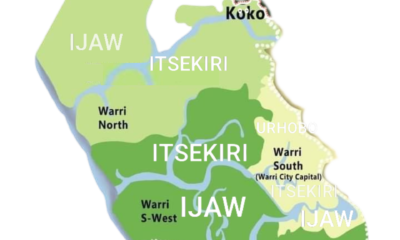
2027: INEC Alegedly Announces Plans to Conduct Party Primaries in the Newly Created State Constituencies in Warri North and Warri Southwest LGAs, Others
-

 Local News2 months ago
Just In: Ambassador Podoki Emerges APP Candidate for Burutu Constituency-I Assembly Seat
-
 Politics2 months ago
2027: Mulade Challenges NDC’s Substitution of His Party Candidacy, Demands ₦5 Billion Damages
-
 Breaking2 months ago
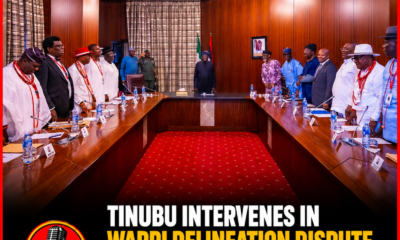
Tinubu Intervenes in Warri Delineation Dispute, Meets Ijaw, Urhobo and Itsekiri Leaders
-

 Local News3 months ago
INC: Group Faults Sponsored Attacks on Tompolo, Igbadiwei, Urges Unity in Ijaw Nation
-
 Breaking2 months ago
Confirmed: INEC Announces Implementation of Warri Delineation Report, Restores Other Constinuencies
-

 Entertainment3 weeks ago
JKing Logistics Coordinator Shed Light to Address Ijaw Music Wage Controversy
-

 News2 months ago
Arogbo Kingdom Petitions EFCC Over Abandoned NDDC Bridge Project