
News
Texas: Why an Independent Republic Chose to Join the United States

By Staff Reporter Miracle Orumor
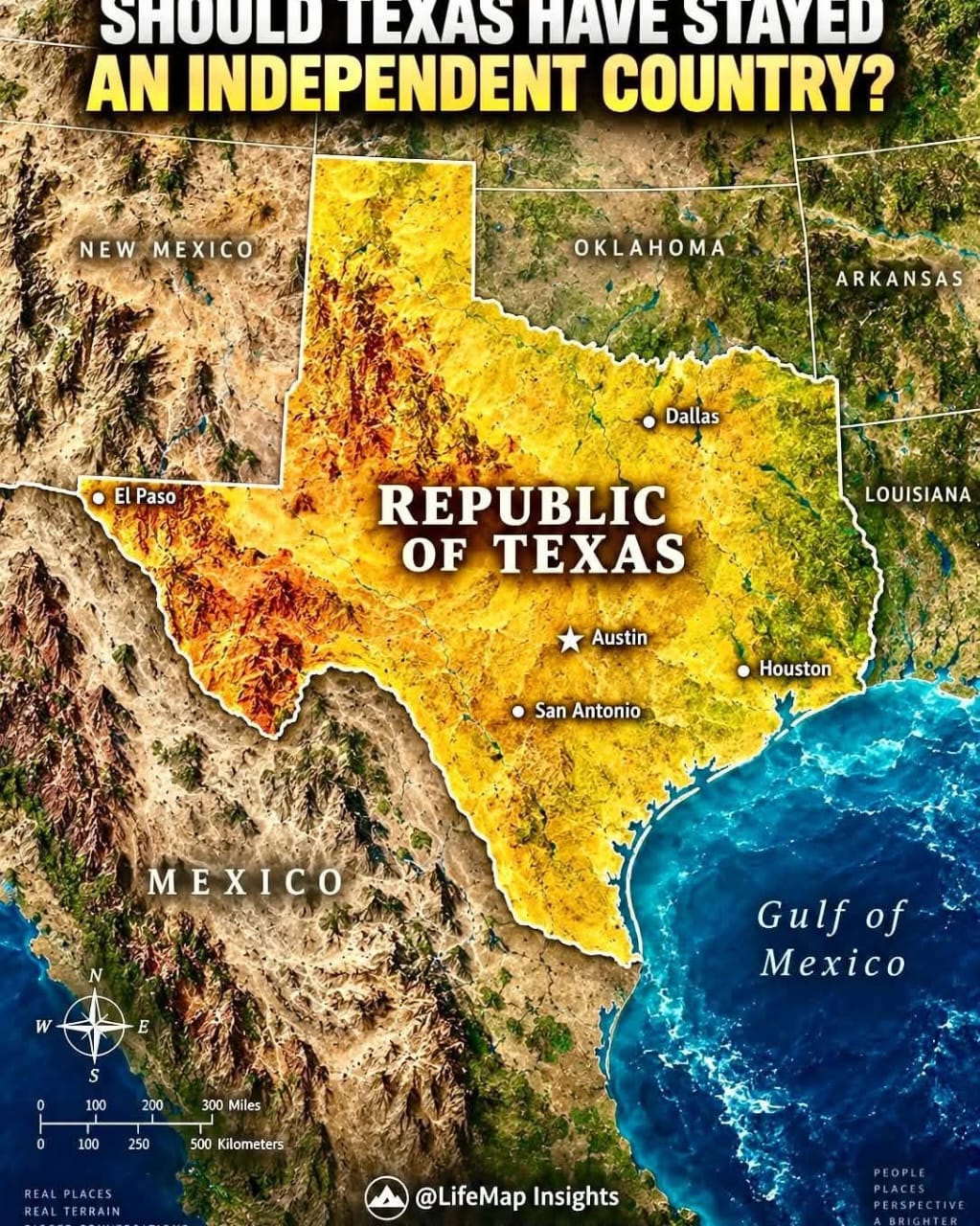
Texas was once an independent country with its own president, government, military and diplomatic relations before becoming one of the largest and most economically powerful states in the United States.
For nearly a decade, from 1836 to 1845, Texas existed as the Republic of Texas, following its revolution against Mexican rule.
The republic declared its independence from Mexico in March 1836. A decisive victory by Texan forces at the Battle of San Jacinto in April of the same year led to the capture of Mexican President Antonio López de Santa Anna and strengthened Texas’ position as an independent republic.
Sam Houston became the first elected president of the Republic of Texas, while the new nation began establishing its government, military and diplomatic relationships with foreign countries.
Financial and Security Challenges
Despite achieving independence, the young republic faced serious challenges.
Texas struggled with financial difficulties, military threats, border disputes and limited resources. Mexico also refused for years to fully recognise Texan independence, leaving the republic vulnerable to renewed conflict.
By the time of annexation, Texas had accumulated a public debt of about $12 million. The government also had to maintain military forces while dealing with conflicts involving Mexico and Native American nations.
These difficulties strengthened support among many Texans for joining the United States. Supporters believed American military protection, access to a larger economy and greater political stability would provide a more secure future.
Texans had already voted overwhelmingly in favour of seeking annexation in 1836. However, the United States initially declined to proceed, partly because annexation could trigger war with Mexico and because of growing political tensions in the United States over slavery.
Mexico Opposes U.S. Annexation
Mexico continued to regard Texas as part of its territory and strongly opposed the republic becoming part of the United States.
In 1845, Mexico offered to recognise Texas as an independent nation under certain conditions, including that Texas would remain separate from the United States.
Texas ultimately rejected that option.
The United States Congress had already approved an annexation resolution in February 1845, offering Texas admission to the Union as a state.
In July 1845, a convention held in Austin considered the proposal. Delegates voted overwhelmingly for annexation, with 55 votes in favour and one against.
Texas voters subsequently approved annexation by an overwhelming margin and also approved a new state constitution.
Texas Becomes a U.S. State
On December 29, 1845, the United States formally admitted Texas into the Union.
The transition from an independent republic to a U.S. state was completed on February 19, 1846, when the government of the Republic of Texas formally transferred its authority to the new state government.
The decision, however, had consequences beyond Texas. Mexico’s opposition to annexation contributed to the growing tensions between Mexico and the United States, eventually becoming one of the major issues preceding the Mexican-American War, which began in 1846.
What If Texas Had Remained Independent?
Nearly two centuries later, the question of what might have happened if Texas had remained an independent country continues to generate debate.
Modern Texas possesses enormous economic resources, including major oil and natural gas reserves, agriculture, technology, manufacturing and other industries. Its large population and geographic size would also give an independent Texas considerable economic and strategic potential.
But independence would come with major responsibilities.
A sovereign Texas would have to maintain its own national defence, manage international trade and diplomatic relations, secure its borders, establish or maintain a currency, raise taxes and finance public services and infrastructure.
The experience of the Republic of Texas also demonstrates that independence did not automatically guarantee stability. The young republic faced significant debt, security concerns and diplomatic uncertainty before joining the United States.
A Historic Choice
Texas’ decision in 1845 was therefore not simply a question of identity. It was also a decision shaped by security, economics, diplomacy and the political circumstances of the time.
The Republic of Texas had survived for almost ten years as an independent nation, but its leaders and citizens ultimately chose the greater security and economic opportunities they believed could come from joining the United States.
Today, Texas remains a powerful symbol of independence and state identity within America.
Its brief history as a sovereign republic, however, leaves behind an enduring question: Had Texas remained independent after 1845, would it have developed into a successful modern country, or would the pressures of security, finance and international politics eventually have pushed it into another political union?


By staff Reporter Rukevwe Odeh
A group of stakeholders in Warri has announced its decision to withdraw support for the incumbent member representing the Warri Federal Constituency in the House of Representatives, Hon. Thomas Ereyitomi, ahead of the 2027 general elections.
The group, while explaining its position, cited what it described as dissatisfaction with the lawmaker’s performance and representation of the constituency.
The stakeholders subsequently declared their support for Comrade Jude Ukori Mulade as their preferred candidate for the 2027 House of Representatives election.
According to the group, its decision followed concerns over the level of representation and development delivered to the constituency under the current administration.
The stakeholders said they were seeking a representative who would be more responsive to the needs of the people and more committed to advancing issues affecting residents across the constituency.
They urged other political stakeholders and eligible voters in Warri to consider Mulade’s candidacy as the 2027 elections approach.
The group’s endorsement adds to the growing political activities and realignments expected to shape the contest for the Warri Federal Constituency seat ahead of the 2027 general elections.
Ereyitomi, who currently represents the constituency in the House of Representatives, has yet to publicly respond to the allegations contained in the group’s statement.

By staff Reporter Rukevwe Odeh
Residents and road users along the Warri Airport Road, particularly the section near Federal Government College in Warri South Local Government Area of Delta State, have continued to contend with recurring flooding despite years of road construction and rehabilitation efforts.
The affected stretch is frequently submerged following heavy rainfall, with inadequate drainage identified as a major factor contributing to the persistent flooding.
The recurring situation has raised concerns among motorists, residents and other road users, who say the condition of the road continues to disrupt movement and create difficulties for commuters whenever there is significant rainfall.
The development has also renewed calls for attention to the drainage system along the route, with residents hoping that a lasting solution will be implemented to prevent the road from repeatedly becoming flooded.
By staff Reporter: Rukevwe Odeh
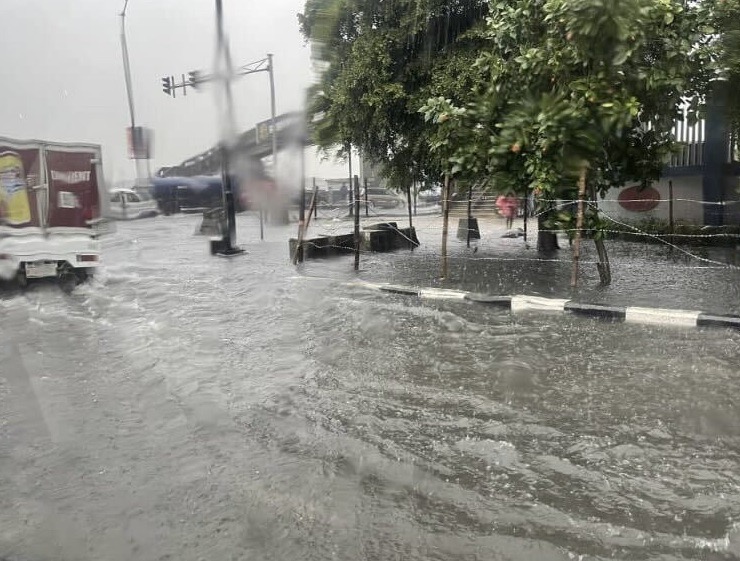
A heavy downpour has left the popular NNPC Housing Complex Road, also known as Ekpan Link Road, submerged in floodwater in Uvwie Local Government Area of Delta State.
The rainfall caused significant water accumulation along the busy road, affecting movement and creating difficulties for motorists and other road users.
The condition of the road has renewed concerns over flooding and drainage challenges in the area, particularly during periods of heavy rainfall.
Residents and commuters are expected to exercise caution while using the affected route as efforts to manage the situation continue.
-

 Social2 months ago
NAIS – Northern Nigeria/Abuja Chapter Honours Amb. Ebi Lagos with Award of Recognition
-
 Breaking3 months ago
2027: INEC Alegedly Announces Plans to Conduct Party Primaries in the Newly Created State Constituencies in Warri North and Warri Southwest LGAs, Others
-

 News1 month ago
PAP: EX-AGITATORS OF BOYLOAF CAMP DISTANCE SELVES FROM THEIR LEADERS ONSLAUGHT ON THE PAP ADMINISTRATOR
-

 Local News4 months ago
Just In: Ambassador Podoki Emerges APP Candidate for Burutu Constituency-I Assembly Seat
-

 Politics3 months ago
2027: Mulade Challenges NDC’s Substitution of His Party Candidacy, Demands ₦5 Billion Damages
-
 Breaking3 months ago
Tinubu Intervenes in Warri Delineation Dispute, Meets Ijaw, Urhobo and Itsekiri Leaders
-

 Local News4 months ago
INC: Group Faults Sponsored Attacks on Tompolo, Igbadiwei, Urges Unity in Ijaw Nation
-

 Entertainment2 months ago
JKing Logistics Coordinator Shed Light to Address Ijaw Music Wage Controversy