
News
DELTA STATE: PROF. BENEDICT BINEBAI’S REFLECTION ON THE BURUTU PORT


By Engr. Henry Yeigagha, JP
Prof. Benedict Binebai’s thoughtful reflection on Burutu Port arrives at a moment when history appears to be knocking once again on the doors of the Niger Delta. His description of Burutu as the “Port Island where history meets the future” is particularly apt, because Burutu is not suddenly acquiring maritime significance; rather, the world may be rediscovering a significance that history had already bestowed upon it.
The reported interest of the European Union in the proposed Sea Link linking Lagos through the coastal corridor to Burutu and onward along the River Niger through Onitsha towards Ajaokuta should therefore be viewed with both excitement and strategic seriousness. The proposal envisages a transportation network capable of shifting part of the movement of goods from roads to coastal and inland waterways, with barges, port infrastructure and logistics facilities forming important components of the corridor.
For Burutu, however, the real significance goes beyond being a convenient point between Lagos and the River Niger. The EU delegation has expressly acknowledged that the existing port may require substantial rehabilitation but also recognised Burutu’s strategic geographical position and its potential to support both maritime and inland-waterway transportation. That recognition should compel Nigerians to look at Burutu not as a forgotten riverine settlement awaiting rescue, but as a maritime asset awaiting intelligent reinvention.
This is where Prof. Binebai’s intervention deserves particular attention. The conversation must move beyond the language of “reviving” Burutu Port to the larger question of what kind of maritime city Burutu can become. A properly developed Burutu could sit at the meeting point of ocean commerce, coastal shipping, inland navigation, logistics, warehousing, marine services, fisheries, ship-related enterprises and other components of the blue economy.
There is also a deeper historical irony here. Burutu’s strategic importance is not a discovery of the twenty-first century. What appears today as a futuristic proposition is, in many respects, a return to an old geographical logic: waterways once connected communities, commerce and industries before the road became the dominant artery of national transportation. The proposed Sea Link could therefore represent not merely new infrastructure but a technological and economic reconnection with a geography Nigeria once understood more intuitively.
Yet enthusiasm must be accompanied by vigilance. Burutu must not become another place where grand announcements arrive before feasibility studies, promises before financing, and ceremonial visits before construction. The Nigerian Shippers’ Council already records concrete preparatory steps concerning Burutu, including an approved Outline Business Case and work towards a Final Business Case, while also noting a partnership framework involving the Port of Antwerp-Bruges for port diagnostic and Lower River Niger freight-corridor development. These are important institutional steps, but they must ultimately translate into measurable physical development.
The people of Burutu and the wider Niger Delta should therefore demand that the conversation encompasses more than the port itself. A maritime hub requires navigable channels, reliable transportation links, storage and logistics facilities, security, telecommunications, power, water, skilled manpower, marine services and a surrounding economy capable of sustaining the traffic that the port is expected to attract. Port development without supporting infrastructure would simply create another island of potential surrounded by an ocean of limitations.
There is also an enormous human-capital dimension. If Burutu is genuinely positioned as a maritime gateway, the opportunity should extend to maritime education, technical training, engineering, logistics, shipbuilding and repair, fisheries, environmental management and other specialised professions. The greatest legacy of the project should not merely be cranes standing beside the river; it should be a generation of young Niger Deltans equipped to participate meaningfully in the economy those cranes create.
Most importantly, Burutu must be allowed to benefit as a host community and as a strategic economic location. The community should not merely watch cargo pass through its waterways while value is created elsewhere. Local enterprise, employment, skills development, environmental protection and meaningful participation must form part of the architecture of the development. A port that enriches everyone except the community upon whose geography it depends would be an incomplete development story.
The proposed corridor also offers Nigeria an opportunity to rethink its relationship with its waterways. For decades, the country has placed extraordinary pressure on its roads while possessing an extensive network of rivers and coastal channels. The Sea Link concept, if found technically, economically and environmentally viable, could help diversify freight transportation and create alternative logistics routes. The EU has itself described the potential of the project in terms of shifting traffic from roads to rivers and coastal waterways while stimulating new business activity.
This is why Prof. Binebai’s voice deserves to be joined by those who understand that Burutu is bigger than a port project. It is a question of geography, history, commerce, regional integration and the future of the Niger Delta. The proposed corridor may begin as a transportation project, but its ultimate significance could be much broader if properly conceived and executed.
Burutu must therefore seize this moment; not with triumphalism, but with strategic preparation. The town must articulate its expectations, strengthen its institutions, prepare its human capital and insist that every stage of the proposed development is transparent, technically sound and economically meaningful. The rediscovery of Burutu should culminate in the transformation of Burutu.
History has already given Burutu the location. Geography has given it the waterways. The emerging international interest may provide another opportunity. What remains is for Nigeria to possess the vision, discipline and political will to convert geography into prosperity.

By staff Reporter Rukevwe Odeh
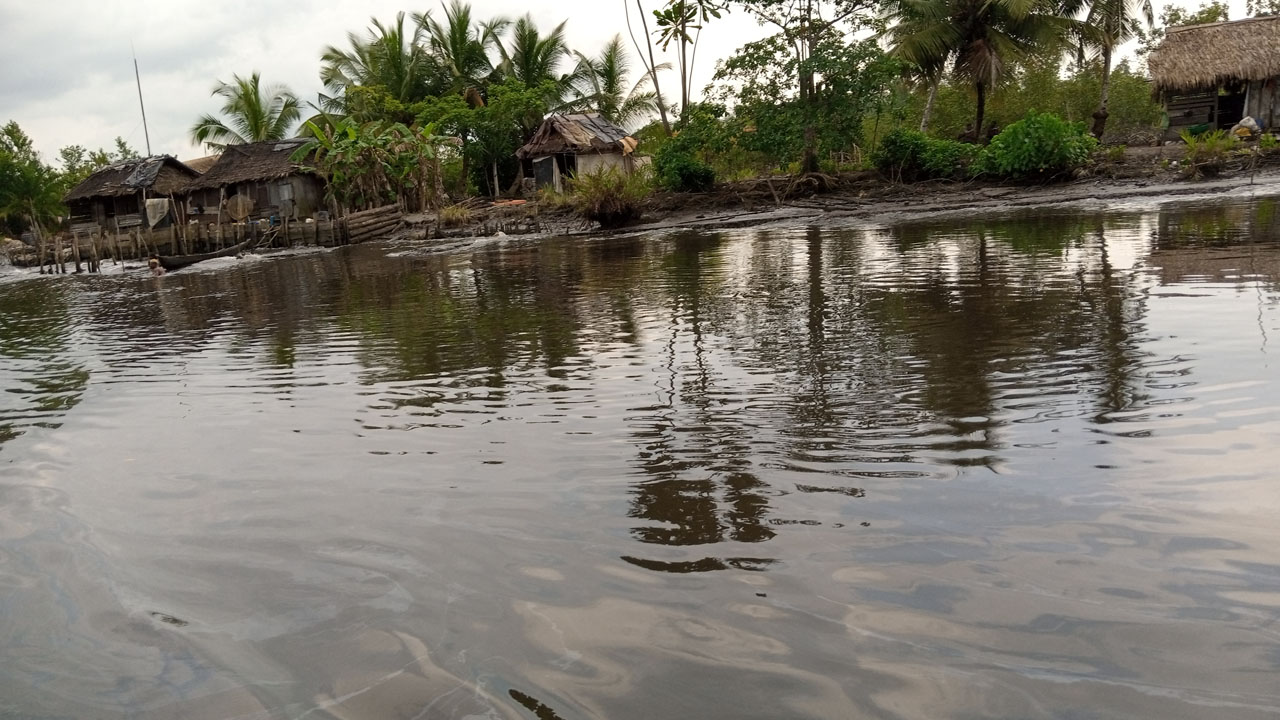
WARRI, Delta State — Stakeholders in Odidi Community, Warri South-West Local Government Area of Delta State, have reaffirmed Prince Preye Okrikpa as the Executive Chairman of the community amid an ongoing leadership dispute before the High Court of Justice in Warri.
The stakeholders also expressed support for the intervention of the Ijaw Youth Council (IYC) Worldwide over the prolonged crude oil spill affecting communities around Oil Mining Lease (OML) 42.
In a statement signed by Clement Numah, Secretary of Odidi Community; Oyateide Joseph Hitler, Youth President; and Nancy Ikpidi, Women Leader, the stakeholders said Okrikpa remains the recognised chairman under the community’s internal processes.
They stated that a rival executive led by Truston Gbenekama is the subject of a pending court case, identified as Suit No. W/102/2026, and urged the media, government institutions and other organisations to exercise caution in identifying individuals as the final leadership of the community while the matter remains before the court.
According to the stakeholders, the pending litigation means that the leadership question should be left for judicial determination rather than being settled through public statements or media activities.
They further stressed that the leadership dispute should not be allowed to overshadow the environmental challenges confronting residents of Odidi.
The stakeholders commended IYC President, Dr. Doubra Collins Okotete, and the council’s leadership for drawing attention to the reported oil spill and its consequences for residents and the environment.
They said the pollution had reportedly affected aquatic life, fishing activities and the livelihoods of people within the affected areas, describing the intervention as an important step toward drawing attention to the situation.
The stakeholders called on Heritage Energy Operational Services Limited (HEOSL), the Nigerian National Petroleum Company Limited (NNPCL), the National Oil Spill Detection and Response Agency (NOSDRA), the Nigerian Upstream Petroleum Regulatory Commission (NUPRC) and other relevant authorities to act on the reported spill.
Their demands include immediate containment and investigation of the incident, environmental assessment and remediation, as well as consideration of legitimate compensation claims in line with applicable laws and procedures.
They also urged authorities to engage properly constituted community representatives during the response while respecting the ongoing court proceedings.
The stakeholders maintained that affected residents should not be denied appropriate relief because of the unresolved leadership dispute.
They urged IYC to sustain its intervention on environmental issues affecting Odidi and other Niger Delta communities.
The group concluded that while the leadership question should be determined by the court, the reported environmental concerns require urgent attention from government agencies, regulators and the relevant oil-sector operators.

By Agregor Ebiboere Immaculate
Nigeria’s cement industry is grappling with low domestic demand and rising production costs, even as industry stakeholders say the sector has significant potential for expansion.
The Chief Executive Officer of HBM Nigeria, Lolu Alade-Akinyemi, disclosed this at the Experiencing Panterra event in Lagos, where he noted that Nigeria’s per-capita cement consumption remains below 150 kilogrammes.
According to him, the figure is significantly lower than the estimated 500kg recorded in Egypt and about 700kg in South Africa.
Alade-Akinyemi, who was represented at the event by HBM’s General Manager, Readymix Concrete, Emmanuel Ilaboya, said cement manufacturers are currently operating at between 20 and 30 per cent of their production capacity.
He explained that the low capacity utilisation reflects weak demand but also indicates that there is considerable room for growth in Nigeria’s cement market.
The HBM chief identified foreign exchange pressures and high energy costs as some of the major factors contributing to the rising cost of cement production in the country.
He said several critical inputs required for cement and concrete production are imported, while the cost of locally produced gas and other oil-related inputs is also influenced by dollar-denominated pricing.
Alade-Akinyemi further identified unreliable electricity supply from the national grid as another major challenge confronting manufacturers.
He noted that cement companies are often compelled to construct and operate their own power plants, requiring substantial capital investment and adding to overall production costs.
However, he said the relative stability of the naira exchange rate over the past year has provided some relief, allowing manufacturers to forecast costs more effectively and improve operational planning.
Meanwhile, the Chief Executive Officer of Panterra, Tayo Odunsi, called for greater transparency in Nigeria’s real estate sector.
Odunsi said the industry currently lacks a standard repository of reliable information that investors and other stakeholders can easily access when making decisions.
Also speaking, Panterra’s Chief Investment Officer, Ayo Ibaru, said currency stability, improved access to financing, security and growing investments from Gulf, Turkish and Asian investors are influencing the development of West Africa’s real estate market.
Ibaru identified the $15.6 billion Abidjan-Lagos Corridor as another major opportunity capable of stimulating investment across the region.
According to him, the corridor, which will link five countries, could drive the development of industrial zones, port cities, logistics infrastructure and real estate along its route.
Stakeholders at the event emphasised the need for policies and investments that will reduce production costs, strengthen infrastructure and unlock the huge growth potential in Nigeria’s construction and real estate sectors.
 By Agregor Ebiboere Immaculate;
- JAMB has opened a controlled process for candidates who have genuinely lost access to their registered phone numbers or email addresses.
- The service began on September 21 and is available only at designated CBT centres and applicable state offices.
- Applicants can use the service once, subject to strict identity and biometric verification.
The Joint Admissions and Matriculation Board (JAMB) has introduced a controlled procedure allowing candidates who have lost access to their registered phone numbers or email addresses to update their details.
The board announced the policy change on Monday through its official X account, stating that the service commenced on September 21,2026.
JAMB said candidates could access the service only at designated Computer-Based Test centres, including state offices where applicable.
JAMB said candidates could access the service only at designated Computer-Based Test centres, including state offices where applicable.
ATTENTION: Click “HERE” to join our WhatsApp group and receive News updates directly on your WhatsApp! Kk
JAMB said candidates could access the service only at designated Computer-Based Test centres, including state offices where applicable.
READ ALSO: JAMB, WAEC Fix ₦4,000 One-Off Fee For O’Level Result Verification
It explained that the arrangement was designed for candidates with genuine cases involving the loss of access to their registered GSM numbers, email addresses or both.
The board said applicants would be required to undergo strict identity and biometric checks before their details could be changed.
“Please note: The service can be accessed only once and is subject to strict identity and biometric verification,” JAMB said.
It urged candidates to visit only approved centres and avoid dealing with unauthorised individuals or channels.
“For your security, use only designated JAMB centres and avoid unauthorised persons or channels,” the board added.
JAMB said the announcement was part of its JCARE and JAMB Updates initiatives.
The board reiterated that the update facility could be used only once and that all requests would be subject to the prescribed verification process.
-

 Social2 months ago
NAIS – Northern Nigeria/Abuja Chapter Honours Amb. Ebi Lagos with Award of Recognition
-
 Breaking3 months ago
2027: INEC Alegedly Announces Plans to Conduct Party Primaries in the Newly Created State Constituencies in Warri North and Warri Southwest LGAs, Others
-

 News1 month ago
PAP: EX-AGITATORS OF BOYLOAF CAMP DISTANCE SELVES FROM THEIR LEADERS ONSLAUGHT ON THE PAP ADMINISTRATOR
-

 Local News4 months ago
Just In: Ambassador Podoki Emerges APP Candidate for Burutu Constituency-I Assembly Seat
-
 Politics3 months ago
2027: Mulade Challenges NDC’s Substitution of His Party Candidacy, Demands ₦5 Billion Damages
-
 Breaking3 months ago
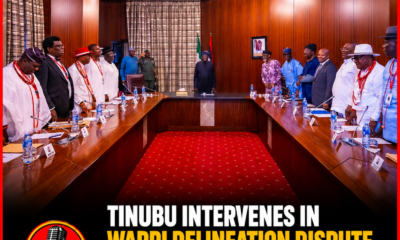
Tinubu Intervenes in Warri Delineation Dispute, Meets Ijaw, Urhobo and Itsekiri Leaders
-

 Local News4 months ago
INC: Group Faults Sponsored Attacks on Tompolo, Igbadiwei, Urges Unity in Ijaw Nation
-

 Entertainment2 months ago
JKing Logistics Coordinator Shed Light to Address Ijaw Music Wage Controversy