
News
SIX YEARS AFTER #ENDSARS, POLICE BRUTALITY ALLEGATIONS PERSIST AS LAWYERS DEMAND SWEEPING RE

By Reporter Agregor Ebiboere Immaculate
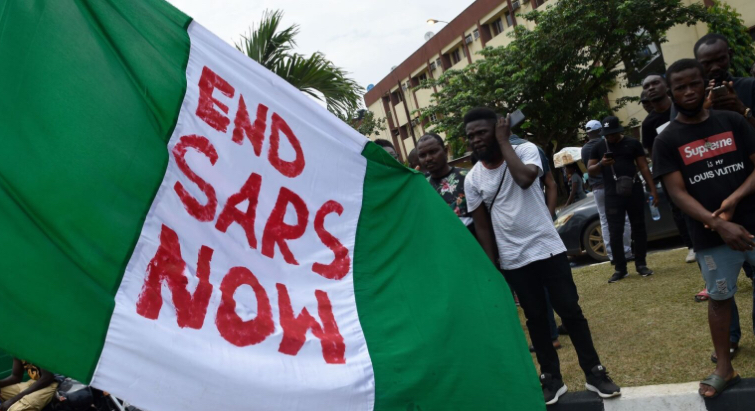
ABUJA, NIGERIA — Six years after the #EndSARS protests brought police brutality and misconduct to the forefront of national discourse, allegations of unlawful arrests, torture, extortion and excessive use of force continue to raise serious concerns about policing and human rights protection in Nigeria.
Despite the introduction of new legislation, revised police regulations and training initiatives, legal practitioners have expressed concern that the reforms have yet to translate into the fundamental changes Nigerians demanded during the October 2020 protests.
The #EndSARS demonstrations, which initially called for an end to abuses associated with the now-defunct Special Anti-Robbery Squad (SARS), later evolved into a broader movement demanding police accountability, respect for fundamental human rights and improved governance.
Following the protests, the Federal Government disbanded SARS and introduced measures aimed at reforming the Nigeria Police Force.
One of the major steps was the enactment of the Police Act 2020, which replaced the 1943 legislation and established accountability, transparency, professionalism, respect for human rights and community partnership as key principles of policing.
The Act also provides for Police Complaints Response Units to receive and address complaints of misconduct, including allegations involving deaths, serious injuries and other grave human rights violations.
The Police Service Commission (PSC) also retains responsibility for disciplinary matters involving police personnel and other constitutional oversight functions.
However, concerns over inadequate funding, weak accountability and poor implementation have continued to undermine the effectiveness of these reforms.
The Nigeria Police Force has announced a new training curriculum designed to improve officers’ professional competence, strengthen practical policing skills and prepare personnel to tackle emerging crimes involving technology and artificial intelligence.
Similarly, new Nigeria Police Regulations have been introduced to strengthen disciplinary procedures, improve recruitment and career development, enhance oversight mechanisms and reinforce human rights standards.
Despite these measures, critics argue that the central challenge remains the gap between policies on paper and their implementation in police operations.
ALLEGATIONS OF ABUSE RAISE FRESH CONCERNS
Recent allegations of police misconduct have further intensified calls for accountability.
Amnesty International alleged that officers attached to the Tiger Base anti-kidnapping unit of the Imo State Police Command were involved in extrajudicial killings, torture, ill-treatment of detainees and extortion.
The organisation said its investigations uncovered allegations that some detainees were removed from their cells and killed, while others were allegedly tortured to obtain confessional statements.
The allegations have renewed concerns about the protection of suspects in police custody and the need for independent investigations into reported human rights violations.
Similar concerns emerged during the August 2024 #EndBadGovernance protests, when Amnesty International alleged that security operatives used excessive force, including live ammunition and tear gas, against demonstrators.
The organisation reported that at least 24 people were killed during protests across several states, although the police and other authorities disputed aspects of the allegations.
The incidents have continued to fuel public debate over the use of force during demonstrations and the effectiveness of measures introduced to prevent a recurrence of abuses associated with the #EndSARS era.
LAWYER: UNLAWFUL ARRESTS, TORTURE AND EXTORTION REMAIN CONCERNS
The Convener of the Criminal Justice Network of Nigeria (CJNN), Nathaniel Ngwu, has warned that unlawful arrests, torture, extortion and excessive use of force remain major concerns in police operations six years after the #EndSARS protests.
Ngwu argued that the failure to integrate reforms into the daily operations of the police, alongside corruption, inadequate funding, poor training and weak accountability, had continued to frustrate efforts to improve policing in the country.
He maintained that meaningful reform must begin within the institution, with officers demonstrating a commitment to respecting the law and protecting citizens’ rights.
According to him, some police stations lack basic operational resources, including vehicles and writing materials, creating situations in which members of the public are allegedly asked to provide money to facilitate investigations and arrests.
He warned that such practices could undermine the independence of police investigations and create opportunities for extortion.
Ngwu also expressed concern over allegations that confessional statements are sometimes obtained through intimidation, noting that court proceedings to determine whether statements were made voluntarily highlight the importance of addressing alleged coercion during investigations.
The lawyer called for compulsory and regular human rights training for officers who interact directly with members of the public, particularly investigators and personnel responsible for obtaining statements.
He further advocated stronger independent oversight mechanisms to monitor police conduct, enforce court judgments and ensure that officers found responsible for misconduct face appropriate sanctions.
Ngwu stressed that existing laws prohibiting torture must be effectively implemented if the country is to achieve meaningful progress in police reform.
OK EKE CALLS FOR SEPARATION OF ATTORNEY-GENERAL AND JUSTICE MINISTER’S OFFICES
The Managing Partner of Chris Okeke & Co., Senior Advocate of Nigeria, Chris Okeke, has called for the separation of the offices of the Attorney-General and Minister of Justice as part of broader efforts to strengthen access to justice and address police brutality.
Okeke argued that the concentration of responsibilities in the two offices could undermine the effective administration of justice and the protection of citizens’ rights.
He identified poverty, limited awareness of legal rights, gaps in the law and poor enforcement of existing provisions as major obstacles confronting victims of police misconduct.
The senior lawyer also highlighted provisions of the Administration of Criminal Justice Act requiring magistrates to visit police divisions within their jurisdictions at specified intervals to monitor detention practices and ensure that police powers are exercised appropriately.
However, he raised concerns over reported instances of inadequate cooperation with magistrates, stressing the need for stronger enforcement of existing safeguards.
Okeke also called for reforms to police recruitment and the process of appointing the Inspector-General of Police, emphasising the importance of character, temperament, background, discipline and professional training in selecting officers.
He maintained that effective accountability mechanisms were necessary to ensure that police personnel who violate the law are held responsible for their actions.
NWOBI ADVOCATES SERVICE-ORIENTED POLICING AND FASTER JUSTICE DELIVERY
Also speaking on the need for comprehensive reform, the Principal Partner at Tower of David Solicitors & Advocates, Chuks Nwobi, has urged the Nigeria Police Force to abandon what he described as a colonial-era policing mentality and embrace a culture centred on service, professionalism and respect for human rights.
Nwobi argued that policing in a democratic society should prioritise the protection of citizens rather than coercion, intimidation or the suppression of lawful activities.
He identified delays in the administration of justice as another major challenge, noting that congested courts and prolonged proceedings often discourage victims of human rights violations from seeking legal remedies.
The lawyer proposed that serious human rights cases, particularly those involving unlawful detention, torture and police brutality, should receive accelerated judicial attention, suggesting a target of three to six months for their determination, subject to constitutional requirements and fair-hearing guarantees.
He also called for measures to reduce unnecessary adjournments and review the workload of appellate courts, including the Supreme Court.
On accountability, Nwobi maintained that officers accused of misconduct must be properly investigated and sanctioned where the allegations are substantiated.
He stressed that laws prohibiting unlawful arrests, torture, extortion and arbitrary detention would have little impact without effective enforcement and meaningful consequences for proven violations.
The lawyer further called for sustained public education on fundamental human rights and improvements in police recruitment procedures to ensure that officers possess the integrity, sound judgment and psychological suitability required for law enforcement.
CALL FOR ACTION BEYOND LEGISLATION
As Nigeria reflects on the sixth anniversary of the #EndSARS protests, the continuing allegations of police misconduct have renewed calls for the authorities to move beyond policy declarations and ensure that reforms produce measurable changes in police operations.
The concerns raised by legal practitioners centre on the need for adequate funding, professional training, independent oversight, transparent investigations and effective punishment for proven misconduct.
The reform debate also highlights the importance of ensuring that citizens can report abuses without fear of intimidation and access justice without facing unnecessary financial or institutional barriers.
While the introduction of new laws and regulations represents an important step, the ultimate test of police reform remains the extent to which officers respect the rights of Nigerians in their everyday interactions.
For many advocates, the demand that emerged from the #EndSARS protests remains clear: a police institution that protects the people, respects the law and remains accountable to the citizens it is established to serve.
IDUWINIVOICE TV — YOUR VOICE, YOUR STORY.


By staff Reporter Rukevwe Odeh
The Tompolo-led PBAT Door-to-Door Movement is set to take its mobilisation campaign for President Bola Tinubu’s re-election to Ekiti State, with a rally scheduled for Thursday, October 29, in Ado-Ekiti.
The programme, billed for the Ekiti Parapo Pavilion, is expected to feature the distribution of campaign vehicles and materials to strengthen grassroots mobilisation ahead of the 2027 presidential election.
The movement is led by its Grand Patron, High Chief Government Oweizide Ekpemupolo, popularly known as Tompolo, and is extending its activities to Ekiti following the inauguration of its structures in Plateau State on Wednesday.
The Plateau event, held in Jos, also featured the unveiling of 25 vehicles to support the movement’s outreach activities.
The Ekiti rally forms part of the movement’s ongoing efforts to expand its organisational presence across states and support the campaign for President Tinubu and Vice President Kashim Shettima ahead of the 2027 general election.
Through its door-to-door approach, the movement aims to strengthen its grassroots network and coordinate campaign activities at the community level.

By staff Reporter Rukevwe Odeh
Union Confers ‘Ukodo the Pace Setter’ Title on Governor, Urges Workers to Reciprocate Gesture
The Trade Union Congress (TUC), Delta State Council, has honoured Governor Sheriff Oborevwori with the title “Ukodo the Pace Setter” in recognition of his administration’s decision to institutionalise the payment of 13th-month salaries to public servants.
The union said the initiative would provide additional financial support for workers and their families amid rising living costs and prevailing economic challenges.
In a statement signed by the state chairman, Comrade Wilson Asekutu, the TUC described the legal backing for the additional salary as a demonstration of the government’s recognition of workers’ contributions to the growth and development of Delta State.
According to the labour organisation, the decision reflects the governor’s commitment to policies that deliver tangible benefits to workers and improve their welfare.
The union noted that employees who feel valued and adequately supported are more likely to remain motivated, productive and committed to their responsibilities.
It also reaffirmed its readiness to collaborate with the state government in promoting good governance, sustainable development and improved living conditions for workers and residents.
However, the TUC stressed that its engagement with the government would continue to be guided by mutual respect, constructive engagement and social dialogue.
The labour body urged the Oborevwori administration to sustain consultations with organised labour and implement policies that would strengthen workers’ purchasing power, improve productivity and protect their dignity.
It also called on public servants to reciprocate the government’s gesture through dedication, discipline and improved service delivery.
“Your Excellency, you have taken a bold step in workers’ welfare. You have set a pace. Ukodo the Pace Setter,” Asekutu said on behalf of the union’s leadership and members.
The recognition underscores the TUC’s appreciation of the governor’s decision to provide additional financial benefits to public servants and its call for sustained government-labour cooperation.

By staff Reporter Rukevwe Odeh
The Federal Government has paid ₦1.23 trillion out of the ₦3.3 trillion owed to electricity generation companies as part of efforts to address financial challenges in the power sector and improve electricity supply across the country.
The Minister of Power, Joseph Tegbe, disclosed this on Wednesday while briefing State House correspondents after the Federal Executive Council meeting presided over by President Bola Tinubu in Abuja.
Tegbe explained that the payment was aimed at easing liquidity challenges affecting the electricity industry, particularly those linked to gas supply to power plants.
He said the government was also working to expand Nigeria’s electricity transmission capacity from approximately 5,000 megawatts to 19,000 megawatts within the next two years.
According to the minister, the Federal Executive Council had approved three major transmission infrastructure projects to strengthen the national grid and improve electricity delivery.
The projects include the construction of underground and overhead double-circuit transmission lines at the Katampe Transmission Substation in Abuja, the supply of three high-capacity power transformers for the Egbin Transmission Substation serving the Lagos axis, and the upgrade of the 35.6-kilometre McPherson–Shagamu transmission line.
Tegbe said the projects were part of a broader strategy to improve the capacity and reliability of Nigeria’s electricity transmission network.
He added that the government had commenced a technical audit of power infrastructure across three major energy zones to identify ageing facilities requiring repairs, replacement or upgrades.
The zones include the Lagos–Ibadan axis, the Abuja–Kaduna–Karu corridor, and the Benue–Enugu–Port Harcourt corridor.
The minister noted that the Lagos–Ibadan axis alone accounts for approximately 50 per cent of the country’s electricity demand, making infrastructure improvements in the area particularly important.
He also disclosed plans to develop an east-west super grid connecting Sokoto through Funtua, Abuja, Akwanga and Benue to Epe in Lagos State.
The proposed project is expected to strengthen electricity transmission links between different parts of the country and enable more power to reach consumers.
In another development, President Tinubu has directed the Ministry of Power to facilitate the clearance of more than 300 containers of electricity equipment abandoned at ports nationwide, some for as long as 20 years.
Tegbe said technical experts would inspect the containers to determine which equipment remained functional and could be deployed to support the national grid. Obsolete materials would be disposed of appropriately.
He further announced that a new National Control Centre was under construction in Osogbo, Osun State, to replace the existing facility, which has been in operation for 64 years.
The new centre is expected to improve real-time monitoring and coordination of the national electricity grid.
The Federal Government said the measures were part of its broader efforts to address longstanding challenges in the electricity sector, strengthen transmission infrastructure and improve power supply to Nigerian households and businesses.
-

 Social3 months ago
NAIS – Northern Nigeria/Abuja Chapter Honours Amb. Ebi Lagos with Award of Recognition
-
 Breaking5 months ago
2027: INEC Alegedly Announces Plans to Conduct Party Primaries in the Newly Created State Constituencies in Warri North and Warri Southwest LGAs, Others
-

 News2 months ago
PAP: EX-AGITATORS OF BOYLOAF CAMP DISTANCE SELVES FROM THEIR LEADERS ONSLAUGHT ON THE PAP ADMINISTRATOR
-

 Local News5 months ago
Just In: Ambassador Podoki Emerges APP Candidate for Burutu Constituency-I Assembly Seat
-
 Politics5 months ago
2027: Mulade Challenges NDC’s Substitution of His Party Candidacy, Demands ₦5 Billion Damages
-
 Breaking5 months ago
Tinubu Intervenes in Warri Delineation Dispute, Meets Ijaw, Urhobo and Itsekiri Leaders
-
 Breaking5 months ago
Confirmed: INEC Announces Implementation of Warri Delineation Report, Restores Other Constinuencies
-

 Entertainment4 months ago
JKing Logistics Coordinator Shed Light to Address Ijaw Music Wage Controversy