Editorial/Oppion
Opinion: Delta South Needs Results, Not Experiments — Why APC Delegates Should Stand With Senator Joel-Onowakpo Thomas


Today’s APC senatorial primary election in Delta South is more than an internal party exercise. It is a defining moment that will determine whether the district consolidates on growing political influence and developmental progress or returns to the uncertainties of untested representation.
At moments like this, delegates must look beyond emotions, political noise, and temporary alignments. They must think deeply about the future of Delta South, the stability of the APC, and the importance of retaining a lawmaker who has already begun building strong institutional relevance for the district at the national level.
In politics, effective representation is not measured by speeches alone. It is measured by access, influence, visibility, legislative impact, empowerment, and the ability to deliver practical benefits to the people. By these standards, Senator Joel-Onowakpo Thomas has earned a strong case for continuity.
For the first time in a long while, Delta South has a senator occupying a strategic national position as Chairman of the Senate Committee on Local Content — a highly influential committee directly connected to the oil and gas industry, the economic backbone of the Niger Delta. This position places Delta South at the center of discussions surrounding employment opportunities, indigenous participation, energy investments, and local economic growth.
Delegates must therefore ask a fundamental question: why should Delta South surrender such strategic advantage at a time when the district is beginning to gain stronger visibility within national politics?
Leadership is also about tangible impact. Within a short period, Senator Joel-Onowakpo has demonstrated that public office should produce direct benefits for ordinary citizens. Across communities in Delta South, his empowerment programmes have supported traders, fishermen, artisans, farmers, women, and youths with tools and starter packs aimed at improving livelihoods and encouraging self-reliance.
His sponsorship of the Federal Medical Centre, Oleh Bill further reflects a lawmaker who understands the developmental needs of the people. Healthcare remains one of the greatest challenges facing many communities, and the establishment of a federal medical institution in Delta South represents a major long-term investment in human welfare.
More importantly, Senator Joel-Onowakpo’s politics has largely remained issue-based, inclusive, and stabilizing. At a time when ethnic and political divisions often threaten unity within Delta South, he has maintained a leadership approach that accommodates different interests and promotes wider participation across the district.
The APC in Delta South must also think strategically ahead of the 2027 general elections. Winning elections today requires candidates with broad acceptability, political maturity, grassroots structure, and proven performance. The opposition will certainly field strong candidates, and APC cannot afford unnecessary internal fragmentation caused by abandoning a performing senator who already enjoys visibility and growing support across the district.
Changing leadership without clear justification often weakens political structures and disrupts continuity in governance. Experience remains valuable in the National Assembly, especially in a system where ranking, committee influence, and established networks determine access to opportunities and federal presence.
This primary election therefore presents APC delegates with two options: to consolidate on an already established foundation or to begin another uncertain political experiment.
For many observers, the safer and more productive path is clear.
Delta South already has a senator with legislative experience, growing national influence, grassroots connection, and measurable achievements. Rather than interrupting that trajectory, delegates should strengthen it.
As APC delegates cast their votes today, they must remember that their decision will shape not only the future of the party but also the developmental direction of Delta South in the years ahead.
This is the time for wisdom, unity, and continuity.
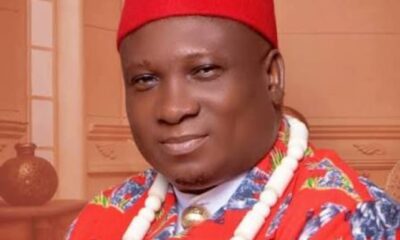
This is the time to return Senator Joel-Onowakpo Thomas.





Editorial/Oppion
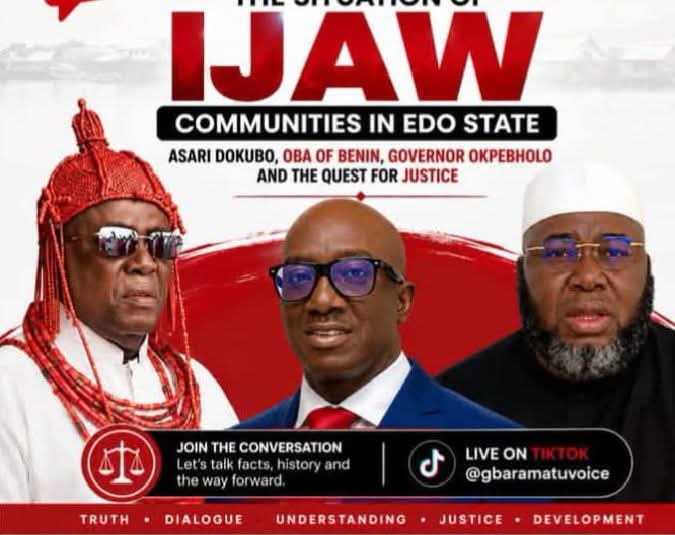
EDO STATE MARGINALIZATION: WHEN IGNORANCE BECOMES A GEOGRAPHER: THE FUTILITY OF ERASING THE IJAW FOOTPRINTS IN EDO STATE ~ “How Historical Illiteracy, Ethnic Prejudice, and the Arrogance of Ignorance Continue to Wage War Against Facts”
By Engr. Yeigagha Henry, JP
There is a peculiar arrogance that often accompanies ignorance. It is the confidence of a man who has never opened a history book, never listened to the elders, never studied a map beyond political boundaries, yet speaks with the certainty of an eyewitness to centuries he never lived. Such was the unfortunate display by one social media commentator who not only dismissed the existence of Ijaw communities in Edo State but chose to garnish historical illiteracy with ethnic insults.
History, however, has never surrendered to loud voices. Rivers do not reverse their courses because someone shouts at them. Neither do ancient peoples disappear because a keyboard warrior wishes them away. Civilizations are not deleted by opinion; they are preserved by evidence.
To suggest that there are no Ijaw people in Edo State is not merely an error; it is an assault on documented history. Long before Nigeria became a political entity, and long before today’s state boundaries were imagined, the Ijaw occupied strategic settlements along the Benin River and adjoining Atlantic coast. Their presence is neither accidental nor recent. It predates colonial cartographers who merely drew lines across landscapes already inhabited by peoples with identities, languages, and institutions.
The Ijaw of Edo State are not ghosts conjured by political convenience. They are organized into historic kingdoms and clans such as Egbema, Olodiama, Furupagha, and Ukomu. Communities including Inekorogha, Ayakoroma, Ofoniama (popularly called Ofunama), Gelegelegbene (Gelegele), Ikoro, Siluko, Gbelekanga, Binidogha, Itagbene, Gbelebu, Okomu-Ijaw and several others have existed for generations, maintaining their language, customs, traditional institutions and cultural identity. Their history is preserved not merely in oral traditions but also in colonial records, ethnographic studies, and scholarly literature.
It is, therefore, astonishing that in the twenty-first century, when information travels at the speed of light, some still attempt to settle historical questions with emotional outbursts instead of evidence. Denial has never been a substitute for scholarship. The inability to know history does not invalidate history.
Equally disturbing was the reckless attempt to portray the developmental challenges of Bayelsa State as proof of intellectual deficiency among the Ijaw people. Such reasoning is as shallow as it is dangerous. If underdevelopment defines an ethnic group, then no Nigerian nationality would escape condemnation. Corruption has never asked its victims for their tribe before striking. It has impoverished communities from Sokoto to Calabar, from Kano to Port Harcourt, from Lagos to Maiduguri. To ethnicize governance failure is to misunderstand Nigeria itself.
If one is searching for examples of communities struggling against political domination or the burden of historical prejudice, the conversation should not begin and end with the Ijaw. The contemporary struggle of the Ijaw in Edo State echoes a broader pattern of minority agitation for recognition, inclusion, and equitable participation in governance. Many have drawn parallels with the historical grievances expressed by sections of Esan society regarding political power and representation within Edo State. Whether one agrees entirely with such comparisons or not, the underlying lesson is unmistakable: democracy loses its soul when any group is treated as though its history, identity, or voice matters less than that of others.
It is equally ironic to ridicule Bayelsa State as though underdevelopment was an ethnic inheritance. Bayelsa is one of Nigeria’s youngest states, created only in 1996, and its developmental journey is still unfolding. Benin City, by contrast, is one of Africa’s oldest and most celebrated civilizations, admired across the world for its rich history, artistic brilliance, and sophisticated ancient monarchy. Yet, like many Nigerian cities, it continues to grapple with infrastructure deficits and the corrosive effects of corruption and poor governance. The lesson should be obvious to every honest observer: corruption is not an Ijaw disease, a Bini disease, or the burden of any single ethnic nationality. It is a Nigerian affliction. To mock Bayelsa while overlooking the developmental challenges of a far older city is not reasoned criticism; it is selective outrage clothed in ethnic prejudice.
Yes, the Niger Delta deserves better. Yes, Bayelsa deserves more than abandoned projects and squandered opportunities. Yes, leaders, Ijaw or otherwise, must be held accountable for every kobo entrusted to them. But accountability is an individual and institutional obligation, not an ethnic verdict. One does not prosecute an entire people because some of their leaders have disappointed them. That is prejudice masquerading as analysis.
Curiously, those who accuse the Ijaw of “claiming everybody” seem unaware that history itself has already made the introductions. Identity is not conferred by social media approval. It is inherited through ancestry, language, culture, and historical continuity. Whether one accepts it or not, the rivers remember those who first paddled them, and the mangroves still whisper the names of the people who nurtured them long before modern Nigeria emerged.
Perhaps what Nigeria needs today is less ethnic mockery and more historical literacy. We need citizens who consult archives before attacking identities, who interrogate facts before broadcasting falsehoods, and who understand that diversity is not a threat but one of the country’s oldest inheritances.
The Ijaw presence in Edo State requires no validation from internet polemicists. It has already been validated by history, geography, scholarship, and time. Those who genuinely seek truth will find abundant evidence. Those who seek only to insult will eventually discover that history is remarkably stubborn. It refuses to be rewritten by ignorance.
In the end, rivers possess a wisdom unknown to deserts. They flow quietly, nourishing civilizations without announcing their importance. So, too, have the Ijaw communities of Edo State endured: unmoved by denial, sustained by history, and affirmed by generations whose footprints neither insults nor misinformation can wash away. The tide of history can not be reversed by the pebbles of ignorance. Those who seek truth will find it in the archives, in the rivers, in the memories of the elders and in the enduring identity of a people whose roots run as deep as the waters that have sustained them for centuries.
Editorial/Oppion
EDITORIAL: Should It Really Be This Difficult for a President to Make His Academic Records Public?
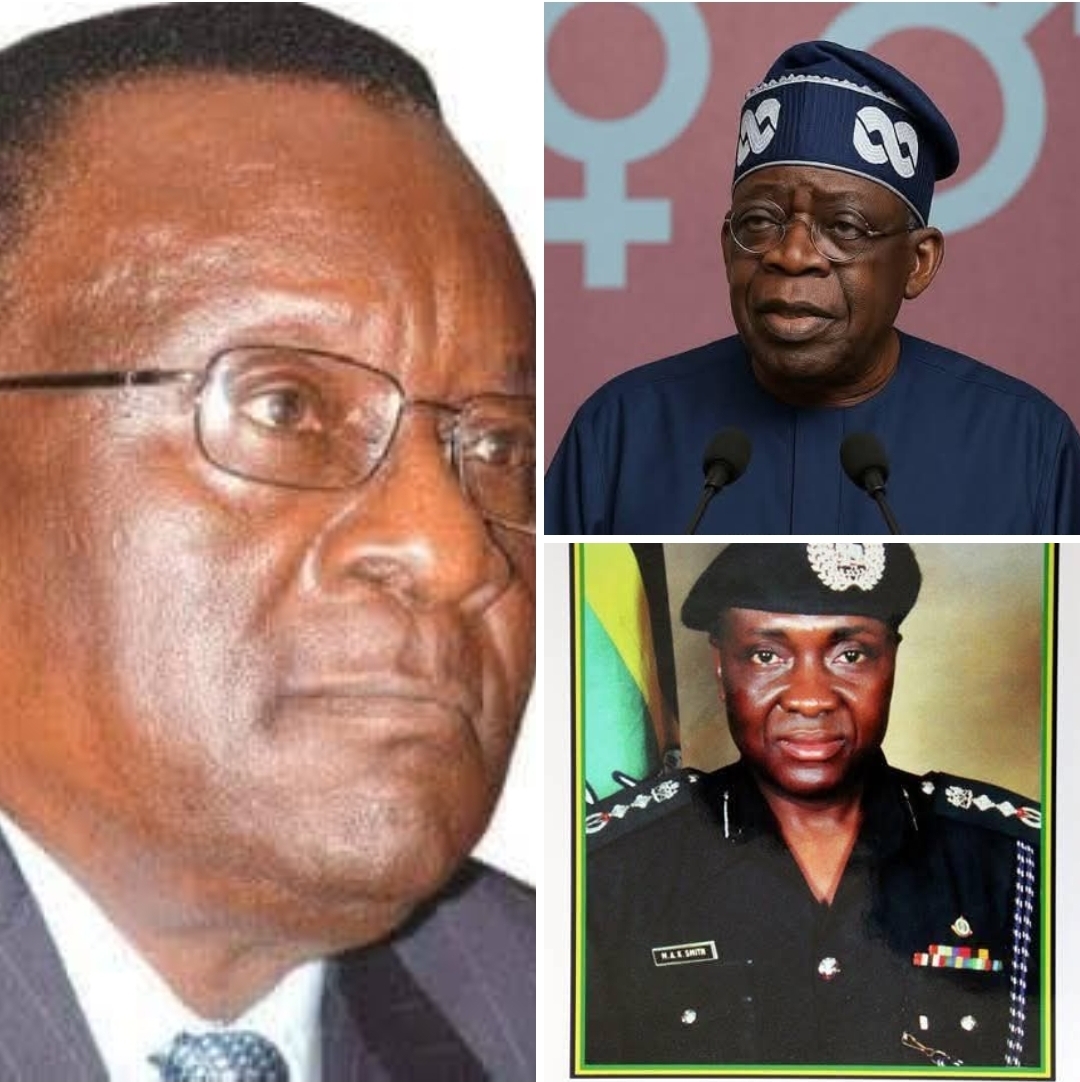
The Editorial Board
There are certain questions that should never become national controversies in a constitutional democracy. One of them is a simple request for a public office holder to disclose and verify his academic history.
Academic records are among the easiest documents to authenticate. Schools maintain archives. Examination bodies preserve records. Alumni associations exist. In most democracies, questions about a candidate’s educational background are resolved quickly through official documentation rather than prolonged political and legal battles.
Yet, in Nigeria, the issue of President Bola Ahmed Tinubu’s academic credentials has remained one of the country’s most enduring political controversies.
What makes the matter particularly remarkable is that efforts to subject the issue to legal scrutiny did not begin recently. More than two decades ago, the late legal icon, sought to compel the Nigeria Police to investigate allegations relating to documents submitted by then Lagos State Governor, to the electoral authorities.
Although the litigation eventually reached the Supreme Court, the significance of the judgment extended beyond the personalities involved. The apex court clarified that while Section 308 of the Constitution shields certain public office holders from prosecution during their tenure, it does not prevent law enforcement agencies from investigating alleged offences. The court further held that the police have a statutory duty to investigate allegations of crime and, where they fail to perform that duty, they may be compelled through an order of mandamus.
That landmark decision has since become an important constitutional authority on the distinction between investigation and prosecution.
Yet, despite that legal clarification, the underlying controversy never truly disappeared.
Instead, it resurfaced with greater intensity between 2022 and 2024 during and after the presidential election.
Questions surrounding President Tinubu’s academic records dominated public discourse. Litigation in Nigeria and proceedings in the United States brought renewed attention to documents connected with his educational history. Public interest grew as records from were produced pursuant to court proceedings, while political opponents and supporters advanced sharply different interpretations of the evidence.
Supporters maintained that the President satisfied every constitutional requirement for office and argued that the controversy was politically motivated. Critics, on the other hand, insisted that inconsistencies in certain documents warranted deeper scrutiny and, if established, could raise questions extending beyond politics into possible criminal liability relating to false declarations or document falsification.
Despite years of litigation, investigations, public debates and extensive media coverage, the controversy has continued to generate more questions than answers in the minds of many Nigerians.
This naturally leads to a broader issue.
Should it really be this difficult for a President of a democratic nation to make his academic history publicly clear?
Transparency is not merely a legal obligation; it is a cornerstone of public trust. The higher the office, the higher the expectation that every aspect of a public officer’s qualifications should withstand public examination.
At the same time, fairness demands that allegations should not substitute for proof. In every constitutional democracy, suspicion alone cannot amount to guilt. Equally, public office should never shield legitimate questions from reasonable scrutiny.
The Constitution of the Federal Republic of Nigeria prescribes minimum educational qualifications for presidential candidates. The threshold itself is relatively modest. Therefore, one legitimate question is whether academic qualifications should continue to occupy such a central place in political contests if the constitutional requirement has been met.
On the other hand, perhaps the issue has never been merely about possessing certificates.
Perhaps the real concern is whether every declaration made to electoral authorities is truthful and authentic. If a candidate is alleged to have submitted false information or forged documents, the issue ceases to be one of academic achievement and becomes one of legal accountability, because false declaration, forgery and impersonation are criminal allegations under Nigerian law if established by competent evidence in a court of law.
Twenty-four years after Gani Fawehinmi’s landmark legal victory clarified the powers of investigators, Nigerians continue to debate essentially the same questions.
The unanswered issue, therefore, is not simply whether President Tinubu attended a particular institution or possesses a particular qualification.
The larger question remains:
Is academic qualification itself the real issue under the Nigerian Constitution, or has the controversy endured because the claims made about those qualifications have been alleged by critics to involve possible criminal falsification or impersonation if ever proven?
That question remains part of Nigeria’s continuing constitutional conversation—and one that history, transparency, and the rule of law may ultimately answer.

By Divine Perezide
The Ijaw Peoples Development Initiative (IPDI) has urged political actors, stakeholders, and members of the public to support the Administrator of the Presidential Amnesty Programme (PAP), High Chief Dennis Otuaro, PhD, describing ongoing criticisms against him as unnecessary distractions capable of undermining Delta State’s opportunity for effective representation at the federal level.
In a statement signed by its President, Comrade Ozobo Austin, the organisation stressed that Otuaro’s appointment by President Bola Ahmed Tinubu represents a significant milestone for Delta State and the Niger Delta, calling on all interested parties to place regional development above personal or political interests.
According to IPDI, the current leadership of the Presidential Amnesty Programme offers Delta State a unique opportunity to contribute meaningfully to the implementation of federal initiatives aimed at sustaining peace, promoting human capital development, and strengthening post-amnesty interventions across the Niger Delta.
The group maintained that Otuaro has remained focused on the administration of the programme, citing the regular payment of beneficiaries’ stipends, efforts to clear scholarship obligations, expansion of vocational and skills acquisition initiatives, and programmes designed to enhance the reintegration of ex-agitators into productive society.
While acknowledging that public office holders should be open to scrutiny, IPDI advised critics to present evidence-based concerns through appropriate channels instead of engaging in what it described as campaigns driven by misinformation and media sensationalism.
The organisation also clarified that issues relating to any review of beneficiaries’ stipends fall within the constitutional powers of the Presidency, noting that such decisions are beyond the unilateral authority of the PAP Administrator.
IPDI further appealed for unity among stakeholders, arguing that a successful tenure for Otuaro would strengthen development efforts not only in Delta State but across the wider Niger Delta region.
The group explained that its “Leave Otuaro Alone” campaign is not intended to exclude any state or individual from federal opportunities, but rather to encourage solidarity and protect Delta State’s legitimate opportunity to contribute to national development through one of its sons occupying a strategic federal office.
It concluded by urging all stakeholders to prioritise peace, cooperation, and constructive engagement in the overall interest of the Presidential Amnesty Programme and the continued development of the Niger Delta.
-

 Social2 months ago
NAIS – Northern Nigeria/Abuja Chapter Honours Amb. Ebi Lagos with Award of Recognition
-
 Breaking3 months ago
2027: INEC Alegedly Announces Plans to Conduct Party Primaries in the Newly Created State Constituencies in Warri North and Warri Southwest LGAs, Others
-

 News1 month ago
PAP: EX-AGITATORS OF BOYLOAF CAMP DISTANCE SELVES FROM THEIR LEADERS ONSLAUGHT ON THE PAP ADMINISTRATOR
-

 Local News4 months ago
Just In: Ambassador Podoki Emerges APP Candidate for Burutu Constituency-I Assembly Seat
-
 Politics3 months ago
2027: Mulade Challenges NDC’s Substitution of His Party Candidacy, Demands ₦5 Billion Damages
-
 Breaking3 months ago
Tinubu Intervenes in Warri Delineation Dispute, Meets Ijaw, Urhobo and Itsekiri Leaders
-
 Local News4 months ago
INC: Group Faults Sponsored Attacks on Tompolo, Igbadiwei, Urges Unity in Ijaw Nation
-

 Entertainment2 months ago
JKing Logistics Coordinator Shed Light to Address Ijaw Music Wage Controversy