
News
Oborevwori’s Infrastructure Drive Transforms Delta, Expands Economic Opportunities

By Rukevwe Odeh
Infrastructure has become a defining feature of governance in Delta State under Governor Sheriff Oborevwori. Across urban centres, farming communities, and riverine settlements, the administration’s investments in roads, bridges, and transportation networks are altering the physical and economic landscape of the state.
Rather than being measured solely by policies and political promises, the impact of governance is increasingly visible in completed projects that are improving connectivity, easing transportation challenges, and creating new opportunities for economic growth.
From the communities of Ughelli South to the agricultural hubs of Ndokwa Nation and the commercial corridors of Warri, the Oborevwori administration has continued to expand its infrastructure footprint. These efforts align with the governor’s MORE Agenda, which is focused on delivering practical development outcomes for residents.
The state recently received further recognition when it was ranked the second-best governed state in Nigeria in the 2025 Commonwealth Institute of Advanced and Professional Studies Governance Performance Index. The ranking, which placed Delta behind only Kaduna State, highlighted achievements in governance, public service delivery, and infrastructure development.
For many residents, however, the effects of governance are more evident in their daily experiences than in performance reports. Improved roads, new bridges, and enhanced transportation links are providing direct benefits to communities that previously struggled with poor infrastructure.
A recent example is the commissioning of three major road projects in Ndokwa Nation, covering nearly 18 kilometres. The projects include the Obi-Ibabu/Ibabu Road in Onicha-Ukwuani, Phase One of the Utagba-Uno/Ndemili Road, and the Etua-Ukpo, Etua-Etiti, and Etua-Oliogo road network.
For years, inadequate road infrastructure in the area hindered movement, increased transportation costs, and limited access to essential services and markets. The newly completed roads are expected to improve mobility and stimulate economic activity throughout the region.
Beyond improving transportation, the projects reflect a broader strategy aimed at ensuring that rural and semi-urban communities benefit from development initiatives. Better connectivity is expected to facilitate trade, support agricultural production, and encourage investment.
Speaking during the inauguration of the projects, Governor Oborevwori described the roads as vital infrastructure capable of promoting commerce and supporting community development. He also directed that preparations begin for the next phase of the Utagba-Uno/Ndemili Road project, demonstrating the administration’s focus on continuity and long-term planning.
Stakeholders have welcomed the developments. The political advocacy group Ndokwa Forward described the projects as strategic investments capable of strengthening agriculture, boosting commercial activities, improving transportation, and enhancing the quality of life for residents.
Another landmark project attracting attention is the Orere Bridge in Ughelli South Local Government Area. For decades, residents of Orere and surrounding communities depended mainly on canoes to cross the Orere River. While the river served as a key transportation route, it also restricted access and economic expansion.
The situation has changed significantly with the commencement of vehicular movement across the bridge. Many residents view the development as historic, as it marks the first time vehicles can conveniently access the community by road.
The project comprises a 500-metre bridge across the river as well as more than four kilometres of connecting roads. Although construction is still ongoing and has surpassed 82 percent completion, the opening of the bridge to traffic represents a major achievement.
The benefits are expected to extend beyond transportation. Improved access is likely to encourage investment, support local businesses, improve access to healthcare and education, and create opportunities for tourism and broader economic development.
Commissioner for Works (Highways and Urban Roads), Reuben Izeze, described the milestone as a significant breakthrough for the area. The project has also demonstrated the capability of indigenous contractors to execute technically demanding infrastructure projects successfully.
Meanwhile, work continues on other strategic projects across the state. Rehabilitation of the first five kilometres of the Trans-Warri/Ode-Itsekiri Bridges access road is approaching the halfway mark, while the Okowa Crescent project in Ughelli is nearing completion.
The Trans-Warri access road is considered particularly important because of its role in connecting communities and supporting one of the state’s most ambitious bridge projects. Recognising its importance, the government approved rehabilitation works after years of deterioration caused by heavy usage.
The intervention reflects an approach that combines the construction of new infrastructure with the maintenance and preservation of existing assets. This strategy is intended to maximise public investment and ensure sustainability.
Similarly, the near completion of Okowa Crescent is expected to improve mobility and contribute to urban renewal efforts within Ughelli.
Collectively, these projects are helping to create a more connected Delta State, reducing barriers between communities and expanding access to economic opportunities.
Infrastructure development remains a central element of the administration’s governance agenda. At the same time, the government has maintained that prudent financial management is necessary to sustain development initiatives. The ability to undertake multiple projects while maintaining fiscal responsibility has become one of the defining features of the administration.
Beyond roads and bridges, the government has also focused on addressing other development challenges. Recent assurances regarding the restoration of electricity in affected Ndokwa communities highlight efforts to improve critical services and support economic activities.
Looking ahead, several major projects remain in the pipeline. These include the proposed Aboh-Akarai Road and bridge across the Okiri River, the Emu-Ebendo-Iyasele-Ashaka Road, the access road to the Kwale Industrial Park, and the Emu-Beneku Road, among others.
As these projects progress, they are expected to further strengthen connectivity, support economic growth, and improve living standards across the state.
Ultimately, the significance of Delta State’s ongoing infrastructure drive extends beyond the number of roads built or bridges completed. Its lasting impact will be measured by improved livelihoods, expanded economic opportunities, and stronger connections between communities.
From Ndokwa Nation to Orere, Warri, and Ughelli, the infrastructure projects currently underway are contributing to a broader transformation that is redefining development and governance in Delta State.






By staff Reporter Rukevwe Odeh
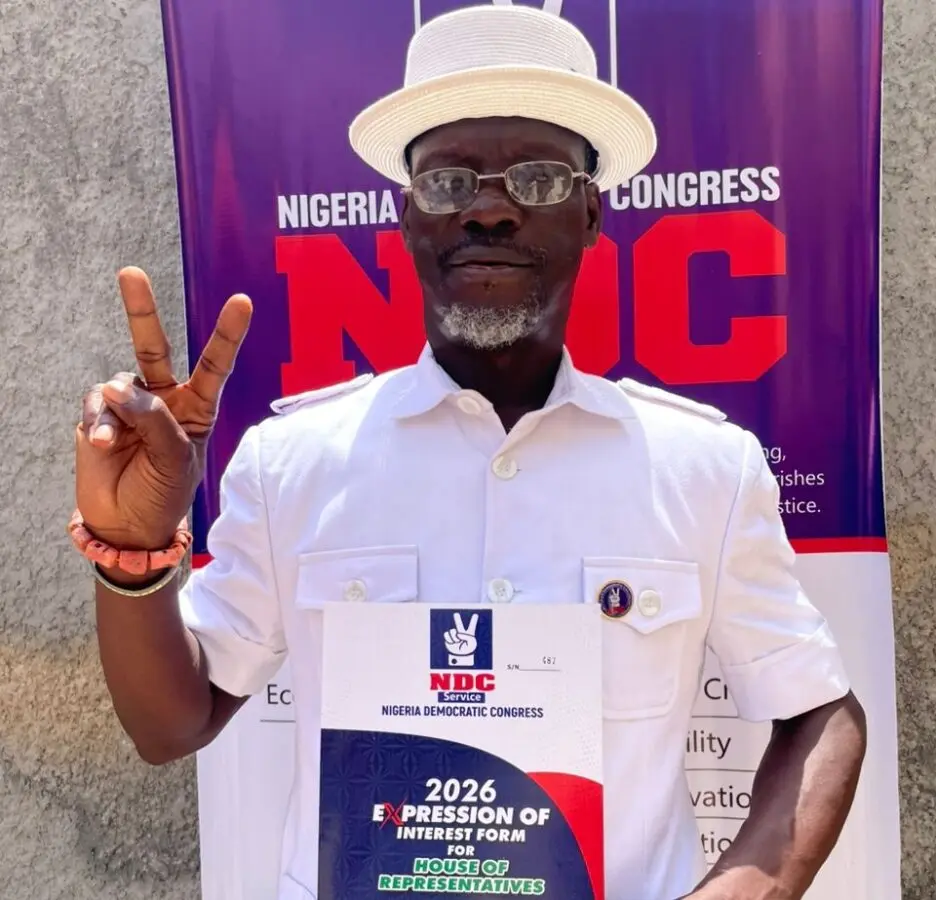
A group of stakeholders in Warri has announced its decision to withdraw support for the incumbent member representing the Warri Federal Constituency in the House of Representatives, Hon. Thomas Ereyitomi, ahead of the 2027 general elections.
The group, while explaining its position, cited what it described as dissatisfaction with the lawmaker’s performance and representation of the constituency.
The stakeholders subsequently declared their support for Comrade Jude Ukori Mulade as their preferred candidate for the 2027 House of Representatives election.
According to the group, its decision followed concerns over the level of representation and development delivered to the constituency under the current administration.
The stakeholders said they were seeking a representative who would be more responsive to the needs of the people and more committed to advancing issues affecting residents across the constituency.
They urged other political stakeholders and eligible voters in Warri to consider Mulade’s candidacy as the 2027 elections approach.
The group’s endorsement adds to the growing political activities and realignments expected to shape the contest for the Warri Federal Constituency seat ahead of the 2027 general elections.
Ereyitomi, who currently represents the constituency in the House of Representatives, has yet to publicly respond to the allegations contained in the group’s statement.
By staff Reporter Rukevwe Odeh
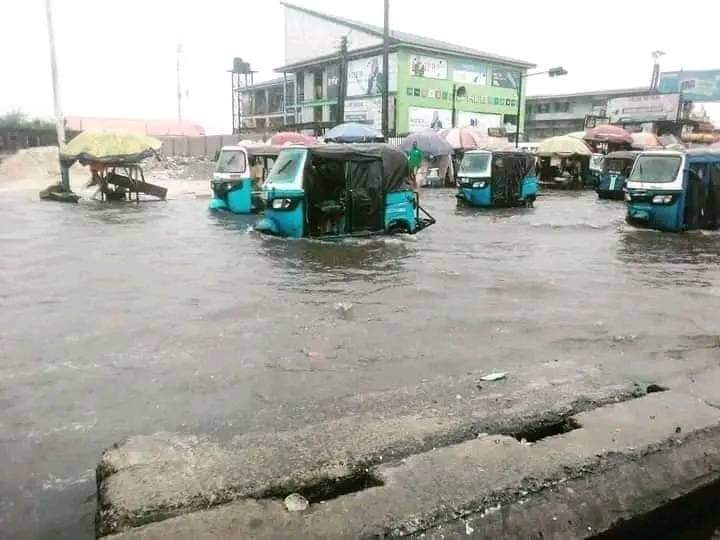
Residents and road users along the Warri Airport Road, particularly the section near Federal Government College in Warri South Local Government Area of Delta State, have continued to contend with recurring flooding despite years of road construction and rehabilitation efforts.
The affected stretch is frequently submerged following heavy rainfall, with inadequate drainage identified as a major factor contributing to the persistent flooding.
The recurring situation has raised concerns among motorists, residents and other road users, who say the condition of the road continues to disrupt movement and create difficulties for commuters whenever there is significant rainfall.
The development has also renewed calls for attention to the drainage system along the route, with residents hoping that a lasting solution will be implemented to prevent the road from repeatedly becoming flooded.
By staff Reporter: Rukevwe Odeh
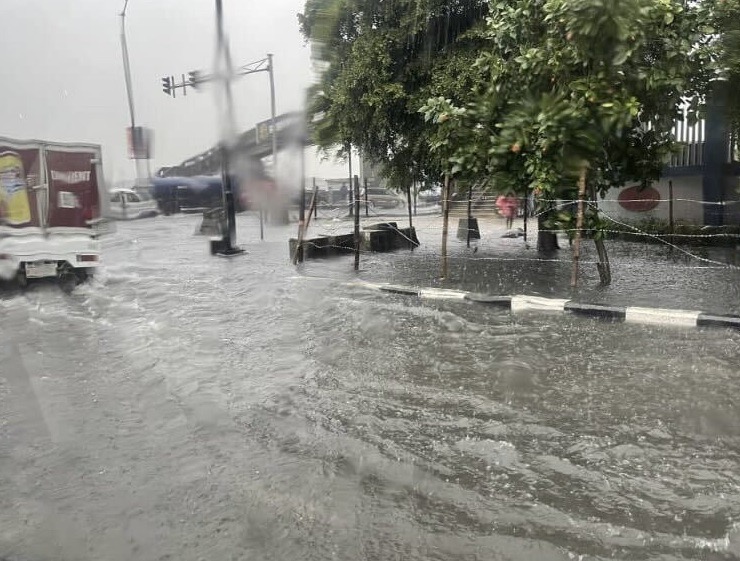
A heavy downpour has left the popular NNPC Housing Complex Road, also known as Ekpan Link Road, submerged in floodwater in Uvwie Local Government Area of Delta State.
The rainfall caused significant water accumulation along the busy road, affecting movement and creating difficulties for motorists and other road users.
The condition of the road has renewed concerns over flooding and drainage challenges in the area, particularly during periods of heavy rainfall.
Residents and commuters are expected to exercise caution while using the affected route as efforts to manage the situation continue.
-

 Social2 months ago
NAIS – Northern Nigeria/Abuja Chapter Honours Amb. Ebi Lagos with Award of Recognition
-
 Breaking3 months ago
2027: INEC Alegedly Announces Plans to Conduct Party Primaries in the Newly Created State Constituencies in Warri North and Warri Southwest LGAs, Others
-

 News1 month ago
PAP: EX-AGITATORS OF BOYLOAF CAMP DISTANCE SELVES FROM THEIR LEADERS ONSLAUGHT ON THE PAP ADMINISTRATOR
-

 Local News4 months ago
Just In: Ambassador Podoki Emerges APP Candidate for Burutu Constituency-I Assembly Seat
-
 Politics3 months ago
2027: Mulade Challenges NDC’s Substitution of His Party Candidacy, Demands ₦5 Billion Damages
-
 Breaking3 months ago
Tinubu Intervenes in Warri Delineation Dispute, Meets Ijaw, Urhobo and Itsekiri Leaders
-
 Local News4 months ago
INC: Group Faults Sponsored Attacks on Tompolo, Igbadiwei, Urges Unity in Ijaw Nation
-
 Entertainment2 months ago
JKing Logistics Coordinator Shed Light to Address Ijaw Music Wage Controversy