
News
INEC Source Claims No Political Party Met Initial July 11 Candidate Submission Deadline

By Rukevwe Odeh
Fresh information from within the Independent National Electoral Commission (INEC) has challenged earlier claims that some political parties complied with the commission’s original July 11 deadline for submitting candidates for the 2027 general elections.
According to a senior official familiar with the process, none of the registered political parties, including the ruling All Progressives Congress (APC), completed the upload of their presidential and National Assembly candidates before the initial deadline expired.
The source explained that the commission eventually shifted the deadline to July 14 after discovering that many parties were still unable to complete the nomination process through INEC’s online portal.
The official further disclosed that a large percentage of APC candidates had not been uploaded before the July 11 deadline, contrary to earlier public statements suggesting the party had fully complied with the timetable. The source added that INEC made administrative adjustments to enable parties finalize their submissions within the extended period.
The development contrasts with previous remarks by APC National Publicity Secretary Felix Morka, who had maintained that the party concluded its submissions before the deadline and argued that the extension mainly benefited opposition parties struggling with their nomination exercises.
INEC had earlier confirmed that the deadline extension followed a request from the Inter-Party Advisory Council (IPAC), which appealed for more time on behalf of political parties that were yet to complete the submission of candidates’ names and required documents. The electoral body said the decision was taken within its legal and administrative powers.
Meanwhile, disagreements over candidate selection continue to generate tension within the APC. On Monday, some party members and aspirants from Apa State Constituency in Benue State staged a protest at the party’s national secretariat in Abuja, alleging attempts to impose a preferred candidate ahead of the primary election.
The protesters called on the party’s National Working Committee to ensure a transparent and credible nomination process, warning that any perceived imposition could undermine internal unity and affect the party’s electoral prospects. They also urged the leadership to allow all aspirants to compete on a level playing field.

By staff Reporter Rukevwe Odeh
The Delta State Police Command has arrested five suspected cult members over the gruesome murder of a young man in Issele-Asagba, Aniocha North Local Government Area, following the circulation of a disturbing video of the incident on social media.
The victim was reportedly attacked and macheted to death during the suspected cult-related incident on October 27, 2026.
The arrests followed a directive by the Commissioner of Police, CP Samuel Erale, who ordered operatives of the Special Anti-Kidnapping Unit (SAKU), Asaba, to track down and apprehend those responsible.
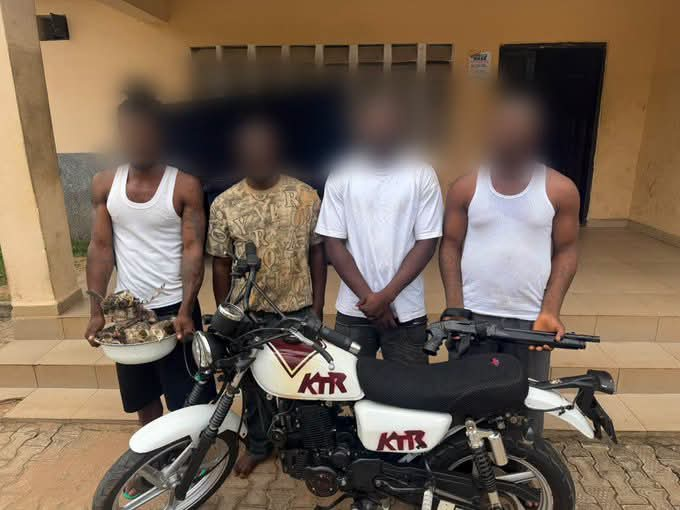
According to the Police Public Relations Officer, SP Bright Edafe, intelligence-led operations resulted in the arrest of four suspected members of the Black Axe confraternity on November 3, 2026.
The suspects were identified as Ifechukwudi Okafor, 26; Michael Okoro, 26; Freedom Iloh, 28; and Chinasa Akwuo, 29.
They were apprehended during a raid on a suspected criminal hideout along Ugbolu-Amachai Road, where operatives recovered a pump-action gun, a dagger and substances suspected to be illicit drugs.
The police disclosed that further investigations led to the arrest of another suspect, 27-year-old Infione Solomon Omefe, on November 4.
Omefe reportedly confessed to participating in the killing captured in the viral video, while investigations are ongoing to apprehend other individuals allegedly connected with the crime.
Reacting to the development, Commissioner of Police Samuel Erale condemned the killing and assured residents that all those found culpable would face the full weight of the law.
He also warned individuals involved in cultism and other violent criminal activities to desist, reaffirming the command’s commitment to sustained operations against criminal groups across the state.
The police further urged residents to provide credible information that could assist security agencies in tackling criminal activities, assuring informants that their identities would remain confidential.
Meanwhile, the police said efforts were ongoing to track down other suspects believed to have participated in the killing.
By staff Reporter Rukevwe Odeh
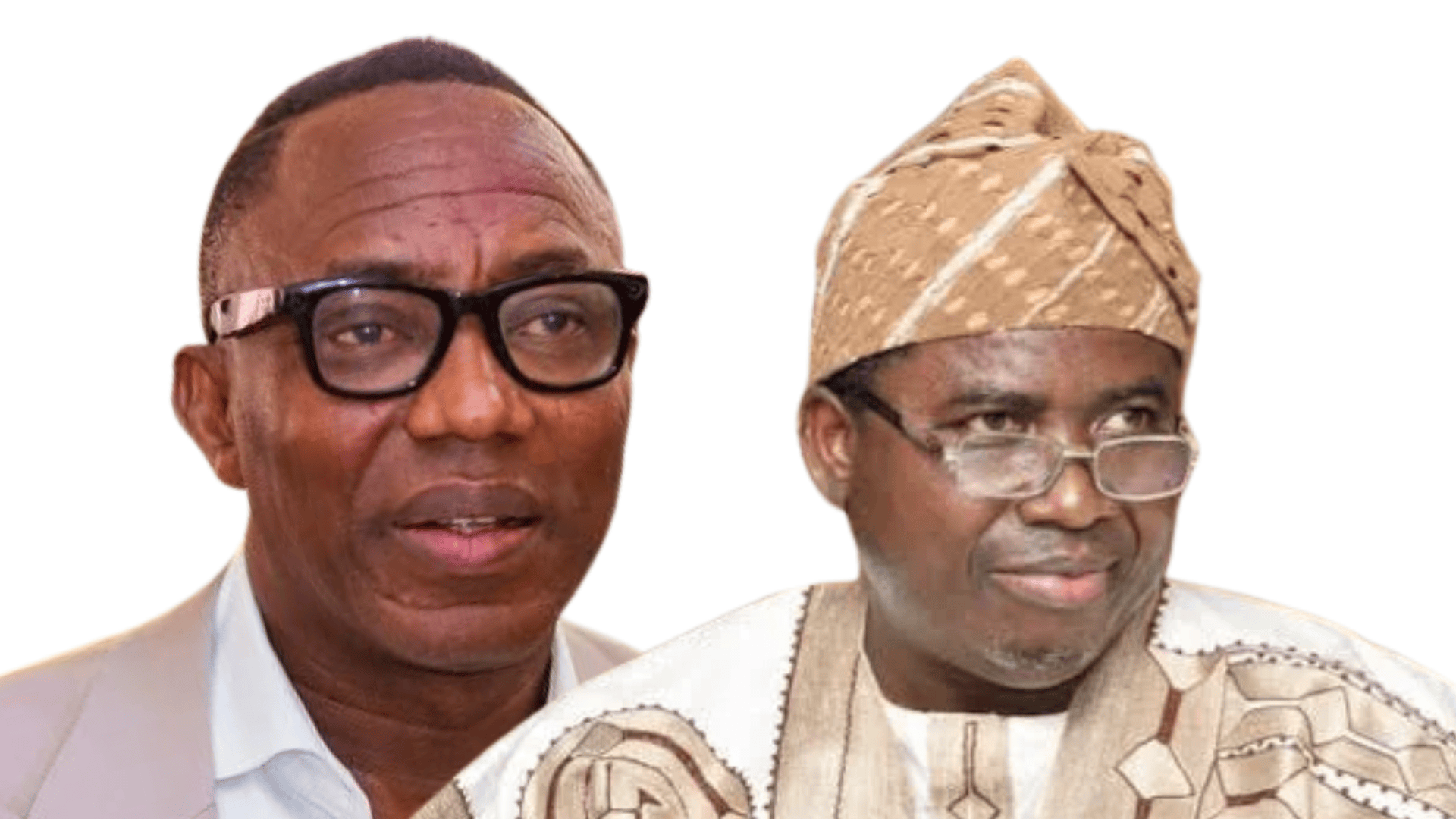
The Independent National Electoral Commission (INEC) has approached the Federal High Court in Abuja, seeking to overturn an order directing its Chairman, Professor Joash Amupitan, to produce President Bola Tinubu’s electoral records from the 1999 Lagos State governorship election and the 2023 presidential election.
Amupitan, through his legal representatives, filed a Motion on Notice dated November 10, 2026, challenging the subpoena issued by the court on October 26 in the ongoing criminal trial of human rights activist and African Action Congress (AAC) presidential candidate, Omoyele Sowore.
The case, marked FHC/CR/484/2025, is before Justice Mohammed Garba Umar and involves the Federal Republic of Nigeria as the complainant and Sowore as the defendant.
The subpoena directed the INEC chairman to produce two sets of electoral documents submitted by Tinubu to the commission. They include his Form CF001 for the 1999 Lagos State governorship election, alongside an affidavit relating to lost certificates, and the corresponding nomination document submitted for the 2023 presidential election.
The court also directed Amupitan to appear as a defence witness and remain in attendance until the determination of the case.
However, INEC is challenging the directive on four grounds, describing the subpoena as legally defective, improperly served and inconsistent with the relevant legal requirements.
The commission argued that Amupitan was not personally served with the subpoena, insisting that service on INEC’s headquarters did not satisfy the required legal procedure.
INEC also maintained that the documents described in the subpoena were not in its custody, arguing that there were no forms known as INEC CF01 for either the 1999 Lagos governorship election or the 2023 presidential election.
Furthermore, the electoral body accused the defence of bringing the application in bad faith, describing the request as irrelevant, speculative and potentially intended to embarrass the commission.
INEC is consequently asking the court to set aside the subpoena issued on October 26, which was reportedly served at its headquarters on November 6.
The development comes amid the ongoing prosecution of Sowore by the Department of State Services (DSS) over his social media description of President Tinubu as a criminal, an allegation that triggered the legal proceedings.
Meanwhile, the Federal High Court is expected to consider INEC’s application as the case continues, with the commission seeking to prevent its chairman from being compelled to produce the requested documents and testify.
The court’s decision will determine whether the subpoena remains valid and whether Amupitan will be required to appear as a witness in the proceedings.
By staff Reporter Rukevwe Odeh
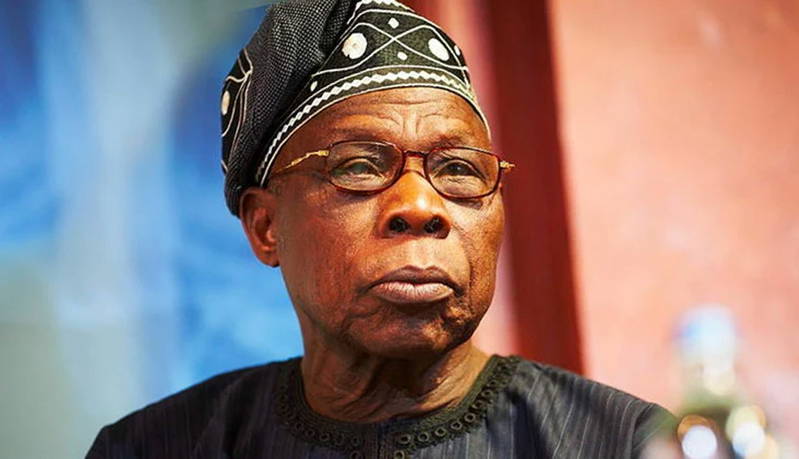
Former President Olusegun Obasanjo has revealed why he rejected an offer of political asylum from the United States despite warnings that he risked arrest upon returning to Nigeria during the military regime of the late General Sani Abacha.
Obasanjo disclosed this while recounting his experience under military rule in an interview published by BBC News Pidgin on Tuesday.
The former president said the American ambassador to Nigeria contacted him while he was travelling abroad and informed him that the US government was prepared to grant him political asylum because of intelligence reports indicating that Abacha intended to arrest him if he returned home.
However, Obasanjo said he declined the offer because he believed he had committed no offence that warranted seeking refuge outside his country.
He recalled that after retiring from the Nigerian Army at the age of 42 as a four-star general and former military Head of State, he ventured into agriculture, which was progressing successfully before the Abacha administration moved against him.
According to him, he considered his military career complete after attaining the highest rank in the Army and serving as Nigeria’s military leader between 1976 and 1979.
Obasanjo alleged that Abacha had decided he must be eliminated to prevent him from standing in the way of the military ruler’s plans.
He said upon returning to Nigeria, his international passport was seized, after which he proceeded to his farm.
On arriving at the farm, one of his security personnel informed him that government security operatives had surrounded the property.
He further narrated that a police officer dressed in civilian clothes subsequently approached him, claiming that an Assistant Inspector-General of Police (AIG) had invited him to the station.
Obasanjo said he challenged the officer, insisting that if the AIG wanted to see him, he should come personally rather than send someone to invite him.
He eventually drove himself to the police station, where the AIG informed him that he had received instructions to arrest him.
The former president also recalled the intervention of former United States President Jimmy Carter, who appealed to Abacha on his behalf.
According to Obasanjo, Carter’s intervention initially secured his placement under house arrest after he had been held at an undisclosed location.
However, he said security operatives later arrived at about 1am while he was playing squash and took him away to prison.
Obasanjo was arrested in 1995 over allegations of involvement in a coup plot against Abacha’s government. He was tried by a military tribunal and sentenced to life imprisonment, although the sentence was later reduced to 15 years.
He regained his freedom in June 1998 following Abacha’s death and subsequently won the 1999 presidential election, becoming Nigeria’s civilian president.
He served two terms in office, leaving the presidency in May 2007.
-

 Social3 months ago
NAIS – Northern Nigeria/Abuja Chapter Honours Amb. Ebi Lagos with Award of Recognition
-
 Breaking5 months ago
2027: INEC Alegedly Announces Plans to Conduct Party Primaries in the Newly Created State Constituencies in Warri North and Warri Southwest LGAs, Others
-
 News3 months ago
PAP: EX-AGITATORS OF BOYLOAF CAMP DISTANCE SELVES FROM THEIR LEADERS ONSLAUGHT ON THE PAP ADMINISTRATOR
-

 Local News6 months ago
Just In: Ambassador Podoki Emerges APP Candidate for Burutu Constituency-I Assembly Seat
-
 Politics5 months ago
2027: Mulade Challenges NDC’s Substitution of His Party Candidacy, Demands ₦5 Billion Damages
-
 Breaking5 months ago
Tinubu Intervenes in Warri Delineation Dispute, Meets Ijaw, Urhobo and Itsekiri Leaders
-
 Breaking5 months ago
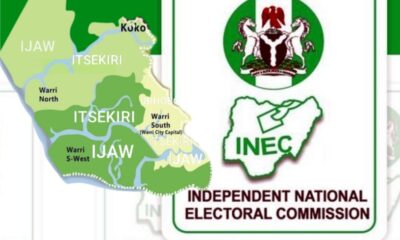
Confirmed: INEC Announces Implementation of Warri Delineation Report, Restores Other Constinuencies
-

 Entertainment4 months ago
JKing Logistics Coordinator Shed Light to Address Ijaw Music Wage Controversy