
News
Igali Mourns Horsfall, Describes Late Security Chief as Niger Delta Icon

By staff Reporter Rukevwe Odeh
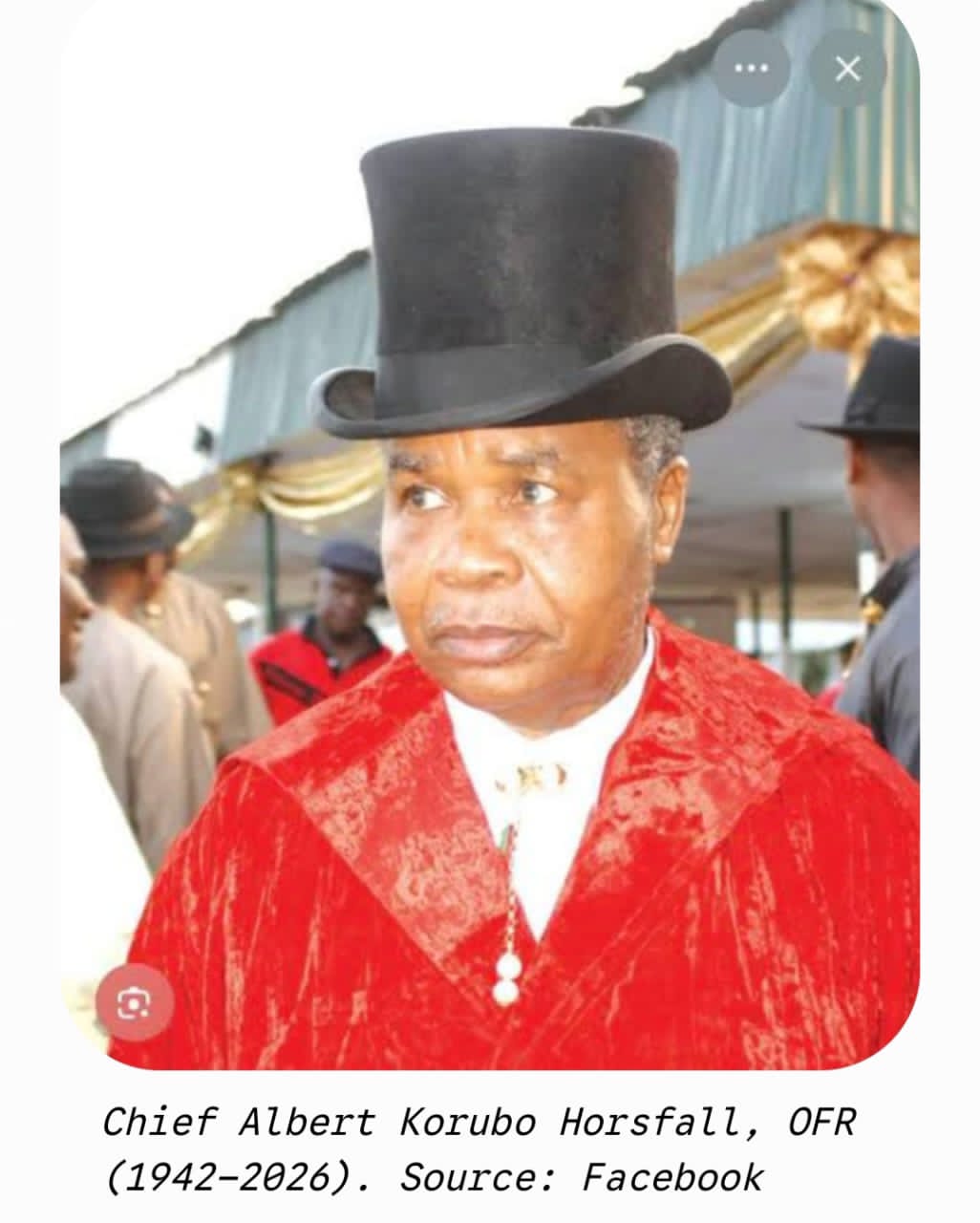
Ambassador Dr. Godknows Boladei Igali has expressed deep sorrow over the death of Chief Albert Korubo Horsfall, a respected Niger Delta elder, former intelligence chief and prominent national figure who died at the age of 84.
Horsfall, who hailed from Buguma in Rivers State, passed away on Wednesday, September 9, 2026, leaving behind a long record of service in Nigeria’s security, intelligence and Niger Delta development sectors.
Igali, who chairs the Pan Niger Delta Forum (PANDEF), described the deceased as a major figure whose contributions extended beyond the Niger Delta to the wider Nigerian state.
According to Igali, Horsfall’s death represents a significant loss to the region, particularly because of his experience, leadership and longstanding commitment to issues affecting the oil-producing communities.
The late elder had an illustrious career in Nigeria’s security architecture. He served as Director-General of the National Intelligence Agency (NIA) and later headed the Department of State Services (DSS), making him one of the few Nigerians to have occupied leadership positions in both major intelligence institutions.
His public service was not limited to intelligence. Horsfall also became the pioneer chairman of the Oil Minerals Producing Areas Development Commission (OMPADEC), an institution established to address development challenges in oil-producing communities before the emergence of the Niger Delta Development Commission (NDDC).
He was subsequently involved in efforts aimed at addressing the political and developmental challenges confronting the Niger Delta and served in other national assignments connected with peace and development in the region.
Beyond government, Horsfall remained active in traditional and regional affairs. He was the holder of the Omekwe Paramountcy in the Kalabari Kingdom and was regarded as an influential voice in Niger Delta affairs.
He was also among the founding members of PANDEF’s Board of Trustees, where his experience and knowledge contributed to the Forum’s efforts to promote development, equity and justice for the Niger Delta.
Mourning the departed elder, Igali conveyed his condolences to Horsfall’s family, the Kalabari Kingdom, the Rivers State Government and people, as well as the wider Niger Delta community.
PANDEF has also directed its chapters in Nigeria and the Diaspora to observe a seven-day mourning period in honour of the late elder and to suspend scheduled social activities during the period.
The death of Chief Albert Korubo Horsfall has been widely regarded as the passing of an important figure in Nigeria’s security history and Niger Delta leadership.
His legacy, particularly in national intelligence, public administration, traditional leadership and regional development, is expected to remain part of the history of the Niger Delta and Nigeria.
Chief Albert Korubo Horsfall was 84.

By staff Reporter Rukevwe Odeh
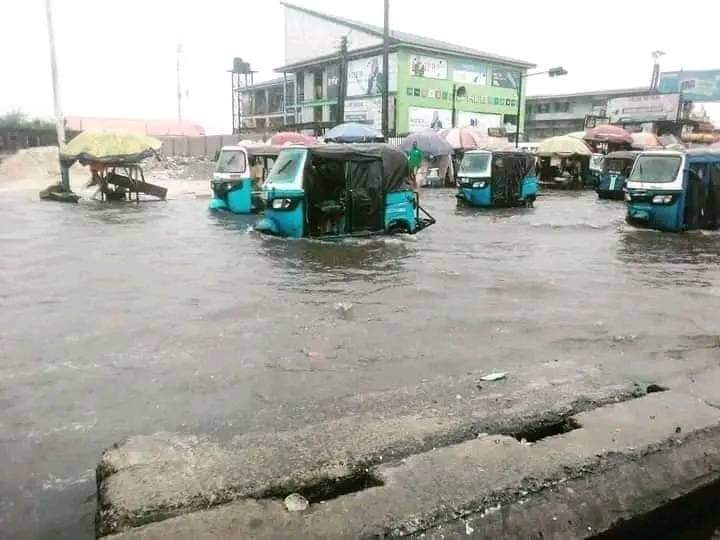
Residents and road users along the Warri Airport Road, particularly the section near Federal Government College in Warri South Local Government Area of Delta State, have continued to contend with recurring flooding despite years of road construction and rehabilitation efforts.
The affected stretch is frequently submerged following heavy rainfall, with inadequate drainage identified as a major factor contributing to the persistent flooding.
The recurring situation has raised concerns among motorists, residents and other road users, who say the condition of the road continues to disrupt movement and create difficulties for commuters whenever there is significant rainfall.
The development has also renewed calls for attention to the drainage system along the route, with residents hoping that a lasting solution will be implemented to prevent the road from repeatedly becoming flooded.
By staff Reporter: Rukevwe Odeh
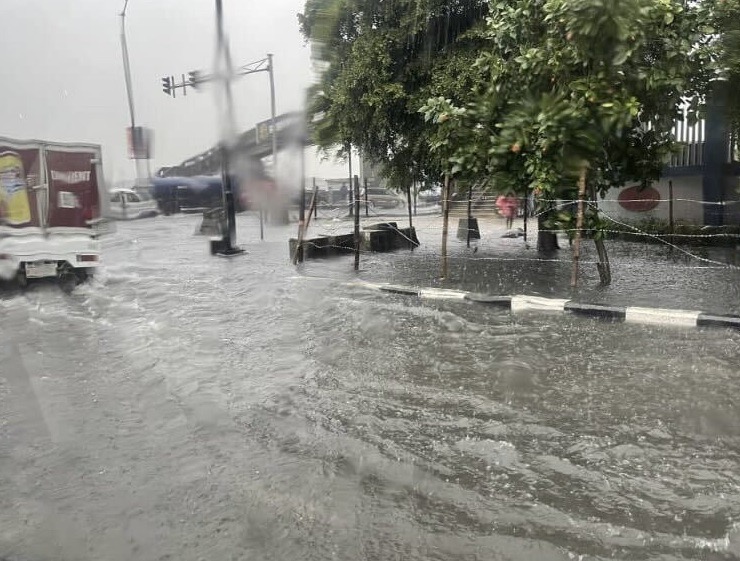
A heavy downpour has left the popular NNPC Housing Complex Road, also known as Ekpan Link Road, submerged in floodwater in Uvwie Local Government Area of Delta State.
The rainfall caused significant water accumulation along the busy road, affecting movement and creating difficulties for motorists and other road users.
The condition of the road has renewed concerns over flooding and drainage challenges in the area, particularly during periods of heavy rainfall.
Residents and commuters are expected to exercise caution while using the affected route as efforts to manage the situation continue.
By Staff Reporter: Rukevwe Odeh
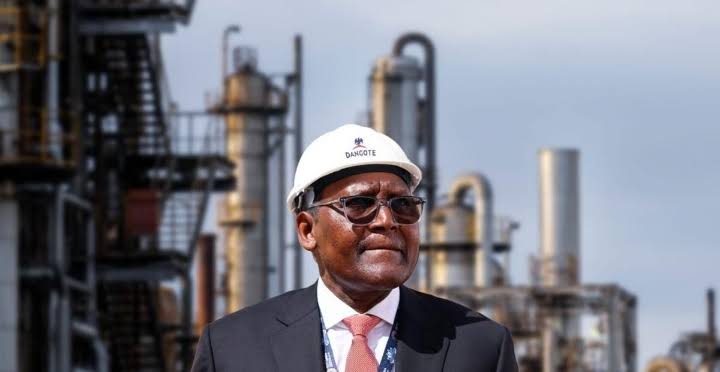
Dangote Industries Limited has acquired an additional 4,000 construction machines as part of its ongoing expansion of the Dangote Petroleum Refinery in Lagos.
The latest procurement has increased the company’s construction equipment fleet to approximately 6,500 units, including 330 cranes, as the group works to raise the refinery’s planned processing capacity from 650,000 barrels of crude oil per day to 1.4 million barrels per day.
The Group Vice President, Oil and Gas and Fertiliser, Devakumar Edwin, disclosed this during a briefing with editors following a tour of the refinery in Ibeju-Lekki, Lagos.
Edwin explained that Dangote initially acquired 2,563 pieces of construction equipment after some contractors indicated that they lacked the capacity required to handle the refinery’s major factory structures.
He said the group subsequently decided to build its own substantial equipment fleet rather than depend entirely on foreign engineering, procurement and construction contractors.
According to him, bringing foreign contractors and their machinery into Nigeria would have involved additional mobilisation and demobilisation expenses, with equipment depreciation potentially increasing the overall project cost.
Edwin said the company’s approach was also influenced by the limited availability of heavy construction equipment in Nigeria.
He recalled that when Dangote constructed its Apapa sugar refinery in 1998, only two large cranes with a lifting capacity of about 150 tonnes were available in the country.
For the Lekki refinery project, Dangote has since developed a much larger equipment base, including 330 cranes, to support construction activities.
The executive also disclosed that a significant portion of the infrastructure established during the first phase of the refinery would be reused for the expansion.
These facilities include a granite quarry with a stated capacity of 10 million tonnes, 82 concrete batching plants, 203 transit mixers, a private port, an oxygen and welding-gas plant and accommodation facilities capable of housing up to 50,000 workers.
Edwin further revealed that the refinery, originally designed for 650,000 barrels per day, was operating at about 700,000 barrels per day at the time of the briefing.
He said Dangote also opted to execute the expansion through its own project company after international contractors reportedly proposed fees amounting to about 12.5 per cent of an estimated $19.5 billion project cost.
That figure, according to Edwin, would have translated into approximately $2.5 billion in contractor fees.
Instead, Dangote Projects Limited was tasked with handling detailed engineering, procurement and the coordination of contractors involved in the project.
The refinery was designed to serve both the Nigerian market and international customers, with the company previously indicating that part of its output would be allocated to domestic consumption while the remainder would be exported.
The planned expansion to 1.4 million barrels per day is expected to significantly increase the refinery’s production capacity and strengthen Dangote Industries’ refining operations.
Edwin also said the group’s overall refining capacity could eventually rise to about 2.1 million barrels per day when the Lekki expansion is combined with the planned 700,000-barrel-per-day refinery project in Kenya.
The Dangote refinery is currently described by the company as the world’s largest single-train petroleum refinery.
-

 Social2 months ago
NAIS – Northern Nigeria/Abuja Chapter Honours Amb. Ebi Lagos with Award of Recognition
-
 Breaking3 months ago
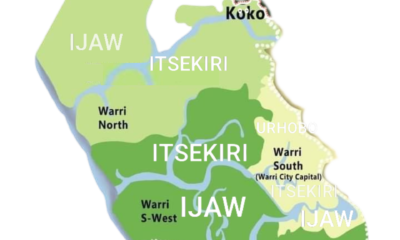
2027: INEC Alegedly Announces Plans to Conduct Party Primaries in the Newly Created State Constituencies in Warri North and Warri Southwest LGAs, Others
-

 News1 month ago
PAP: EX-AGITATORS OF BOYLOAF CAMP DISTANCE SELVES FROM THEIR LEADERS ONSLAUGHT ON THE PAP ADMINISTRATOR
-

 Local News4 months ago
Just In: Ambassador Podoki Emerges APP Candidate for Burutu Constituency-I Assembly Seat
-
 Politics3 months ago
2027: Mulade Challenges NDC’s Substitution of His Party Candidacy, Demands ₦5 Billion Damages
-
 Breaking3 months ago
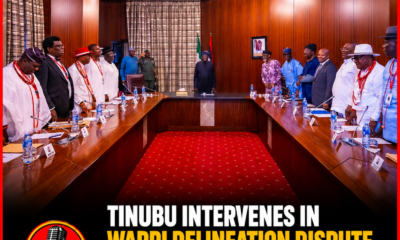
Tinubu Intervenes in Warri Delineation Dispute, Meets Ijaw, Urhobo and Itsekiri Leaders
-
 Local News4 months ago
INC: Group Faults Sponsored Attacks on Tompolo, Igbadiwei, Urges Unity in Ijaw Nation
-
 Entertainment2 months ago
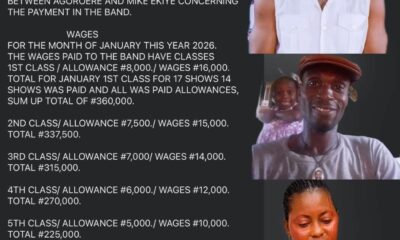
JKing Logistics Coordinator Shed Light to Address Ijaw Music Wage Controversy