
News
Airport Operations Face Possible Disruptions as NiMet Workers Plan Nationwide Protest


By Rukevwe Odeh
Air travel across Nigeria could be affected from Wednesday as employees of the Nigerian Meteorological Agency (NiMet) prepare to stage a nationwide protest over an unresolved financial dispute with the Nigerian Airspace Management Agency (NAMA).
The planned demonstration follows allegations that NAMA has failed to remit the statutory 10 percent share of en-route and overflight charges owed to NiMet. According to the NiMet Unions Joint Action Committee (NJAC), repeated efforts to secure the payment have not produced results.
The unions said the Minister of Aviation and Aerospace Development, Festus Keyamo, had earlier directed NAMA to settle the outstanding remittance within 48 hours. However, they claimed the directive was not carried out.
In a notice signed by representatives of the Amalgamated Union of Public Corporations, Civil Service Technical and Recreational Services Employees (AUPCTRE), the Association of Nigerian Aviation Professionals (ANAP), and the Senior Staff Association of Statutory Corporations and Government-Owned Companies (SSASCGOC), workers were instructed to begin a peaceful nationwide protest from 6:00 a.m. on Wednesday at all NiMet offices.
Union leaders argued that the continued delay in releasing the funds has negatively affected NiMet’s operations and staff welfare. They noted that members had resolved during a Joint Union Congress meeting to escalate the matter if the outstanding payment was not received within the agreed timeframe.
The unions warned that while the protest would remain peaceful, it could significantly impact airport activities because NiMet plays a crucial role in providing weather information required for flight planning, take-off, and landing.
Copies of the protest notice have reportedly been forwarded to the Minister of Aviation and Aerospace Development as well as the Director-General and Chief Executive Officer of NiMet.
As of the time of reporting, NAMA had not issued an official response to the allegations.









By Staff Reporter Rukevwe Odeh
The Trade Union Congress of Nigeria (TUC) has rejected the Federal Government’s proposed ₦70,000 monthly wage award for workers, demanding an immediate salary increase and the full implementation of outstanding agreements with health sector unions.
The congress urged President Bola Tinubu’s administration to introduce a permanent salary adjustment rather than rely on temporary financial interventions, which it described as inadequate to address the economic hardship facing Nigerian workers.
The Federal Government had approved a ₦70,000 transportation allowance for workers across all levels for six months, beginning in November 2026, following a conciliation meeting with the leadership of the Nigeria Labour Congress (NLC).
However, the TUC maintained that workers required sustainable improvements in their earnings to cope with rising costs of food, transportation, healthcare and other essential services.
TUC Proposes ₦300,000 Minimum Salary
The labour congress argued that the Federal Government could increase the salary of the lowest-paid worker from the current ₦70,000 minimum wage to ₦300,000 monthly without waiting for negotiations on a new national minimum wage.
According to the TUC, there is no legal provision establishing a maximum salary that employers can pay workers.
The congress also pointed out that some state governments had introduced minimum wages exceeding ₦100,000, arguing that the Federal Government could adopt a more substantial salary increase and make corresponding adjustments across other salary grades.
It insisted that ongoing negotiations over the national minimum wage should not prevent the government from taking immediate action to improve workers’ earnings.
TUC Questions Previous Wage Award Implementation
The congress explained that its rejection of the proposed intervention was partly informed by the incomplete implementation of the previous wage award introduced in October 2023.
According to the TUC, some workers were still owed one or two months of payments, while others reportedly received nothing.
It further alleged that payments to some beneficiaries were irregular, with workers sometimes waiting one or two months between payments despite repeated demands.
The union also claimed that more than 80 per cent of states and workers in the informal sector did not benefit from any form of wage award.
The TUC argued that introducing another temporary payment without addressing the shortcomings of previous arrangements could undermine workers’ confidence in government commitments.
Beyond salary increases, the congress called for the immediate implementation of the outstanding agreement with the Joint Health Sector Unions (JOHESU), particularly the adjustment of the Consolidated Health Salary Structure (CONHESS).
The TUC said the agreement was reached following negotiations aimed at resolving the prolonged industrial dispute involving health workers.
According to the congress, JOHESU suspended its industrial action in good faith after the agreement was reached, but the Federal Government had yet to fulfil its commitment regarding the CONHESS adjustment.
The union said seven months had passed since the agreement was reached, describing the delay as unacceptable and warning that failure to honour agreements could weaken trust between the government and organised labour.
It called on the government to implement the agreed adjustment without further delay, provide the necessary budgetary provisions and publish a clear timetable for resolving all outstanding issues.
The congress also urged federal, state and local governments to introduce practical measures to reduce the cost of essential goods and services.
It called for the timely payment of salaries and pensions, protection of existing jobs, an end to exploitative labour practices and renewed efforts to strengthen productive sectors of the economy.
The TUC stressed that economic hardship affected not only federal workers but also state and local government employees, pensioners, private-sector workers and those operating in the informal economy.
The congress maintained that government interventions must be inclusive, adequately funded and supported by clear implementation plans.
It said it was awaiting the outcome of its scheduled meeting with the Federal Government before deciding on its next course of action.
The TUC reiterated that workers were demanding improved living conditions, fair remuneration and respect for agreements, insisting that temporary relief measures should not replace lasting improvements in workers’ welfare.
By staff Reporter Rukevwe Odeh
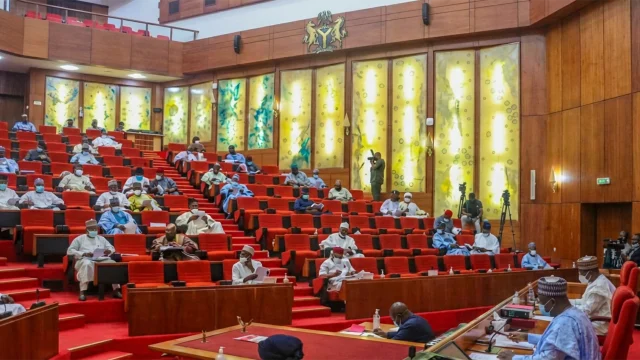
The Nigerian Senate has passed a bill seeking to introduce stiffer penalties, including heavier fines and criminal sanctions, against individuals and companies responsible for oil spills and environmental pollution in the country’s petroleum industry.
The proposed legislation, known as the National Oil Spill Detection and Response Agency (Establishment) Act (Amendment) Bill, 2026, seeks to strengthen the enforcement powers of the National Oil Spill Detection and Response Agency (NOSDRA).
The bill was passed after the Senate considered and adopted the report of its Committee on Environment during plenary.
Presenting the committee’s report on behalf of its chairman, Senator Olubiyi Fadeyi Oluwole, the Senate Chief Whip, Senator Tahir Monguno, representing Borno North, said existing penalties had failed to deter environmental violations, making tougher sanctions necessary.
According to Monguno, oil spills have continued to damage farmlands, contaminate fishing waters and destroy the livelihoods of residents in oil-producing communities, particularly across the Niger Delta.
He maintained that stronger penalties would help hold those responsible for environmental damage accountable and improve compliance with environmental regulations.
The amendment seeks to revise the NOSDRA Establishment Act, 2006, by providing a stronger legal framework for punishing oil pollution offenders and enhancing the agency’s capacity to enforce environmental standards.
During consideration of the bill, lawmakers examined its provisions clause by clause under the Committee of the Whole and approved all 12 clauses, including the short title, explanatory memorandum and long title.
The bill was subsequently read for the third time and passed after the Senate returned to plenary.
Senate President Godswill Akpabio commended the Committee on Environment for its work and congratulated NOSDRA on the additional enforcement powers envisaged under the legislation.
Oil pollution remains a major environmental and economic concern in the Niger Delta, where repeated spills have affected ecosystems, agricultural land, fishing activities and access to clean water in several communities.
The proposed amendment is expected to strengthen accountability in the petroleum sector, although its effectiveness will depend on proper implementation, effective monitoring and consistent enforcement against offenders.
By staff Reporter Rukevwe Odeh
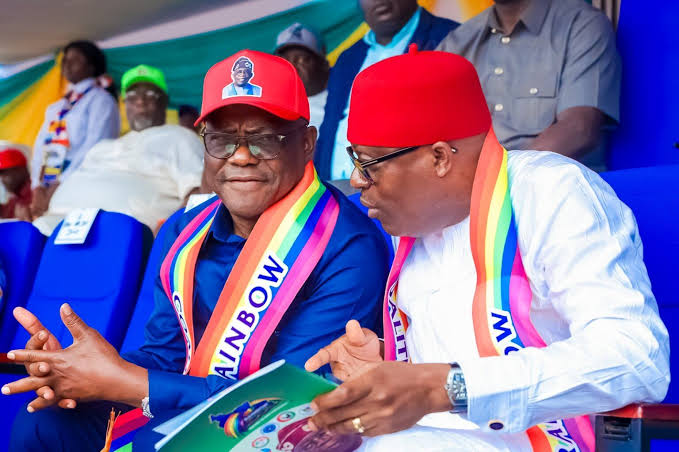
Rivers State Governor, Siminalayi Fubara, has asked his supporters to stop addressing him as their political leader, declaring Federal Capital Territory (FCT) Minister Nyesom Wike as the common leader of their political group.
Fubara made the declaration on Tuesday in Port Harcourt during the unveiling of candidates under the Rainbow Coalition, a political platform associated with Wike, ahead of the 2027 general elections.
Addressing members of the coalition, the governor acknowledged that some of his supporters continued to refer to him as their leader, particularly those who stood by him during his prolonged political dispute with his predecessor.
However, he urged them to abandon the practice, insisting that the political differences between both camps had been resolved and that they were now operating under one political structure.
“Those that called me my leader during the crises, please stop calling me my leader, we have a common leader now which is His Excellency Chief Nyesom Wike,” Fubara said.
The governor also referred to Wike as his oga, acknowledging the former governor’s role in his emergence as the state’s chief executive.
Fubara expressed satisfaction with the reconciliation, describing the gathering as an opportunity for members of his political family to reunite and work towards a common objective.
He subsequently pledged to support President Bola Tinubu’s re-election bid and the victory of candidates endorsed by the Rainbow Coalition in the 2027 elections.
The declaration marks a significant public development in the relationship between Fubara and Wike, whose political disagreement began in October 2023, months after Fubara assumed office.
Their dispute escalated into a major political crisis in Rivers State, resulting in divisions within the State House of Assembly, legal battles and an impeachment threat against the governor.
The crisis also culminated in President Tinubu’s declaration of a state of emergency in Rivers State in March 2025. The emergency rule ended in September of the same year, allowing Fubara to return to office.
Fubara’s latest remarks followed a series of reconciliation efforts between the two politicians as political actors begin positioning themselves ahead of the 2027 general elections.
The Rainbow Coalition’s candidate unveiling attracted stakeholders from several political parties, including the All Progressives Congress (APC), Peoples Democratic Party (PDP), Labour Party (LP), Action Alliance (AA), All Progressives Grand Alliance (APGA) and Allied Peoples Movement (APM).
The development is expected to shape political alignments in Rivers State as preparations for the forthcoming elections gather momentum
-

 Social3 months ago
NAIS – Northern Nigeria/Abuja Chapter Honours Amb. Ebi Lagos with Award of Recognition
-
 Breaking5 months ago
2027: INEC Alegedly Announces Plans to Conduct Party Primaries in the Newly Created State Constituencies in Warri North and Warri Southwest LGAs, Others
-
 News2 months ago
PAP: EX-AGITATORS OF BOYLOAF CAMP DISTANCE SELVES FROM THEIR LEADERS ONSLAUGHT ON THE PAP ADMINISTRATOR
-

 Local News5 months ago
Just In: Ambassador Podoki Emerges APP Candidate for Burutu Constituency-I Assembly Seat
-
 Politics5 months ago
2027: Mulade Challenges NDC’s Substitution of His Party Candidacy, Demands ₦5 Billion Damages
-
 Breaking5 months ago
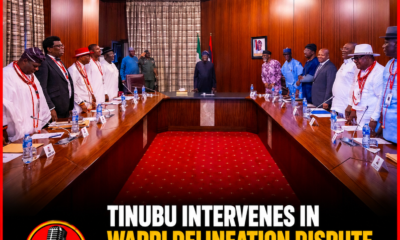
Tinubu Intervenes in Warri Delineation Dispute, Meets Ijaw, Urhobo and Itsekiri Leaders
-
 Breaking5 months ago
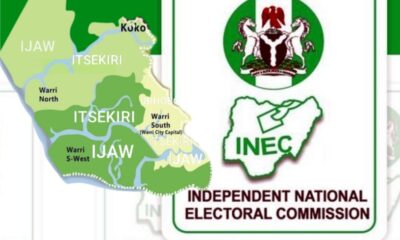
Confirmed: INEC Announces Implementation of Warri Delineation Report, Restores Other Constinuencies
-
 Entertainment4 months ago
JKing Logistics Coordinator Shed Light to Address Ijaw Music Wage Controversy