
News
Currency in Circulation Rises 81% to ₦5.44trn in Three Years

By staff Reporter Rukevwe Odeh
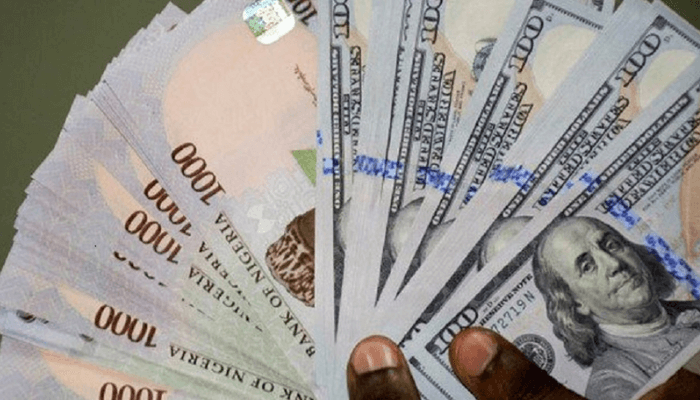
Nigeria’s currency in circulation increased by 80.6 per cent to ₦5.44 trillion in August 2026, from ₦3.01 trillion in August 2023, highlighting the continued reliance on physical cash despite the expansion of digital payment services.
Data from the Central Bank of Nigeria’s (CBN) Money and Credit Statistics showed that the sharpest increase occurred between August 2023 and August 2024, when currency in circulation rose by ₦1.54 trillion, representing a 51.1 per cent increase to ₦4.55 trillion.
However, the pace of growth slowed in subsequent years, with cash in circulation rising by 11.2 per cent to ₦5.057 trillion in August 2025 before reaching ₦5.436 trillion in August 2026, an increase of ₦379 billion or 7.5 per cent.
The report also revealed that commercial banks’ reserves increased significantly over the three-year period, rising from ₦18.528 trillion in August 2023 to ₦36.067 trillion in August 2026, representing a growth of approximately 94.7 per cent.
Commenting on the development, the Managing Director of High Cap Securities Limited, David Adonri, explained that when more money is held as physical cash outside commercial banks, it could reduce the funds immediately available to financial institutions for lending and other investments.
However, the increase in currency in circulation does not necessarily indicate excessive liquidity or rising inflationary pressure, as higher prices, increased transaction values and expanding economic activity could also drive demand for cash.
The figures further highlight the continued importance of physical currency in Nigeria’s economy despite the growing adoption of mobile banking, fintech services, electronic transfers and other digital payment channels.
Although the volume of cash in circulation continues to increase, the declining annual growth rate suggests that the pace of expansion has moderated considerably since 2024.
The development underscores the challenge of transitioning towards a cashless economy, as Nigerians continue to rely on physical money alongside emerging digital payment alternative


By staff Reporter Rukevwe Odeh
The Tompolo-led PBAT Door-to-Door Movement is set to take its mobilisation campaign for President Bola Tinubu’s re-election to Ekiti State, with a rally scheduled for Thursday, October 29, in Ado-Ekiti.
The programme, billed for the Ekiti Parapo Pavilion, is expected to feature the distribution of campaign vehicles and materials to strengthen grassroots mobilisation ahead of the 2027 presidential election.
The movement is led by its Grand Patron, High Chief Government Oweizide Ekpemupolo, popularly known as Tompolo, and is extending its activities to Ekiti following the inauguration of its structures in Plateau State on Wednesday.
The Plateau event, held in Jos, also featured the unveiling of 25 vehicles to support the movement’s outreach activities.
The Ekiti rally forms part of the movement’s ongoing efforts to expand its organisational presence across states and support the campaign for President Tinubu and Vice President Kashim Shettima ahead of the 2027 general election.
Through its door-to-door approach, the movement aims to strengthen its grassroots network and coordinate campaign activities at the community level.

By staff Reporter Rukevwe Odeh
Union Confers ‘Ukodo the Pace Setter’ Title on Governor, Urges Workers to Reciprocate Gesture
The Trade Union Congress (TUC), Delta State Council, has honoured Governor Sheriff Oborevwori with the title “Ukodo the Pace Setter” in recognition of his administration’s decision to institutionalise the payment of 13th-month salaries to public servants.
The union said the initiative would provide additional financial support for workers and their families amid rising living costs and prevailing economic challenges.
In a statement signed by the state chairman, Comrade Wilson Asekutu, the TUC described the legal backing for the additional salary as a demonstration of the government’s recognition of workers’ contributions to the growth and development of Delta State.
According to the labour organisation, the decision reflects the governor’s commitment to policies that deliver tangible benefits to workers and improve their welfare.
The union noted that employees who feel valued and adequately supported are more likely to remain motivated, productive and committed to their responsibilities.
It also reaffirmed its readiness to collaborate with the state government in promoting good governance, sustainable development and improved living conditions for workers and residents.
However, the TUC stressed that its engagement with the government would continue to be guided by mutual respect, constructive engagement and social dialogue.
The labour body urged the Oborevwori administration to sustain consultations with organised labour and implement policies that would strengthen workers’ purchasing power, improve productivity and protect their dignity.
It also called on public servants to reciprocate the government’s gesture through dedication, discipline and improved service delivery.
“Your Excellency, you have taken a bold step in workers’ welfare. You have set a pace. Ukodo the Pace Setter,” Asekutu said on behalf of the union’s leadership and members.
The recognition underscores the TUC’s appreciation of the governor’s decision to provide additional financial benefits to public servants and its call for sustained government-labour cooperation.

By staff Reporter Rukevwe Odeh
The Federal Government has paid ₦1.23 trillion out of the ₦3.3 trillion owed to electricity generation companies as part of efforts to address financial challenges in the power sector and improve electricity supply across the country.
The Minister of Power, Joseph Tegbe, disclosed this on Wednesday while briefing State House correspondents after the Federal Executive Council meeting presided over by President Bola Tinubu in Abuja.
Tegbe explained that the payment was aimed at easing liquidity challenges affecting the electricity industry, particularly those linked to gas supply to power plants.
He said the government was also working to expand Nigeria’s electricity transmission capacity from approximately 5,000 megawatts to 19,000 megawatts within the next two years.
According to the minister, the Federal Executive Council had approved three major transmission infrastructure projects to strengthen the national grid and improve electricity delivery.
The projects include the construction of underground and overhead double-circuit transmission lines at the Katampe Transmission Substation in Abuja, the supply of three high-capacity power transformers for the Egbin Transmission Substation serving the Lagos axis, and the upgrade of the 35.6-kilometre McPherson–Shagamu transmission line.
Tegbe said the projects were part of a broader strategy to improve the capacity and reliability of Nigeria’s electricity transmission network.
He added that the government had commenced a technical audit of power infrastructure across three major energy zones to identify ageing facilities requiring repairs, replacement or upgrades.
The zones include the Lagos–Ibadan axis, the Abuja–Kaduna–Karu corridor, and the Benue–Enugu–Port Harcourt corridor.
The minister noted that the Lagos–Ibadan axis alone accounts for approximately 50 per cent of the country’s electricity demand, making infrastructure improvements in the area particularly important.
He also disclosed plans to develop an east-west super grid connecting Sokoto through Funtua, Abuja, Akwanga and Benue to Epe in Lagos State.
The proposed project is expected to strengthen electricity transmission links between different parts of the country and enable more power to reach consumers.
In another development, President Tinubu has directed the Ministry of Power to facilitate the clearance of more than 300 containers of electricity equipment abandoned at ports nationwide, some for as long as 20 years.
Tegbe said technical experts would inspect the containers to determine which equipment remained functional and could be deployed to support the national grid. Obsolete materials would be disposed of appropriately.
He further announced that a new National Control Centre was under construction in Osogbo, Osun State, to replace the existing facility, which has been in operation for 64 years.
The new centre is expected to improve real-time monitoring and coordination of the national electricity grid.
The Federal Government said the measures were part of its broader efforts to address longstanding challenges in the electricity sector, strengthen transmission infrastructure and improve power supply to Nigerian households and businesses.
-

 Social3 months ago
NAIS – Northern Nigeria/Abuja Chapter Honours Amb. Ebi Lagos with Award of Recognition
-
 Breaking5 months ago
2027: INEC Alegedly Announces Plans to Conduct Party Primaries in the Newly Created State Constituencies in Warri North and Warri Southwest LGAs, Others
-

 News2 months ago
PAP: EX-AGITATORS OF BOYLOAF CAMP DISTANCE SELVES FROM THEIR LEADERS ONSLAUGHT ON THE PAP ADMINISTRATOR
-

 Local News5 months ago
Just In: Ambassador Podoki Emerges APP Candidate for Burutu Constituency-I Assembly Seat
-
 Politics5 months ago
2027: Mulade Challenges NDC’s Substitution of His Party Candidacy, Demands ₦5 Billion Damages
-
 Breaking5 months ago
Tinubu Intervenes in Warri Delineation Dispute, Meets Ijaw, Urhobo and Itsekiri Leaders
-
 Breaking5 months ago
Confirmed: INEC Announces Implementation of Warri Delineation Report, Restores Other Constinuencies
-

 Entertainment4 months ago
JKing Logistics Coordinator Shed Light to Address Ijaw Music Wage Controversy