
Education
Education Crisis Requires Leadership and Investment, not Policy Tweaks – Obi

By Favour Bibaikefie
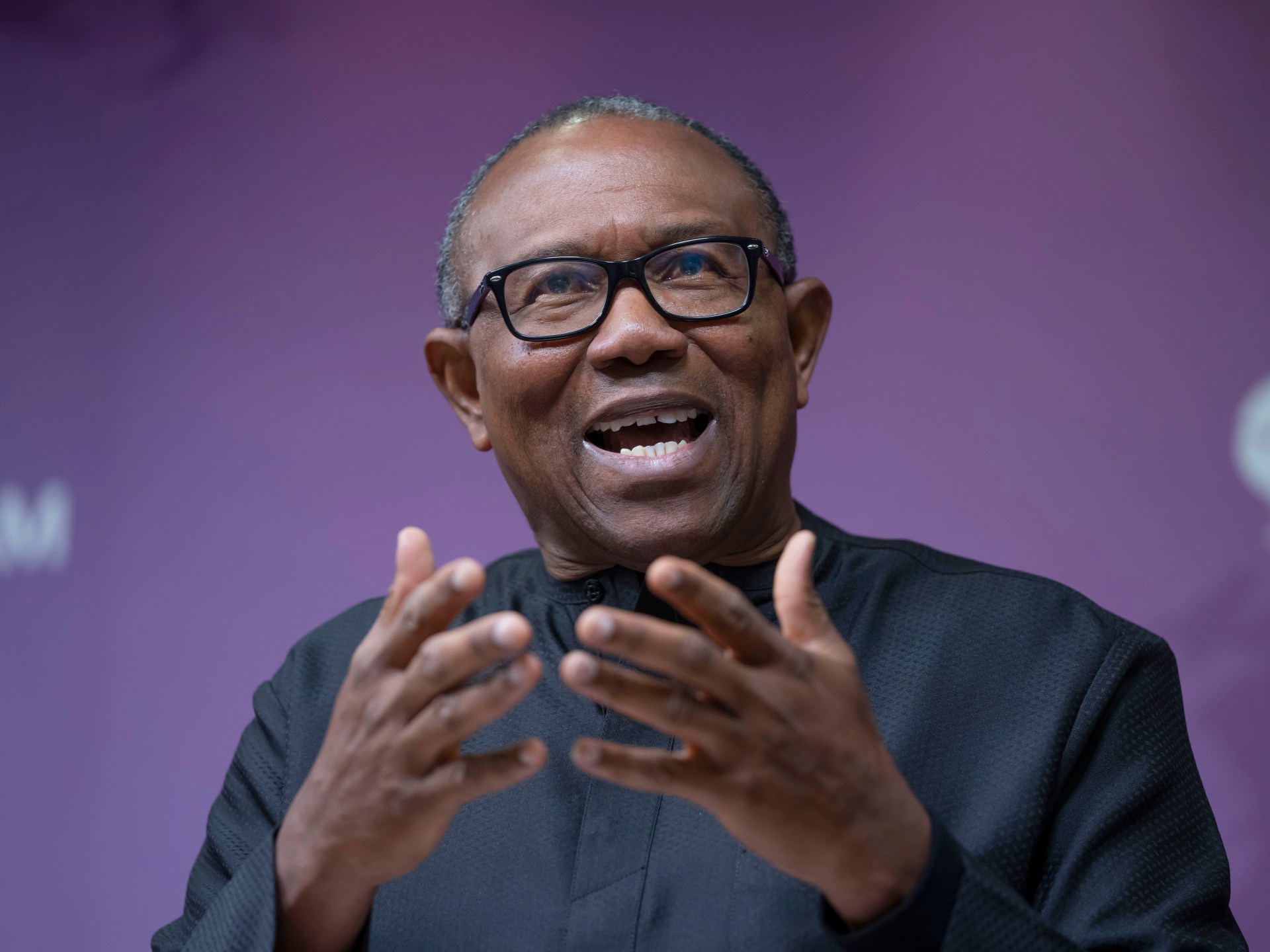
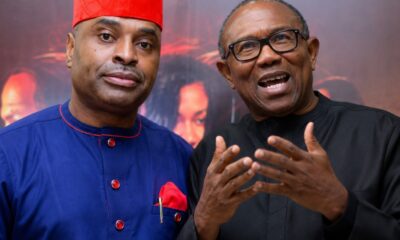
Former presidential candidate, Peter Obi, has said that Nigeria’s worsening education challenges cannot be solved merely by changing policies, but by strong leadership, adequate funding, and sustained investment in the sector.
Obi made the statement while reacting to recent concerns over the country’s education system and declining academic performance in national examinations. He stressed that focusing only on structural or policy adjustments would not address the deeper issues affecting learning outcomes.
He pointed to recent examination statistics, including the 2024 West African Senior School Certificate Examination (WASSCE), where less than half of candidates passed English Language and Mathematics. He also referenced the 2025 computer-based WASSCE results, where pass rates reportedly dropped further, describing the trend as alarming.
According to him, the poor results reflect long-standing neglect of the education sector and insufficient commitment to human capital development. He argued that education remains central to economic growth and national progress, warning that no country can meaningfully develop without investing in it.
Obi also criticized the level of funding allocated to education in recent budgets, noting that it remains far below international benchmarks recommended by UNESCO. He described the low allocation as evidence that education is not being treated as a top national priority.
He further lamented Nigeria’s inability to support students in international academic competitions, citing inadequate funding as a major barrier to exposing talented students to global opportunities.
Reflecting on his time as governor of Anambra State, Obi said targeted investments in education helped improve learning conditions and outcomes. He added that initiatives such as providing digital tools and learning infrastructure contributed to better performance in schools.
He urged the federal government to prioritize education, healthcare, and job creation, insisting that only deliberate and sustained investment in these sectors can reverse Nigeria’s development challenges.
Obi concluded that with the right leadership and commitment, Nigeria can still achieve significant progress, reaffirming his belief that “a new Nigeria is possible.”






 By Agregor Ebiboere Immaculate;
- JAMB has opened a controlled process for candidates who have genuinely lost access to their registered phone numbers or email addresses.
- The service began on September 21 and is available only at designated CBT centres and applicable state offices.
- Applicants can use the service once, subject to strict identity and biometric verification.
The Joint Admissions and Matriculation Board (JAMB) has introduced a controlled procedure allowing candidates who have lost access to their registered phone numbers or email addresses to update their details.
The board announced the policy change on Monday through its official X account, stating that the service commenced on September 21,2026.
JAMB said candidates could access the service only at designated Computer-Based Test centres, including state offices where applicable.
JAMB said candidates could access the service only at designated Computer-Based Test centres, including state offices where applicable.
ATTENTION: Click “HERE” to join our WhatsApp group and receive News updates directly on your WhatsApp! Kk
JAMB said candidates could access the service only at designated Computer-Based Test centres, including state offices where applicable.
READ ALSO: JAMB, WAEC Fix ₦4,000 One-Off Fee For O’Level Result Verification
It explained that the arrangement was designed for candidates with genuine cases involving the loss of access to their registered GSM numbers, email addresses or both.
The board said applicants would be required to undergo strict identity and biometric checks before their details could be changed.
“Please note: The service can be accessed only once and is subject to strict identity and biometric verification,” JAMB said.
It urged candidates to visit only approved centres and avoid dealing with unauthorised individuals or channels.
“For your security, use only designated JAMB centres and avoid unauthorised persons or channels,” the board added.
JAMB said the announcement was part of its JCARE and JAMB Updates initiatives.
The board reiterated that the update facility could be used only once and that all requests would be subject to the prescribed verification process.

By Rukevwe Odeh
The Minister of Education, Dr. Tunji Alausa, made this known in Abuja during the inauguration of the UBEC Ministerial Implementation and Monitoring Committee. He explained that the current arrangement, which treats JSS and SSS as separate administrative structures, has not achieved its intended purpose and has instead contributed to poor student progression and high dropout rates.
According to him, millions of pupils who complete primary school struggle to transition smoothly into higher levels of secondary education. He also pointed out that the imbalance in school distribution—where there are significantly more primary schools than junior secondary schools—has worsened the situation, creating bottlenecks in student advancement.
The minister noted that the separation policy has led to overcrowding in some junior secondary schools while many senior secondary schools remain underutilised. He described the system as inefficient and not in the best interest of learners.
As part of the proposed reform, the government intends to present its recommendation to the National Council on Education for approval. A committee has also been set up to speed up the implementation of related education initiatives, including Smart Schools, Bilingual Schools, and Alternative Schools across the country.
He added that the government is committed to ensuring that abandoned or uncompleted public schools are completed, properly equipped, and put into use so that they serve students effectively.
Education authorities believe that removing the separation between JSS and SSS will help create a smoother academic transition, reduce dropout rates, and improve overall access to secondary education in Nigeria.

By Divine Perezide
The Federal Government has praised Nigerian universities for their stronger performance in global university rankings, describing the achievement as evidence of ongoing improvements in the country’s higher education sector.
According to the government, the latest international rankings highlight the growing competitiveness of Nigerian institutions and reflect the impact of recent efforts to strengthen teaching, research, innovation, and academic standards across universities.
The Minister of Education, Tunji Alausa, congratulated the universities that earned recognition, noting that their success demonstrates the resilience of the nation’s tertiary education system. He stated that reforms introduced by the Federal Government are beginning to produce measurable results and reaffirmed the administration’s commitment to supporting quality education.
The rankings showed that 24 Nigerian universities secured places in the 2026 Times Higher Education World University Rankings by Subject, making Nigeria the country with the highest number of ranked universities in Sub-Saharan Africa. Federal universities accounted for the majority of the institutions listed, underscoring progress in the public university system.
Education stakeholders described the development as a significant milestone, attributing it to sustained improvements in research output, academic quality, and institutional performance. They also urged continued investment in research funding, infrastructure, staff development, and international collaborations to sustain the upward trajectory of Nigerian universities in future global rankings.
The government reiterated its commitment to implementing policies that will further enhance the quality and global competitiveness of higher education in Nigeria while encouraging universities to maintain the momentum and strive for even greater international recognition.
-

 Social2 months ago
NAIS – Northern Nigeria/Abuja Chapter Honours Amb. Ebi Lagos with Award of Recognition
-
 Breaking3 months ago
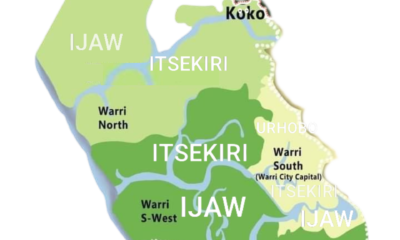
2027: INEC Alegedly Announces Plans to Conduct Party Primaries in the Newly Created State Constituencies in Warri North and Warri Southwest LGAs, Others
-

 News1 month ago
PAP: EX-AGITATORS OF BOYLOAF CAMP DISTANCE SELVES FROM THEIR LEADERS ONSLAUGHT ON THE PAP ADMINISTRATOR
-

 Local News4 months ago
Just In: Ambassador Podoki Emerges APP Candidate for Burutu Constituency-I Assembly Seat
-
 Politics3 months ago
2027: Mulade Challenges NDC’s Substitution of His Party Candidacy, Demands ₦5 Billion Damages
-
 Breaking3 months ago
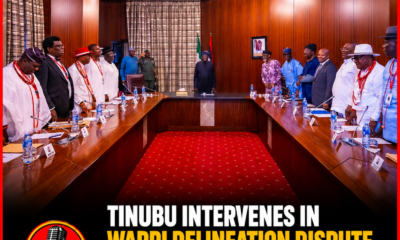
Tinubu Intervenes in Warri Delineation Dispute, Meets Ijaw, Urhobo and Itsekiri Leaders
-
 Local News4 months ago
INC: Group Faults Sponsored Attacks on Tompolo, Igbadiwei, Urges Unity in Ijaw Nation
-

 Entertainment2 months ago
JKing Logistics Coordinator Shed Light to Address Ijaw Music Wage Controversy