Connect with us

News

INC: Ozobo Advises Diri’s Reconciliation Committee to be Fair, Demands Immediate Reopening of Ijaw House

Published

on

INC: Ozobo Advises Diri’s Reconciliation Committee to be Fair, Demands Immediate Reopening of Ijaw House
Spread the love

Ozobo Advises Diri’s Reconciliation Committee to be Fair, Demands Immediate Reopening of Ijaw House

By Charity Ebi

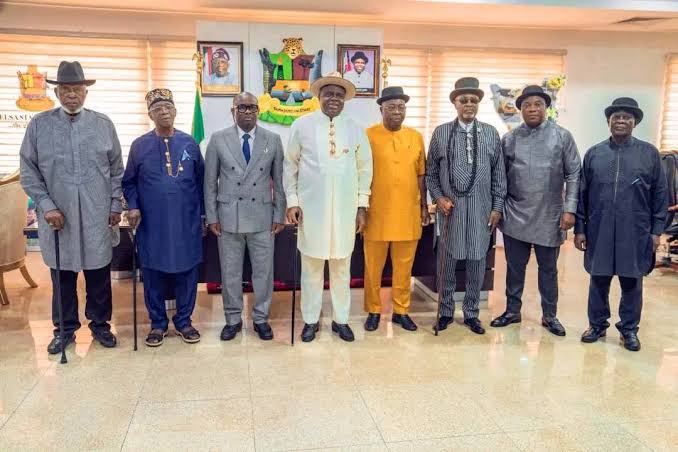
A prominent Niger Delta activist and Ijaw leader, Ozobo Austin, has cautioned members of the reconciliation committee constituted by Douye Diri against pursuing personal interests, urging them to remain neutral and committed to the collective interest of the Ijaw nation.

Speaking on the ongoing issues surrounding the leadership of the Ijaw National Congress, Ozobo warned that the committee must not allow itself to be manipulated to achieve what he described as selfish political objectives.

He maintained that Governor Diri should not portray himself as the overall leader of the Ijaw nation, stressing that the late Diepreye Alamieyeseigha was the only figure widely regarded as the “Governor-General” of the Ijaw people.

According to him, the reconciliation process would only gain acceptance if it was genuinely aimed at uniting aggrieved stakeholders and promoting peace within the Ijaw nation.

Ozobo argued that the electoral process of the INC had been concluded and winners duly emerged, noting that dissatisfaction from some quarters does not invalidate the outcome of an election.

He further criticized the closure of the Ijaw House, insisting that Governor Diri lacked the constitutional and moral authority to order such action. He described the move as provocative and capable of heightening tensions among Ijaw stakeholders.

“The Ijaw House was not built with personal resources belonging to the governor, and no individual has the unilateral power to shut it down without broad consensus from the Ijaw nation,” he stated.

The activist also appealed to respected Ijaw elders to rise above personal interests and political desperation, emphasizing the need to protect the unity and peace of the ethnic nationality.

He urged stakeholders dissatisfied with the election outcome to accept the process in good faith and avoid actions capable of deepening divisions within the Ijaw nation.

Ozobo concluded by calling on Governor Diri to immediately reopen the Ijaw House, warning that failure to do so could result in legal action.


Spread the love
Click to comment

Leave a Reply

Your email address will not be published. Required fields are marked *

News

Diri Expresses Satisfaction Over Progress of Nembe-Brass Road Project

Published

on

Diri Expresses Satisfaction Over Progress of Nembe-Brass Road Project
Spread the love

By Favour Bibaikefie

Governor of Bayelsa State, Senator Douye Diri, has expressed delight over the progress recorded on the ongoing construction of the first phase of the Nembe-Brass Road, describing the project as a major milestone in efforts to open up riverine communities in the state’s eastern senatorial district.

The governor made the remarks during an inspection tour of the 21-kilometre phase one section of the road project on Tuesday, where he assessed the level of work completed by the contractors.

The road project, which traverses challenging mangrove swamps and waterways, is considered one of the state’s most ambitious infrastructure undertakings aimed at linking previously inaccessible communities by road.

Accompanied by the Commissioner for Works and Infrastructure, ESV Moses Teibowei, Governor Diri inspected the completed asphalted stretch covering about 10 kilometres and several bridges before crossing by barge to evaluate ongoing work on another section that has already been stabilised.

Speaking after the inspection, Diri described the project as a fulfillment of a long-held aspiration of the people of Nembe and Brass local government areas.

“I feel accomplished. It is one thing to have the vision and another thing to have the will to do it,” the governor stated.

According to him, the road remains one of the most significant development projects undertaken in the state due to its strategic importance to the riverine communities.

“Being a Bayelsan, the importance of this road cannot be over-emphasised. This is what the people have been yearning for and I’m satisfied that the people are happy about the project,” he said.

The governor noted that his administration has consistently met its financial obligations to the contractors and expressed confidence that the project would be delivered as scheduled.

“On funding, we have never disappointed the contractor and I believe they will not disappoint us. By the time the road is completed, it will reduce cases of sea piracy,” Diri added.

He also acknowledged the support of President Bola Ahmed Tinubu for approving the second phase of the project being handled by the Federal Government.

“There was another President when we proposed this road. We wrote, nobody answered us then. But this President did not only answer us, he awarded the contract for the second phase,” he said.

Also speaking, the Commissioner for Works and Infrastructure, ESV Moses Teibowei, expressed satisfaction with the pace of work, noting that the most difficult aspects of the project had already been addressed.

He disclosed that the fifth bridge currently under construction is expected to be completed within the next three months and assured residents that the entire project remains on schedule.

Providing further updates on the project, the South-South Area Manager of Setraco Construction Company, covering Bayelsa and Rivers states, Mr. Jose Cosme, assured that the first phase of the Nembe-Brass Road would be completed and delivered by December 2026.

The Nembe-Brass Road project is widely regarded as a transformative infrastructure development expected to enhance transportation, improve economic activities, boost security, and strengthen connectivity between communities across Bayelsa’s riverine axis.


Spread the love
Continue Reading

News

IPF Hails NMU Registrar, Dr. Paul Bebenimo, for Outstanding Service on Birthday

Published

on

IPF Hails NMU Registrar, Dr. Paul Bebenimo, for Outstanding Service on Birthday
Spread the love

By Divine Perezide

The Ijaw Publishers’ Forum (IPF) has paid glowing tribute to the Registrar of the Nigerian Maritime University (NMU), Okerenkoko, Dr. Paul Bebenimo, on the occasion of his birthday, applauding his remarkable contributions to educational administration and institutional development.

In a statement issued by the Secretary of the Forum, Mr. Tare Magbei, the IPF described Dr. Bebenimo as a seasoned administrator whose dedication, professionalism, and visionary leadership have continued to strengthen the growth and reputation of the Nigerian Maritime University.

According to the Forum, Dr. Bebenimo has played a pivotal role in enhancing administrative efficiency and promoting academic excellence within the institution, earning the respect and admiration of stakeholders across the education and maritime sectors.

The IPF noted that under his stewardship as Registrar, the university has continued to advance its mandate of producing highly skilled manpower for Nigeria’s maritime industry while maintaining high standards of institutional governance.

The Forum further commended his commitment to human capital development, mentorship, and service to the nation, describing him as a worthy ambassador of the Ijaw nation whose achievements continue to inspire younger generations.

“As Dr. Paul Bebenimo celebrates another year of life and service, we join his family, friends, colleagues, and well-wishers in celebrating a distinguished administrator whose impact resonates far beyond the walls of the university,” the statement read.

The IPF prayed for God’s continued blessings upon the celebrant, wishing him sound health, greater wisdom, and many more years of fruitful service to the advancement of education and national development.


Spread the love
Continue Reading

News

New Power Minister Tegbe Promises Reforms Amid Nigeria’s Electricity Crisis

Published

on

New Power Minister Tegbe Promises Reforms Amid Nigeria’s Electricity Crisis
Spread the love

By Rukevwe Odeh

Nigeria’s electricity sector is entering a new phase following the appointment of Joseph Tegbe as Minister of Power by President Bola Tinubu. His emergence comes at a critical time for an industry grappling with persistent supply shortages, mounting debt, and operational inefficiencies.

Speaking shortly after taking office in Abuja, Tegbe pledged to approach the role with transparency, commitment, and accountability. He outlined plans to pursue reforms through clear targets, performance monitoring, and collaboration with key stakeholders across the power value chain.

According to the minister, consultations have already begun with major industry institutions, including the Transmission Company of Nigeria (TCN), the Niger Delta Power Holding Company (NDPHC), the Nigerian Electricity Regulatory Commission (NERC), and the Rural Electrification Agency (REA). He expressed confidence that these engagements would help drive meaningful improvements in the sector.

Despite Nigeria’s installed electricity generation capacity of more than 13,600 megawatts, actual output remains significantly below demand. Regulatory data shows that average available generation in 2025 stood at approximately 4,853.69MW, representing less than 40 percent of installed capacity.

Industry experts attribute the gap to several longstanding issues, including inadequate gas supply, aging infrastructure, maintenance challenges, and limitations within the transmission network. As a result, a large portion of the country’s generation assets remains underutilized.

Tegbe highlighted a few recent gains, including the return of the 450MW Alaoji Open Cycle Power Plant, which had been inactive for three years. The facility is expected to contribute up to 375MW to the national grid. Additional transmission projects completed in Katampe, Abuja, as well as Ayede and Abeokuta, are also expected to strengthen power delivery in strategic locations.

However, stakeholders argue that these developments address only a fraction of the industry’s broader problems. One of the most pressing concerns remains the severe liquidity crisis affecting electricity generation, transmission, and distribution companies.

Data from the Nigerian Bulk Electricity Trading Company (NBET) indicates that power generation companies invoiced N1.531 trillion between May and October 2025 but received only N547.37 billion. The resulting revenue deficit of nearly N1 trillion has placed significant pressure on operators and limited their ability to invest in maintenance and expansion.

By the end of 2025, sector-wide debt had reportedly exceeded N6 trillion, raising concerns over the long-term sustainability of the industry. Analysts have warned that without major financial interventions and structural reforms, power generation could decline further.

The minister acknowledged the financial difficulties and revealed that discussions with international development partners have produced encouraging indications of possible support. Nevertheless, experts note that external funding alone cannot resolve the fundamental issues affecting the sector.

Metering remains another major challenge. According to NERC figures, more than 72 percent of distribution companies failed to meet required metering targets as of February 2026. Consequently, millions of electricity consumers continue to receive estimated bills, a practice that has generated widespread complaints and reduced confidence in the industry.

Only Abuja, Eko, and Ikeja distribution companies reportedly met the prescribed metering standards during the period under review.

On consumer welfare, Tegbe reaffirmed support for NERC’s directive requiring compensation for Band A customers who experienced service levels below the expected standard. Observers, however, believe the effectiveness of the policy will depend largely on enforcement and the financial health of distribution companies.

The minister urged Nigerians to remain patient, noting that decades of inadequate investment, policy inconsistencies, and governance shortcomings cannot be corrected overnight. He emphasized that his administration would focus on realistic goals and transparent communication with the public.

Energy analysts maintain that deeper reforms are necessary to place the sector on a sustainable path. These may include cost-reflective electricity tariffs, targeted subsidy programs, accelerated metering deployment, and stricter compliance with market rules.

For millions of Nigerians who continue to experience unreliable electricity supply, the success of Tegbe’s tenure will ultimately be measured by visible improvements in power availability and service delivery. With national generation still hovering around 4,000MW for a population exceeding 200 million people, expectations remain high as the new minister begins the task of transforming the country’s struggling power sector.


Spread the love
Continue Reading

Trending