
News
Tompolo, Otuaro and Borders


By: Enewaridideke Ekanpou
Borders are the plagues of any society; borders are also the joys of any society. Border management strategies intentionally mapped out do produce results that become either destabilising or beneficial when viewed through the lens of man’s struggle for self-actualisation and social belonging in a society where identity-building is all.
However society is structured, the cream of man’s struggle is to attain self-actualisation and social belonging, especially with borders that have attained changing meanings and functions in the society. In line with the changing meanings of borders which function differently in different societies, the preoccupation of High Chief Government Ekpemupolo ( Tompolo) and High Chief Dr. Dennis Otuaro centres on functionally optimal management of borders away from the udulations that stifle growth and self-actualisation projections. Burdened with these national assignments, Tompolo and Dr. Otuaro are always at work to be on the rosy side of history in terms of border-management since they are now looked upon as border managers in Nigeria.
Borders were chiefly conceptualised as geographical constructs cartographically marked and indicated by lines and divisions. With the reconceptualisaton, reconfiguration and re-imagination of borders in the 1980s, borders have also become social constructs that function differently and define human relations, especially when they are applied to literature through the methodology of border poetics.
The endangerment or betterment of society depends on how borders are managed by government, the oil companies and privileged individuals because borders are no longer defined solely by geographic constructions. Society escapes being encumbered when borders are optimally managed by border managers.
Currently, pipeline surveillance and protection is contractually in the hands of Tompolo just as the Presidential Amnesty Programme is in the hands of Dr. Otuaro. Right from when this national task is contractually thrust on Tompolo, he knows that there are borders between the communities and the government, including the multinational oil companies. Even among the oil producing communities there are borders defined by those involved in local refining of crude oil through pipeline vandalism, and those who are ideologically opposed to it. For those involved in pipeline vandalism and local production of fuel, diesel and kerosene, it is their own search for self-actualisation and social belonging since the symbolic borders have been manipulated and hegemonised through border exclusivity. To handle these emerging complexities, Tompolo created engagement platforms for all communities and individuals hitherto engaged in pipeline vandalism and crude oil theft for self-actualisation and social belonging.
Tompolo is a man always driven by vision. With varied engagement platforms created by him, the borders become no longer tension-stricken; the borders become sites for meaningful interaction and integration, where self-actualisation platforms have been created for the people. The net profit of this border-management has manifested in higher daily production of crude oil in Nigeria. This means the Nigerian Federal Government has got the enablement to fulfill its obligations to the citizens through proper management of the economy and its allied matters without giving fruitless excuses attributed to pipeline vandalism and crude oil theft.
The Presidential Amnesty Programme is also burdened with various borders. People who have today become ex-agitators were once militant agitators who carried guns against the government and the multinational oil companies in Nigeria. In carrying guns they were all driven by their own search for self-actualisation, identity negotiation and social belonging because they were systematically shut out by the Nigerian Federal Government and the multinational oil companies in the management of the symbolic borders. Sadly, everything was wilfully pushed to dimensions of border exclusivity by the border managers. For a people systematically shut out by border managers, they feel existentially obligated to negotiate and construct their own identities within the Nigerian structure. Nigeria became the home of tensions as these agitators searched for their self-actualisation within the Nigerian governance space. To extinguish the conflagration from the emerging border tensions, Amnesty was given to the agitators, followed by creation of engagement platforms. Dr. Otuaro has been assigned the task to handle these complexities and reduce border tensions that always inflict wounds on the economy of Nigeria.
Very much at home with the dangers and consequences with the emerging tensions likely to emerge when borders are not handled as sites for interaction, integration and self-actualisation, Dr. Otuaro activated and strengthened all the engagement platforms for all ex-agitators. Between the ex-agitators there are borders resulting from the fact that some are educated while others are not educated. To bridge this gap and ward off border tensions, all the ex-agitators are placed in engagement and empowerment platforms that reflect their capabilities. In this specific approach Dr. Otuaro is guided by his insight into the benefits of comparative advantage in resource management built around the strengths and weaknesses of the people in terms of their capabilities and specific areas of excellence and performance-fluidity.
In handling the affairs of the Amnesty Programme Dr. Otuaro has never been associated with scandals and crisis incubated and masterminded by agitators because he has deep roots in border management. The Amnesty boss has structured the PAP in a manner replete with windows and opportunities for self-actualisation and social belonging. Otuaro knows that when borders become inclusive through deliberate policy thrust, self-actualisation opportunities become the stars in the sky. Harmony becomes the word when people are no longer denied self-actualisation opportunities. Creation of self-actualisation opportunities for agitators in line with their capabilities is what Dr. Otuaro has activated in PAP. Here he is aided by his understanding that borders function differently under different circumstances. His understanding of border studies as a political scientist has come in handy for him in his management of the Amnesty Programme.
From Tompolo and Otuaro , only prepossessing stories of performance are told and heard in the key areas of pipeline surveillance and the Amnesty Programme. Communities and individuals hitherto involved in pipeline vandalism and crude oil theft are comfortable with their platforms for self-actualisation and social belonging. In the Amnesty Programme ex-agitators are daily kept busy with their self-actualisation engagement platforms. Both in the pipeline surveillance contract and the Amnesty Programme, individuals hitherto denied opportunities have been given the window for self-actualisation, identity negotiation, identity construction and social belonging. For Tompolo and Otuaro, borders are the sites for meaningful interaction, integration and self-actualisation.
Even without straining one’s productive energies in the deliberate creation of a noise equivalent in decibel to two irons beaten to awaken preternaturally deaf iguanas and salvage them from a waiting danger on the shoreline which may mark their obituary, it is known to all that that the pipeline surveillance contract and the Amnesty Programme are currently liberated from turbulence and undulations is a product of the border-management expertise of Tompolo and Otuaro who have roots deeply buried in border studies, particularly the social construction of borders that see and designate borders as a site for meaningful interaction and integration, where opportunities for self-actualisation and social belonging are fully explored without encumbrances thrown up by border exclusivity.
Dr. Ekanpou writes from Akparemogbene, Delta State





By Reporter Agregor Ebiboere Immaculate
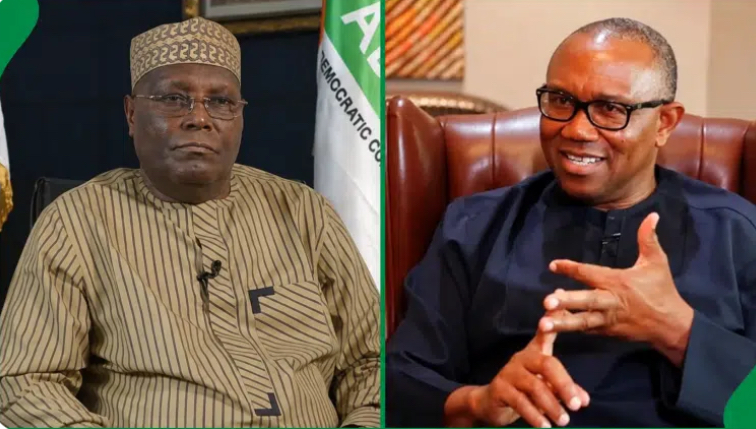
The proposed mega opposition coalition ahead of the 2027 general elections has triggered fresh debate over who should emerge as the presidential candidate between former Vice President Atiku Abubakar of the African Democratic Congress (ADC) and former Anambra State Governor Peter Obi of the Nigeria Democratic Congress (NDC).
The debate followed a call by the G100 coalition for opposition parties and political figures to unite behind a single candidate in an effort to challenge President Bola Ahmed Tinubu in the 2027 presidential election.
However, the major challenge confronting the proposed alliance remains the question of which of the two leading opposition figures should step down.
Obi, speaking in a recent interview with ARISE Television, said he could not unilaterally withdraw his presidential ambition in favour of Atiku.
According to him, any political arrangement involving the opposition must go beyond the individual candidates and involve the political parties concerned.
The issue has become particularly significant because Atiku and Obi previously appeared on the same presidential ticket in 2019 before contesting separately in the 2023 presidential election.
Atiku is widely regarded by his supporters as having extensive political experience, a nationwide political network and strong structures, particularly across Northern Nigeria.
Obi, on the other hand, has maintained a strong support base among young Nigerians and voters seeking political and economic reforms.
The disagreement over who should step aside has therefore become one of the major obstacles to efforts to build a single opposition platform ahead of 2027.
Calls for Atiku to Step Down
The NDC vice-presidential candidate, Rabiu Kwankwaso, had earlier called on Atiku to withdraw from the presidential race to facilitate a broader opposition arrangement.
The call, however, attracted criticism from some members of the ADC and the All Progressives Congress (APC).
ADC chieftain Chille Igbawua described the appeal as inappropriate and questioned suggestions that Atiku should withdraw because of his age or other personal considerations.
Meanwhile, Chief Promoter of the Alternative Movement, Segun Showunmi, has criticised the renewed push for candidates to step down at this stage of the political process.
Showunmi argued that the time for negotiating such an arrangement was before the various parties produced their presidential candidates.
He maintained that asking either Atiku or Obi to withdraw after their respective political structures had already been established could create further disagreements within the opposition.
According to him, both candidates have invested considerable time, resources and political effort in their presidential ambitions.
He also questioned how an agreement at the presidential level would affect candidates contesting for governorship, Senate and House of Representatives seats under the various parties.
Coalition Challenge
Showunmi further argued that the opposition coalition had already gone through several stages of negotiations and that the emergence of different presidential candidates had made a last-minute arrangement more complicated.
He said the proposed alliance would require clear agreements on issues such as the presidential candidate and power-sharing arrangements before the formation of a coalition.
The debate also comes as other opposition figures continue to pursue their own political ambitions ahead of 2027.
The central question now remains whether Atiku and Obi, alongside their respective political structures, can reach an agreement capable of producing a single presidential candidate.
With the 2027 election approaching, the outcome of the coalition discussions could have significant implications for the opposition’s strategy and the shape of the presidential contest.
For now, neither Atiku nor Obi has publicly announced a decision to withdraw from the presidential race in favour of the other
By staff Reporter Rukevwe Odeh
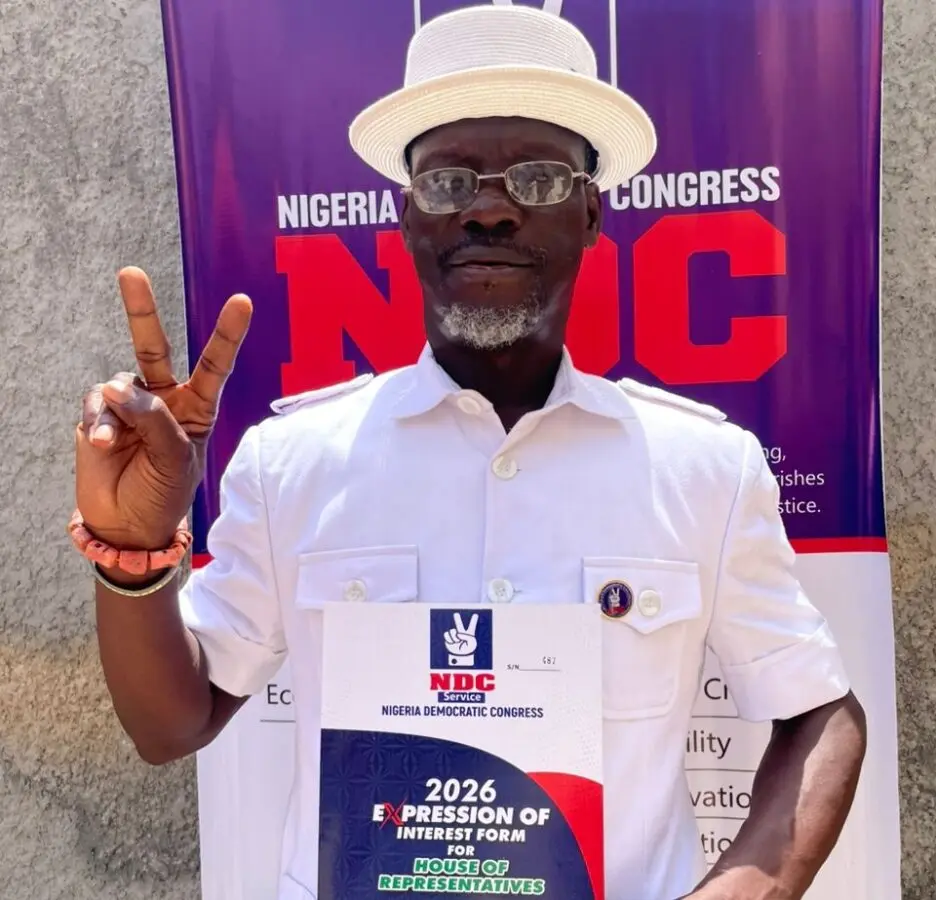
A group of stakeholders in Warri has announced its decision to withdraw support for the incumbent member representing the Warri Federal Constituency in the House of Representatives, Hon. Thomas Ereyitomi, ahead of the 2027 general elections.
The group, while explaining its position, cited what it described as dissatisfaction with the lawmaker’s performance and representation of the constituency.
The stakeholders subsequently declared their support for Comrade Jude Ukori Mulade as their preferred candidate for the 2027 House of Representatives election.
According to the group, its decision followed concerns over the level of representation and development delivered to the constituency under the current administration.
The stakeholders said they were seeking a representative who would be more responsive to the needs of the people and more committed to advancing issues affecting residents across the constituency.
They urged other political stakeholders and eligible voters in Warri to consider Mulade’s candidacy as the 2027 elections approach.
The group’s endorsement adds to the growing political activities and realignments expected to shape the contest for the Warri Federal Constituency seat ahead of the 2027 general elections.
Ereyitomi, who currently represents the constituency in the House of Representatives, has yet to publicly respond to the allegations contained in the group’s statement.

By staff Reporter Rukevwe Odeh
Residents and road users along the Warri Airport Road, particularly the section near Federal Government College in Warri South Local Government Area of Delta State, have continued to contend with recurring flooding despite years of road construction and rehabilitation efforts.
The affected stretch is frequently submerged following heavy rainfall, with inadequate drainage identified as a major factor contributing to the persistent flooding.
The recurring situation has raised concerns among motorists, residents and other road users, who say the condition of the road continues to disrupt movement and create difficulties for commuters whenever there is significant rainfall.
The development has also renewed calls for attention to the drainage system along the route, with residents hoping that a lasting solution will be implemented to prevent the road from repeatedly becoming flooded.
-

 Social2 months ago
NAIS – Northern Nigeria/Abuja Chapter Honours Amb. Ebi Lagos with Award of Recognition
-
 Breaking3 months ago
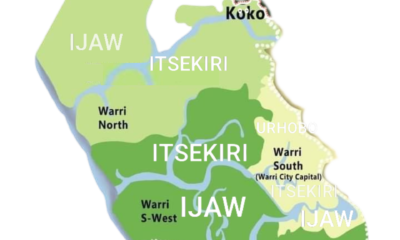
2027: INEC Alegedly Announces Plans to Conduct Party Primaries in the Newly Created State Constituencies in Warri North and Warri Southwest LGAs, Others
-

 News1 month ago
PAP: EX-AGITATORS OF BOYLOAF CAMP DISTANCE SELVES FROM THEIR LEADERS ONSLAUGHT ON THE PAP ADMINISTRATOR
-

 Local News4 months ago
Just In: Ambassador Podoki Emerges APP Candidate for Burutu Constituency-I Assembly Seat
-
 Politics3 months ago
2027: Mulade Challenges NDC’s Substitution of His Party Candidacy, Demands ₦5 Billion Damages
-
 Breaking3 months ago
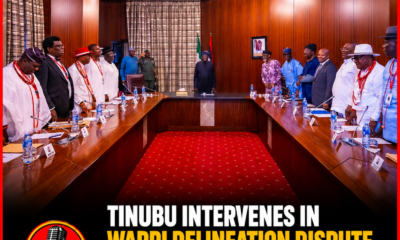
Tinubu Intervenes in Warri Delineation Dispute, Meets Ijaw, Urhobo and Itsekiri Leaders
-
 Local News4 months ago
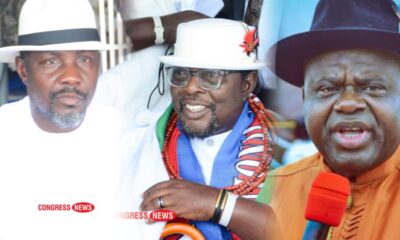
INC: Group Faults Sponsored Attacks on Tompolo, Igbadiwei, Urges Unity in Ijaw Nation
-

 Entertainment2 months ago
JKing Logistics Coordinator Shed Light to Address Ijaw Music Wage Controversy