
News
U.S. Introduces Worldwide Visa Restrictions for Cybercrime Suspects, Families


By Derick Peretengboro
The United States has rolled out a new global visa restriction policy aimed at foreign nationals involved in cyber-related crimes, with immediate family members of offenders also at risk of being denied entry into the country.
The measure was announced by U.S. Secretary of State Marco Rubio as part of the Trump administration’s broader efforts to combat international cybercrime, online investment fraud and sextortion targeting American citizens.
According to Rubio, the policy applies to individuals found to have participated in or supported cyber-enabled criminal activities, regardless of their nationality. He explained that the restrictions are backed by the U.S. Immigration and Nationality Act, which allows the government to deny visas when an applicant’s entry is considered contrary to U.S. foreign policy interests.
The U.S. government said the new action is in line with President Donald Trump’s campaign against cyber fraud and other online criminal operations that have caused significant financial losses and emotional harm to victims.
Rubio noted that online investment scams have cost Americans billions of dollars, while online sextortion schemes have increasingly targeted young people and vulnerable internet users.
He stressed that the visa restrictions are intended to ensure that those involved in cybercrime do not enjoy unrestricted access to the United States. The policy also extends to close family members of individuals directly linked to such offences.
The State Department added that the visa sanctions form part of a wider strategy that includes criminal prosecutions, financial sanctions, asset seizures, extradition requests and stronger international law enforcement cooperation to dismantle global cybercrime networks.
Although U.S. authorities did not identify any countries or individuals affected by the policy, officials emphasized that the restrictions will apply worldwide to eligible foreign nationals involved in cyber-enabled criminal activities.
The announcement comes as the Trump administration continues to tighten immigration and security measures while expanding efforts to tackle transnational crime.

By staff Reporter Rukevwe Odeh
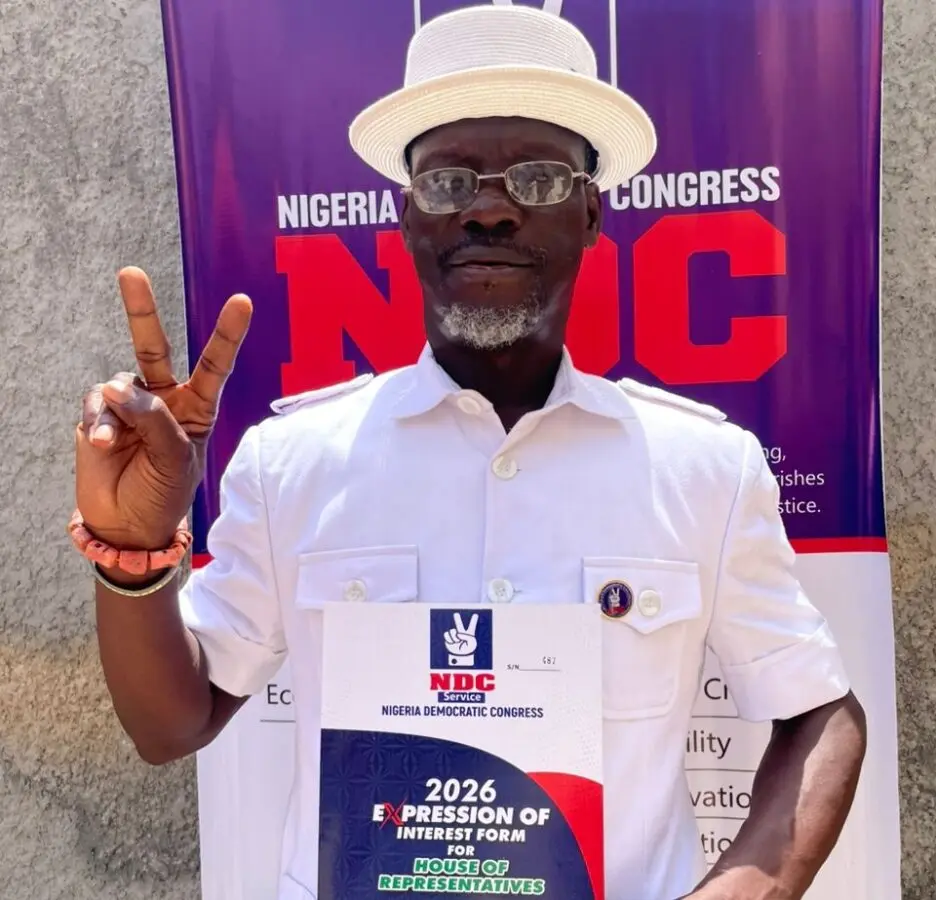
A group of stakeholders in Warri has announced its decision to withdraw support for the incumbent member representing the Warri Federal Constituency in the House of Representatives, Hon. Thomas Ereyitomi, ahead of the 2027 general elections.
The group, while explaining its position, cited what it described as dissatisfaction with the lawmaker’s performance and representation of the constituency.
The stakeholders subsequently declared their support for Comrade Jude Ukori Mulade as their preferred candidate for the 2027 House of Representatives election.
According to the group, its decision followed concerns over the level of representation and development delivered to the constituency under the current administration.
The stakeholders said they were seeking a representative who would be more responsive to the needs of the people and more committed to advancing issues affecting residents across the constituency.
They urged other political stakeholders and eligible voters in Warri to consider Mulade’s candidacy as the 2027 elections approach.
The group’s endorsement adds to the growing political activities and realignments expected to shape the contest for the Warri Federal Constituency seat ahead of the 2027 general elections.
Ereyitomi, who currently represents the constituency in the House of Representatives, has yet to publicly respond to the allegations contained in the group’s statement.
By staff Reporter Rukevwe Odeh
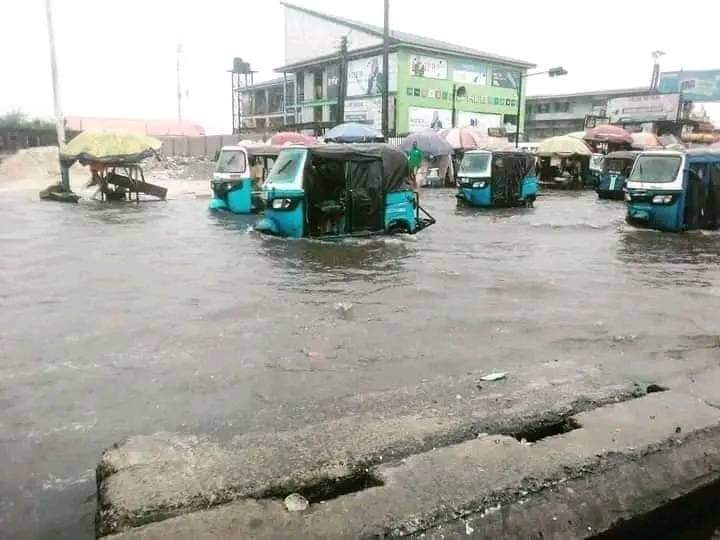
Residents and road users along the Warri Airport Road, particularly the section near Federal Government College in Warri South Local Government Area of Delta State, have continued to contend with recurring flooding despite years of road construction and rehabilitation efforts.
The affected stretch is frequently submerged following heavy rainfall, with inadequate drainage identified as a major factor contributing to the persistent flooding.
The recurring situation has raised concerns among motorists, residents and other road users, who say the condition of the road continues to disrupt movement and create difficulties for commuters whenever there is significant rainfall.
The development has also renewed calls for attention to the drainage system along the route, with residents hoping that a lasting solution will be implemented to prevent the road from repeatedly becoming flooded.
By staff Reporter: Rukevwe Odeh
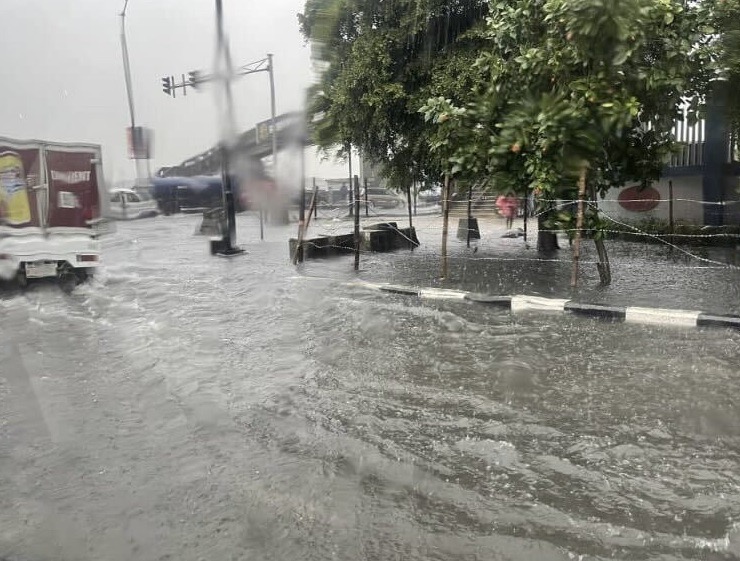
A heavy downpour has left the popular NNPC Housing Complex Road, also known as Ekpan Link Road, submerged in floodwater in Uvwie Local Government Area of Delta State.
The rainfall caused significant water accumulation along the busy road, affecting movement and creating difficulties for motorists and other road users.
The condition of the road has renewed concerns over flooding and drainage challenges in the area, particularly during periods of heavy rainfall.
Residents and commuters are expected to exercise caution while using the affected route as efforts to manage the situation continue.
-

 Social2 months ago
NAIS – Northern Nigeria/Abuja Chapter Honours Amb. Ebi Lagos with Award of Recognition
-
 Breaking3 months ago
2027: INEC Alegedly Announces Plans to Conduct Party Primaries in the Newly Created State Constituencies in Warri North and Warri Southwest LGAs, Others
-

 News1 month ago
PAP: EX-AGITATORS OF BOYLOAF CAMP DISTANCE SELVES FROM THEIR LEADERS ONSLAUGHT ON THE PAP ADMINISTRATOR
-

 Local News4 months ago
Just In: Ambassador Podoki Emerges APP Candidate for Burutu Constituency-I Assembly Seat
-
 Politics3 months ago
2027: Mulade Challenges NDC’s Substitution of His Party Candidacy, Demands ₦5 Billion Damages
-
 Breaking3 months ago
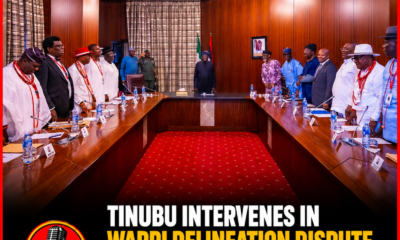
Tinubu Intervenes in Warri Delineation Dispute, Meets Ijaw, Urhobo and Itsekiri Leaders
-

 Local News4 months ago
INC: Group Faults Sponsored Attacks on Tompolo, Igbadiwei, Urges Unity in Ijaw Nation
-

 Entertainment2 months ago
JKing Logistics Coordinator Shed Light to Address Ijaw Music Wage Controversy